
Trump's 200% Tariff Threat Sends U.S. Stocks Down 1.4%
U.S. President Donald Trump has escalated trade tensions with the European Union by threatening to impose a 200% tariff on all wines, champagnes, and alcoholic beverages imported from France and the EU. This move is a response to the EU's recent imposition of a 50% tariff on American whiskeyAIG--, which Trump has described as "nasty." The threat was communicated via social media, with Trump stating that the tariff would be implemented immediately unless the EU removed its levy.
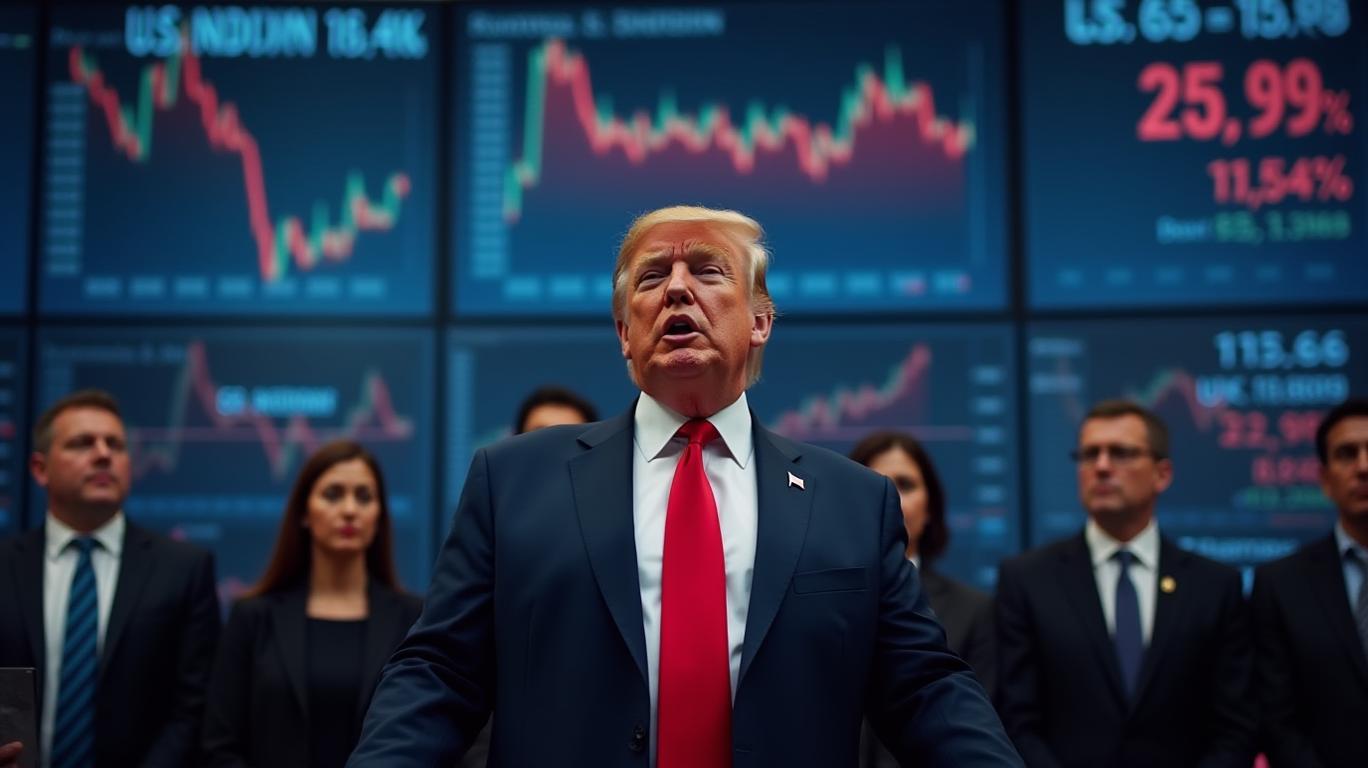
The announcement has sent shockwaves through global markets, with U.S. stocks experiencing a sharp decline. The S&P 500 dropped 1.4%, officially entering correction territory, more than 10% below its record high in February. The Nasdaq fell 2% while the Dow Jones shed 1.3%. The market downturn was driven by escalating trade tensions, which overshadowed better-than-expected economic data, including a slowdown in U.S. producer prices and a drop in unemployment claims.
Investors, rattled by the trade war rhetoric, sought safe-haven assets. Gold prices surged to a record high above $2,970 per ounce, nearing the $3,000 mark. The threat of a 200% tariff on European wines and spirits was seen as a retaliatory measure against the EU's tariffs on American whiskey, further complicating the already strained trade relations between the two economic blocs.
The escalation in trade tensions has raised concerns about the potential impact on prices, jobs, and the broader economic relationship between the U.S. and the EU. The threat of higher tariffs could lead to increased costs for consumers and businesses, as well as potential job losses in industries affected by the tariffs. The economic uncertainty and ongoing trade disputes continue to put pressure on market sentiment, with investors reacting to concerns that rising costs and geopolitical risks may undermine growth prospects.
The situation highlights the delicate balance between trade policies and economic stability. The U.S. President's threat to impose a 200% tariff on European wines and spirits is a clear indication of the escalating trade war between the U.S. and the EU. The market reaction, including the drop in U.S. stocks and the surge in gold prices, reflects the growing uncertainty and risk aversion among investors. The potential impact on prices, jobs, and the broader economic relationship between the two regions remains a significant concern, as the trade war continues to unfold.
In the cryptocurrency market, Bitcoin experienced a brief rebound but fell again due to the drag from the U.S. stock market. Bitcoin once fell below the $80,000 mark, rebounding only after the U.S. stock market closed, reaching $81,571 at the time of writing, with a 24-hour drop of 2.6%. As altcoins collapse and on-chain activities remain bleak, with the market continuing to be sluggish, interest in futures trading is on the rise.
In terms of major forex news, the February PPI increase was lower than expected, pushing the US Dollar Index up by 0.2%. Russia agreed to a 30-day ceasefire, and a Russia-US agreement may revive Russian oil and gas supplies, causing a nearly 1.7% drop in US oil prices. Driven by Trump's tariff threat and market safe-haven demand, spot gold surged nearly 1.8% to hit a new historical high, approaching $3,000.
The CPI on Wednesday and the PPI on Thursday both indicate that U.S. inflationary pressures are easing, but the market generally believes that this is not enough to bring about a significant rebound. Trump's trade policy remains a key factor suppressing investor sentiment and has cast doubt on the Federal Reserve's future interest rate path, with the market still maintaining expectations for three rate cuts this year.







Comentarios
Aún no hay comentarios