
Trump's H-1B Visa Overhaul: A Tectonic Shift in Global Tech Markets
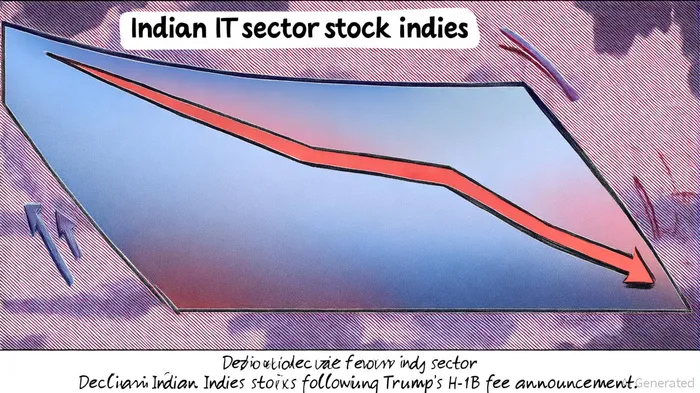
The U.S. immigration landscape has undergone a seismic shift with President Donald Trump's September 2025 proclamation imposing a $100,000 fee on new H-1B visa petitions. This policy, coupled with a wage-based lottery system and stricter eligibility criteria, marks a pivotal departure from the status quo, with profound implications for global tech markets. For investors, the reforms present a dual-edged sword: while they aim to protect domestic labor, they risk stifling innovation and reshaping international capital flows.
The Cost of Talent: A New Era for U.S. Tech Giants
The immediate financial burden on multinational tech firms is staggering. AmazonAMZN--, the largest H-1B sponsor with 10,044 approved visas in 2025, faces potential costs exceeding $1 billion if the fee applies to all new hires[1]. MicrosoftMSFT-- and MetaMETA--, with 5,189 and 5,123 H-1B beneficiaries respectively, have issued urgent advisories to current visa holders to avoid international travel[2]. Smaller firms and startups, less equipped to absorb such costs, may be forced to offload work to countries like India or accelerate automation[3].
The market has already reacted. Cognizant Technology SolutionsCTSH-- saw its stock plummet 4.75% following the announcement, while InfosysINFY-- and WiproWIT-- dropped 3.40% and 2.80%, respectively[4]. Analysts warn that the policy could trigger a “reshoring” of talent to countries like Canada or Mexico, further straining U.S. firms' competitiveness in AI and cloud computing[5].
India's Crossroads: A Talent Exodus or Strategic Rebound?
India, home to 70% of H-1B visa holders[6], faces a dual crisis. The fee hike threatens to disrupt the $160 billion IT services sector, which relies heavily on U.S. on-site delivery. Indian IT firms like Tata Consultancy Services and Infosys could see combined visa costs rise by $1.2 billion annually, eroding up to 10% of their FY25 net profits[7]. The Indian stock market's Nifty IT index fell 5.2% in the week following the announcement, reflecting investor anxiety[8].
However, the policy may inadvertently boost India's global IT services. U.S. firms offshoring work to circumvent the fee could create a “triple shock” for Indian companies: higher costs for U.S. clients, increased domestic hiring pressures, and a potential talent drain as workers seek opportunities in Europe or Southeast Asia[9].
Global Market Momentum: Winners and Losers
The Asia-Pacific region is poised for a realignment. While U.S. tech giants grapple with rising costs, firms in China and Southeast Asia may benefit from a shift in global supply chains. For instance, Vietnam and the Philippines, already hubs for IT outsourcing, could see increased demand for nearshore services[10].
Meanwhile, the European Union's “blue card” program—offering expedited residency for high-skilled workers—may gain traction as an alternative to the U.S. model[11]. This could divert talent and capital from the U.S., further fragmenting the global tech ecosystem.
Legal and Long-Term Uncertainties
Critics argue the $100,000 fee lacks legal foundation, citing the Immigration and Nationality Act's absence of such a provision[12]. Legal challenges could delay implementation, creating regulatory uncertainty for firms. Additionally, the administration's push for a wage-based system—prioritizing high-salary applicants—risks excluding mid-tier talent critical for innovation in fields like cybersecurity and AI[13].
Investment Implications: Navigating the New Normal
For investors, the key lies in hedging against volatility while capitalizing on sector-specific opportunities:
1. U.S. Tech Firms: Focus on companies with diversified labor strategies or strong automation capabilities (e.g., NVIDIA, Palantir).
2. Indian IT Sector: Monitor firms with robust offshore delivery models (e.g., TCS, Wipro) and those pivoting to AI-driven solutions.
3. Global Talent Platforms: Consider investments in companies facilitating remote work (e.g., Zoom, Upwork) or cross-border talent mobility.
Conclusion
Trump's H-1B reforms are not merely a policy shift but a recalibration of global tech dynamics. While the U.S. seeks to protect domestic labor, the unintended consequences—rising costs, talent fragmentation, and geopolitical friction—pose significant risks to innovation and market stability. For investors, the path forward demands agility, with a focus on resilience in an era of regulatory turbulence.





Comentarios
Aún no hay comentarios