
Trump's 100% Pharma Tariff and Its Impact on Global Biotech Supply Chains: Strategic Shifts and Investment Opportunities
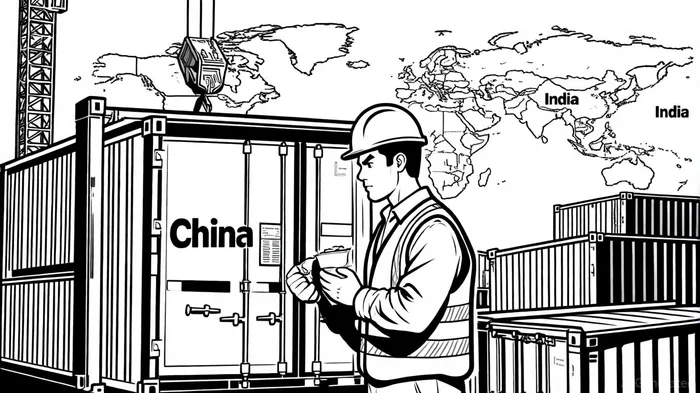
The Trump administration's 100% tariff on imported branded and patented pharmaceuticals, effective October 1, 2025, represents a seismic shift in global biotech supply chains. This policy, framed as a tool to lower drug prices for Americans and counter foreign "free-riding" on U.S. innovation[6], is catalyzing a wave of reshoring and strategic repositioning among pharmaceutical firms and supply-chain players. For investors, the implications are profound, with domestic U.S. manufacturers and diversified logistics firms emerging as key beneficiaries.
U.S. Pharma Giants: Reshoring as a Survival Strategy
Pharmaceutical companies are racing to avoid the 100% tariff by accelerating investments in U.S. manufacturing. AstraZenecaAZN--, for instance, has committed $50 billion to expand its U.S. footprint, including a flagship Virginia facility leveraging AI and automation[1]. Similarly, Roche and Eli LillyLLY-- are investing $50 billion and $27 billion, respectively, to build domestic production capacity[1]. These moves are not merely tariff-avoidance tactics but strategic pivots to align with Trump's broader agenda of reducing reliance on foreign active pharmaceutical ingredients (APIs), 72% of which are currently sourced abroad[2].
The Trump administration's use of the International Emergency Economic Powers Act (IEEPA) to justify these tariffs has created a regulatory environment where reshoring is both a compliance necessity and a competitive advantage. As noted by Pharmaceutical Technology, innovations in continuous manufacturing and process analytics are further reducing the cost gap between domestic and offshore production, making reshoring economically viable[2]. For investors, this signals a long-term structural shift rather than a short-term regulatory adjustment.
Diversified Supply-Chain Players: Adapting to a Fragmented World
Beyond Big Pharma, diversified supply-chain players are repositioning to capitalize on the new normal. Logistics firms like Maersk and DHL are promoting "multi-shoring" and "China+1" strategies, where companies diversify supplier locations across Southeast Asia, India, and the U.S. to mitigate geopolitical risks[1]. This trend is particularly pronounced in the pharmaceutical sector, where supply-chain visibility and resilience are critical. For example, contract development and manufacturing organizations (CDMOs) such as Recipharm and Siegfried are expanding their global footprints to ensure local production capabilities[3].
Academic research underscores the importance of collaboration in this transition. A 2021 study in Smart Logistics highlights how cost-sharing and revenue-sharing contracts between manufacturers and logistics providers can optimize supply-chain coordination during transformation[3]. This aligns with the industry's shift toward regionalization, where companies like Johnson & Johnson and MerckMRK-- are prioritizing U.S. facilities to shorten supply chains and reduce carbon footprints[4].
Challenges and Risks
While the reshoring boom presents opportunities, challenges persist. Securing local sources for intermediate materials used in API synthesis remains a hurdle[2], and legal challenges to the Trump administration's use of IEEPA could delay or alter the tariff's implementation[1]. Additionally, the temporary exemption for pharmaceuticals may not last: Trump has hinted at a 104% tariff on Chinese drugs and a broader "major" tariff that could disrupt global supply chains[3].
For investors, the key is to distinguish between short-term volatility and long-term trends. Companies that integrate advanced manufacturing technologies and strategic regionalization—such as those leveraging AI-driven logistics or dual-sourcing models—are better positioned to thrive. Conversely, firms reliant on rigid, cost-driven supply chains may struggle to adapt.
Conclusion
Trump's 100% pharma tariff is more than a policy shock—it is a catalyst for a fundamental reconfiguration of global biotech supply chains. U.S. manufacturers are reshoring to avoid tariffs, while diversified supply-chain players are embracing regionalization and collaboration to navigate a fragmented world. For investors, the winners will be those who align with these shifts, prioritizing innovation, resilience, and strategic flexibility.







Comentarios
Aún no hay comentarios