
Trump's First 100 Days: Crypto Industry Sees 500% Policy Shifts, Controversies
The first 100 days of the administration of US President Donald Trump have had a profound impact on the crypto industry, marked by significant events and policy shifts. The administration's actions have ranged from the launch of a memecoin to the establishment of a Bitcoin reserve, all while navigating a complex trade war and macroeconomic uncertainty.
On Jan. 20, Trump's inauguration day, his family's crypto investment firm, World Liberty FinancialLBTYB-- (WLFI), launched its second token sale of WLFIWLFC-- tokens. The initial demand was high, but the tokens' true value remains uncertain as they are not transferable or tradable on exchanges. This move set the stage for Trump's crypto agenda, which has garnered both support and criticism from observers and lawmakers.
Trump immediately began appointing pro-crypto leaders to key government agencies. On day oneDAWN-- of his presidency, he nominated businessman Paul Atkins to lead the Securities and Exchange Commission (SEC) and appointed businessman and crypto investor David Sacks as chair of the President’s Council of Advisors on Science and Technology. These appointments were seen as a positive step for the crypto industry, which had previously faced regulatory hurdles.
On Jan. 21, Trump announced a $500-billion private-led AI infrastructure investment called “Stargate,” led by OpenAI, SoftBank, and OracleORCL--. The project aimed to create 10,000 American jobs and keep AI development onshore, positioning the US as a global leader in AI innovation. This initiative was part of Trump's broader strategy to enhance the country's technological capabilities and national security.
One of the most notable actions during Trump's first 100 days was the pardon for Silk Road founder Ross Ulbricht. Trump commuted Ulbricht's life sentence, which had been a rallying point for libertarian movements and prison reform advocates. Ulbricht's platform was one of the first places where people could spend Bitcoin, making his case significant for the crypto community.
On Jan. 23, Trump established an internal working group focused on making the US “the world capital in crypto.” This group was tasked with creating a regulatory framework for cryptocurrencies and prohibiting the establishment of a US central bank digital currency (CBDC). The move was seen as a victory for privacy activists who oppose CBDCs as a form of state surveillance.
Trump's trade war with Mexico, China, and Canada began on Feb. 1, with the announcement of sweeping tariffs. These tariffs were initially met with retaliatory measures from Canada and Mexico, leading to a period of macroeconomic uncertainty. The trade war had a significant impact on crypto markets, as higher prices on electronics made it harder for Bitcoin miners to break even.
On Feb. 12, a prisoner swap between the US and Russia saw Alexander Vinnik, the convicted money launderer behind the Mt. Gox hack, return to his home country. Vinnik was exchanged for American schoolteacher Marc Fogel, who had been jailed in Russia since 2021. This swap highlighted the complex geopolitical dynamics at play during Trump's administration.
On Feb. 18, former FTX CEO Sam Bankman-Fried made a veiled plea for release in an interview, likening his position to that of Trump. Bankman-Fried, who had made significant political contributions to both the Democratic and Republican parties, called into question the conduct of the federal judge overseeing his trial. Observers saw this as an attempt to elicit a pardon from Trump.
On March 7, Trump signed an executive order establishing a “Strategic Bitcoin Reserve” and a US Digital Asset Stockpile containing other cryptocurrencies. While the reserve fell short of expectations among Bitcoin maximalists, it marked a significant step towards crypto adoption by the US government. The order also stated that the government may purchase additional Bitcoin in a budget-neutral fashion.
Later that month, leaders of the crypto industry gathered at the White House for a summit to discuss regulation and industry development. Attendees included Michael Saylor, Brian Armstrong, and David Sacks, among others. While some were optimistic about the event's focus on strengthening the US crypto industry, others noted that real change would require legislation in Congress.
On March 25, WLFI expanded its offerings with the soft launch of its stablecoin USD1, backed by short-term US government treasuries and other cash equivalents. The launch came just days after WLFI secured more than $500 million by selling its own WLFI tokens. However, the project faced criticism from lawmakers who cited the president's ability to influence stablecoin policy as a major conflict of interest.
On April 2, Trump levied tariffs on all US trade partners in what he dubbed “Liberation Day.” The move was met with market volatility and concerns over a looming recession. Crypto miners in the US were further squeezed as their operation costs increased significantly. Former White House Communications Director Anthony Scaramucci described Trump's first 95 days as the worst in modern presidential history, citing the economic impact of the trade war.
On April 25, rumors circulated that top Trump memecoin holders were offered an opportunity to have dinner with the president for $300,000, sparking renewed concerns over his crypto project. Democratic Senator Jon Ossoff expressed support for impeachment, citing the president's sale of access as an impeachable offense.
In summary, Trump's first 100 days brought unprecedented change to the crypto industry, with significant policy shifts and appointments. However, the administration's actions also opened the industry to increased criticism and controversy, particularly regarding the president's personal ties with blockchain projects. These controversies may jeopardize the industry's efforts to effect change in Congress, as the political landscape remains fraught with uncertainty and ethical questions. 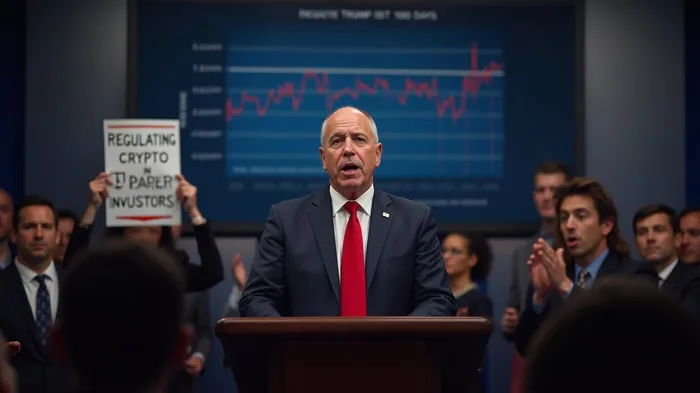






Comentarios
Aún no hay comentarios