
Trump's 10% Rate Cap: A Tactical Play on Banking Stocks
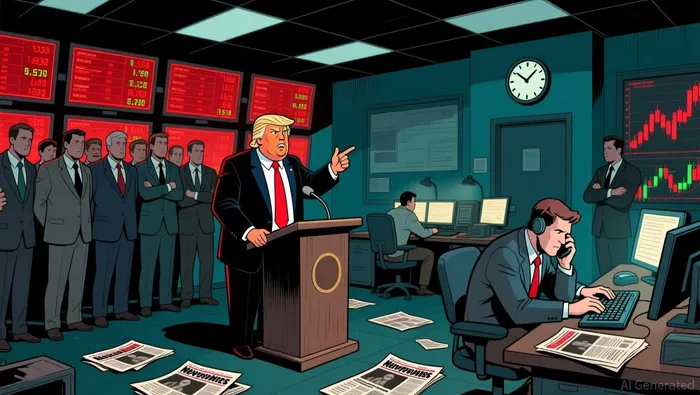
The immediate trigger is clear. On Friday, President Trump posted on Truth Social, reviving a campaign pledge with a direct call: effective January 20, 2026, I, as President of the United States, am calling for a one-year cap on Credit Card Interest Rates of 10%. He framed it as a populist move to stop consumers from being "ripped off" by companies charging rates of 20 to 30%. The market's first reaction was a swift sell-off. Shares in major card issuers fell in early trading, with VisaV-- and MastercardMA-- down more than 2% each, and American ExpressAXP-- dropping 4%. Other banks like JPMorganJPM-- and Bank of AmericaBAC-- also saw their stocks open lower.
The financial context makes the proposed cap a high-stakes event. The average U.S. credit card interest rate sits at roughly 20%, meaning a 10% cap would more than halve the typical rate. This isn't a minor adjustment; it targets the core profit engine for many banks. The scale of potential savings is massive, with researchers estimating Americans could save $100 billion in interest a year if the cap were implemented. Yet the industry's opposition is immediate and fierce, warning it would "drive consumers toward less regulated, more costly alternatives" and be "devastating" for credit availability.
This sets up the tactical play. The directive is a pure political catalyst, creating a clear mispricing in the short term. The market is pricing in a high probability of implementation, driving down valuations. But the immediate financial impact remains uncertain, hinging on a path that is far from clear. The president did not specify if the cap would come through executive action or legislation, and legal challenges from the industry are all but guaranteed. For now, the event has created a window of opportunity, but the setup is one of high volatility and significant execution risk.
The Financial Mechanics: A Threat to Margins
The proposed cap is not a minor tweak; it is a direct assault on the core profitability model for dominant credit card issuers. The average U.S. rate sits at roughly 20%, meaning a 10% ceiling would more than halve the typical rate charged to consumers. For a pure-play issuer, this isn't just a margin compression-it's a fundamental dismantling of the net interest margin that funds operations, rewards programs, and shareholder returns.
The financial mechanics are straightforward. If a bank can no longer charge 20% on a balance, its primary source of fee income evaporates. Analysts have noted that most banks would respond by cutting credit limits, closing riskier accounts, and scaling back rewards programs, as they simply couldn't cover losses at that price point. This creates a clear trade-off: either accept drastically lower profits or restrict credit availability to protect them.
The industry's warning underscores the severity. Banking associations have stated that a 10% cap would "reduce credit availability" and be "devastating" for millions of families and small businesses. Their argument is that the move would force lenders to retreat from high-risk borrowers, effectively "de-banking" them. This isn't just a theoretical risk; it's the direct consequence of making a key profit center unprofitable.
Yet the immediate path to implementation remains legally murky. The proposal revives a campaign pledge that analysts dismissed at the time, noting it would require congressional approval, not executive action. President Trump's call on Friday did not provide details on how the cap would be introduced or enforced. This uncertainty is a critical factor. While the market is pricing in a high probability of some form of cap, the lack of a clear legislative or regulatory pathway introduces a major execution risk. The financial threat is real, but the timeline and mechanism for its realization are still in flux.
The Setup: Scenarios and Catalysts
The immediate risk is a temporary mispricing driven by political fear. The market is reacting to the president's directive as if it were imminent, but the path to implementation faces significant legislative hurdles. The key catalyst to watch is Republican Senate support and the introduction of a formal bill. While Trump's call was made on Friday, it did not provide details on how the cap would be introduced or enforced. The critical next step is for a Republican senator to introduce legislation, which would move the threat from rhetoric to a tangible legislative risk. Analysts have noted that such a step requires congressional approval, not executive action, and the current narrow Republican majority in Congress adds a layer of uncertainty.
The key guardrail is the lack of details on enforcement and legal mechanism. This creates a major source of uncertainty that could limit sustained selling. Without a clear plan, the industry's opposition is fierce, warning the move would "reduce credit availability" and be "devastating" for millions. Yet the proposal has drawn support from an unlikely coalition, uniting populists with lawmakers like Bernie Sanders who have introduced similar bills in the past. The historical context shows these efforts have often languished in Congress, which tempers the immediate threat but does not eliminate it.
For now, the setup is one of high volatility. The market is pricing in a high probability of some form of cap, but the execution risk is substantial. The tactical play hinges on this uncertainty. If a bill is introduced and gains Republican backing, the threat becomes more real, and the sell-off could extend. If the proposal stalls, the initial panic may reverse. The event has created a window, but the catalysts for its resolution are still unfolding.







Comentarios
Aún no hay comentarios