
Trump's $1.5T Defense Budget Post: A Tactical Reversal Trade
The immediate catalyst was a stark reversal on President Trump's Truth Social platform. Just hours after a scathing post that sent defense stocks reeling, Trump pivoted to a powerful bullish call. In a post earlier this week, he declared the Pentagon's fiscal 2027 budget should be $1.5 Trillion Dollars, a roughly 50% increase from the current $1 trillion baseline. This wasn't a vague aspiration; it was a specific, headline-grabbing directive that created a clear, event-driven setup.
The market's reaction was a textbook reversal trade. Shares of key contractors like Lockheed MartinLMT-- (LMT) and Huntington IngallsHII-- (HII) each surged more than 7% in the regular session. This rally directly reversed the sharp pre-market plunge from the previous day, when Trump had threatened to prohibit dividends and buybacks for defense companies, calling them slow and overpriced. The pivot from threat to massive spending proposal reset the entire narrative overnight.
The thesis here is tactical. This Truth Social post is a pure catalyst event, creating a temporary mispricing. The rally is a classic "buy the rumor" move on a specific, high-impact policy shift. While the feasibility of a $500 billion annual increase remains a political and fiscal question, the immediate impact is clear: the market is pricing in the potential for a multi-year funding surge. For traders, this creates a short-term opportunity tied directly to the event's mechanics and the subsequent political maneuvering.
The Mechanics of the Reversal
The price action tells the full story of a market abruptly flipping its narrative. In the regular session, shares of defense contractors were hammered by Trump's earlier threat to prohibit dividends and buybacks. The after-hours recovery was a direct, mechanical reversal: Lockheed Martin stock rose 7%, Northrop GrummanNOC-- gained 4%, General DynamicsGD-- jumped 4.6%, and Huntington Ingalls increased 2%. This wasn't a tentative bounce; it was a sharp, broad-based rally that reset the entire trading day's damage.
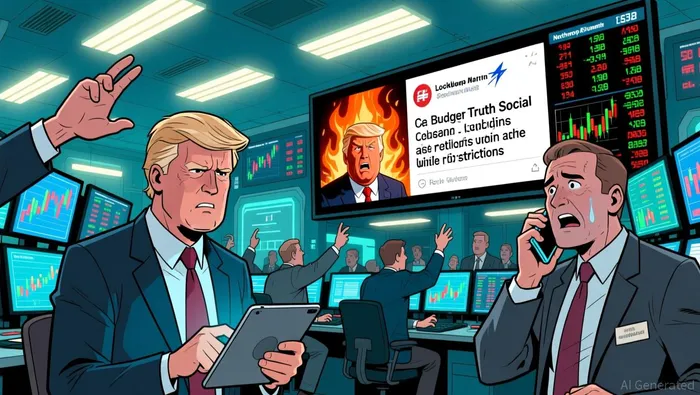
The market is interpreting Trump's Truth Social post as a clear policy pivot. His $1.5 Trillion Dollars directive for the 2027 budget is being priced as a direct replacement for his earlier punitive stance. The sector's primary growth driver-predictable, long-term capital investment-is now seen as secured, at least in theory. The rally is a classic "buy the rumor" move on a specific, high-impact policy shift, directly addressing the core vulnerability that the dividend ban highlighted.
This isn't just a U.S. story. The narrative is spreading globally. European defense stocks followed suit, with shares in European arms makers rising on Thursday to a fresh record high. The pan-European aerospace and defense index hit a new all-time high, led by a 6% jump in Britain's BAE Systems. This broad-based move indicates the market sees Trump's budget call as a signal of a sustained, global policy shift toward higher military spending, removing a major overhang on the entire sector.
The Setup: Catalysts and Risks Ahead
The market has priced in the bullish narrative. Now, traders must watch for the actual budget proposal to confirm or break the trade. The primary catalyst is the formal submission to Congress, which will provide the critical details on funding mechanisms and political feasibility. Until that official document lands, the Truth Social post remains a powerful but untested directive.
The key risk is political gridlock. While some Republican lawmakers have expressed support for higher defense spending, the path to a $1.5 trillion budget is fraught. The proposal would require a massive, multi-year legislative effort to fund a roughly 50% increase from the current baseline. Lawmakers have yet to pass a full-year defense appropriations bill for fiscal 2026, indicating the process is already underway but far from certain. Any delay or significant reduction in the formal proposal would likely trigger a sharp reversal in the recent rally.
A second major risk is the assumed funding source. Trump explicitly tied the increase to "tremendous numbers being produced by Tariffs". If tariff revenue fails to materialize as projected, the budget gap becomes a direct fiscal burden. This creates a vulnerability: the market's optimism is predicated on a specific, politically charged revenue stream that may not be reliable.
Finally, traders should watch for offsetting cuts. A $500 billion annual increase could force difficult trade-offs elsewhere in the federal budget. The market's current euphoria assumes the entire increase is new money, but if the proposal is offset by spending reductions in other areas, the net benefit to defense contractors could be muted.
The tactical setup is clear. The trade is event-driven, and the event is the formal budget submission. Watch for any divergence between the post's rhetoric and the actual proposal's details. Any sign of political friction, funding uncertainty, or offsetting cuts would be the catalyst to break the recent rally.





Comentarios
Aún no hay comentarios