
Trump's $1.5 Trillion Military Plan: A New Era for Defense Stocks?
The U.S. defense sector is at a pivotal juncture as President Donald Trump's proposed $1.5 trillion military budget for fiscal 2027 reshapes the landscape of strategic investment. This represents a 66% increase from the 2026 budget of $901 billion and signals a dramatic shift in fiscal priorities, driven by Trump's assertion of "troubled and dangerous times". For investors, the proposal raises critical questions: How will this surge in defense spending reshape the fortunes of major defense contractors? What are the risks and opportunities embedded in this policy shift? And how should institutional and retail investors position themselves in this evolving environment?
Market Volatility and Investor Sentiment
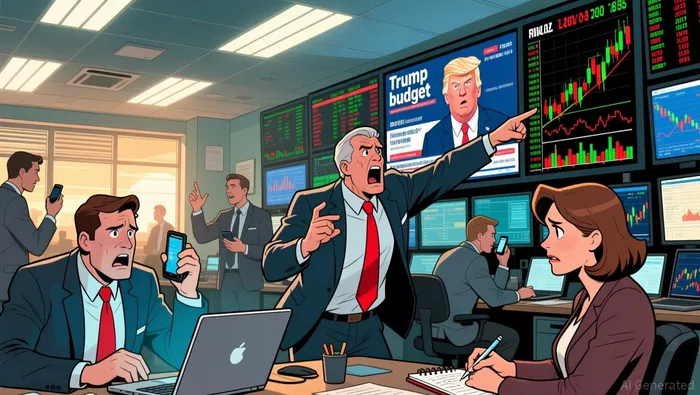
The announcement has already triggered significant market volatility. Defense stocks such as Lockheed MartinLMT-- (LMT), Northrop GrummanNOC-- (NOC), and General DynamicsGD-- (GD) experienced sharp intraday declines following Trump's warning that companies engaging in stock buybacks or dividends without reinvesting in manufacturing would face restrictions. However, the subsequent proposal to boost the defense budget by $1.5 trillion spurred a rebound, with Lockheed Martin's shares surging 7% in after-hours trading. This duality-punishment for short-term financial practices and reward for long-term strategic alignment-reflects a broader recalibration of investor expectations.
Analysts note that the sector's performance is also influenced by geopolitical dynamics. Rising tensions in the Middle East, East Asia, and the Arctic have reinforced the necessity of defense spending, creating a tailwind for companies with robust procurement pipelines. As one report by Investing.com highlights, defense stocks are increasingly viewed as "safe havens" in a world of heightened uncertainty.
Funding Challenges and Fiscal Realities
While Trump frames the budget increase as revenue-neutral-relying on tariff hikes from imports-experts caution that this logic is flawed. The Committee for a Responsible Federal Budget estimates that the plan would add $5.8 trillion to the national debt by 2035. This fiscal strain could limit long-term sustainability, particularly if tariff revenues fall short of projections. For investors, this underscores the importance of distinguishing between short-term policy rhetoric and long-term fiscal realities.
Moreover, Trump's threats to block Pentagon purchases from underperforming contractors, such as Raytheon, introduce operational risks for defense firms. Companies that fail to align with the administration's emphasis on "Dream Military" readiness-prioritizing production capacity over shareholder returns-may face reputational and financial headwinds.
Strategic Alignment and Sector Positioning
The proposed budget aligns with broader strategic shifts under Trump's administration, including a rebranding of the Department of Defense as the Department of War and a focus on unilateral action. This realignment favors firms with capabilities in next-generation technologies, such as hypersonic weapons, cyber defense, and AI-driven logistics. General Dynamics and Lockheed Martin, for instance, have already seen their stocks receive "Buy" ratings from analysts, reflecting confidence in their ability to capitalize on these trends.
From an institutional perspective, ETFs with exposure to the defense sector are gaining traction. BlackRock's defense-focused ETFs, for example, have attracted record inflows, capitalizing on global defense spending that reached $2.7 trillion in 2024 and is projected to exceed $3.6 trillion by 2030. While major banks like Goldman Sachs and JPMorgan have not yet issued specific sector weightings tied to the 2027 budget, the broader trend toward ETF allocations suggests a growing appetite for diversified exposure to the defense industry.
Risks and Long-Term Considerations
Investors must remain cautious. The feasibility of a $1.5 trillion budget hinges on congressional approval and the political will to sustain such a massive fiscal commitment. Additionally, the administration's focus on curbing corporate short-termism could lead to regulatory overreach, potentially stifling innovation and profitability. For example, Trump's executive order to tie executive compensation to long-term performance metrics may deter talent in a sector already grappling with labor shortages.
Conclusion: Balancing Opportunity and Caution
Trump's military plan represents a seismic shift in U.S. defense policy, with profound implications for investors. While the immediate outlook for defense stocks appears bullish-driven by geopolitical tensions and policy tailwinds-the long-term success of this strategy depends on fiscal discipline and operational execution. For strategic investors, the key lies in balancing exposure to high-conviction names like Lockheed Martin and General Dynamics with a diversified portfolio that accounts for macroeconomic risks. As the 2027 budget moves through the legislative process, vigilance will be paramount.





Comentarios
Aún no hay comentarios