
Trump's $1.5 Trillion Military Budget Would Add $5.8 Trillion to the National Debt, with Interest, CRFB Says
President Donald Trump has proposed increasing the U.S. military budget for 2027 to $1.5 trillion, a 66% rise from the current $901 billion 2026 budget. Trump cited 'dangerous and troubled times' as the justification for the increase.
The proposed budget comes amid heightened global military activity, including a recent U.S. operation that led to the capture of Venezuelan President Nicolás Maduro. Trump also mentioned potential military actions in the Western hemisphere, including a strategic interest in Greenland.
The financial implications of the proposed increase are substantial. According to the nonpartisan Committee for a Responsible Federal Budget, the increased spending would add $5.8 trillion to the national debt by 2035, with interest, even with Trump's plan to use tariff revenue to offset part of the cost.
Why Did This Happen?
Trump argued that the increased spending would allow the U.S. to build a 'Dream Military' that keeps the country safe and secure. He claimed that the additional revenue from tariffs would allow for the increased spending while paying down the national debt and providing 'substantial Dividend to moderate income Patriots'.
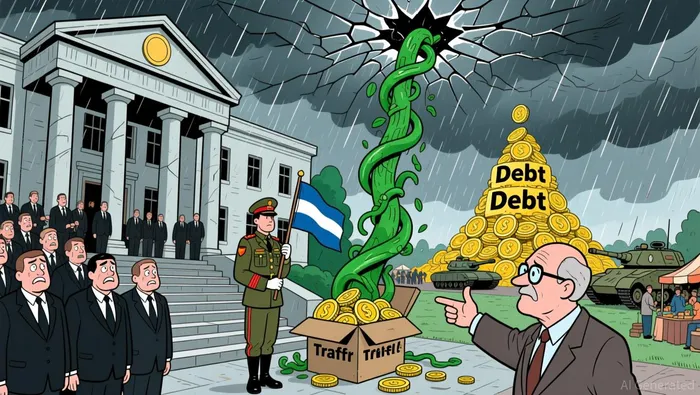
This proposal aligns with Trump's broader economic strategy, which includes imposing tariffs on imports and using the revenue to fund various domestic initiatives.
How Did Markets React?
Defense stocks experienced a significant rebound in after-hours trading following Trump's announcement. Shares of major defense contractors like Lockheed Martin and Northrop GrummanNOC-- rose by over 6%. European defense shares also surged, with companies like Rheinmetall and BAE Systems seeing gains of 2% and 6.5%, respectively.
Earlier in the day, defense stocks had fallen after Trump announced restrictions on stock buybacks and dividends for defense contractors. The market's positive reaction to the budget proposal indicates a strong expectation of increased defense spending.
What Are Analysts Watching Next?
Analysts are closely monitoring the feasibility of Trump's proposal, particularly the ability to fund the increased spending through tariffs. According to the Bipartisan Policy Center, the U.S. government collected $288.5 billion in tariff revenue in 2025, which could help offset some of the increased spending, but may not cover the full cost.
Congressional approval is another key factor. While Republicans could use reconciliation to pass the budget without Democratic support, deficit hawks within the GOP may oppose it. Additionally, legal challenges to Trump's tariffs could affect the revenue stream.
Market observers are also watching how defense contractors adapt to the new fiscal environment, including whether they will reduce dividends and focus more on manufacturing.
The overall economic implications, including potential impacts on the trade deficit and inflation, remain a concern. The U.S. trade deficit is at a 16-year low, but this may not be sustainable given ongoing trade tensions and tariff policies.







Comentarios
Aún no hay comentarios