
Truist's $10B Stock Buyback Program and Its Implications for Shareholder Value
Strategic Rationale: Balancing Growth and Shareholder Returns
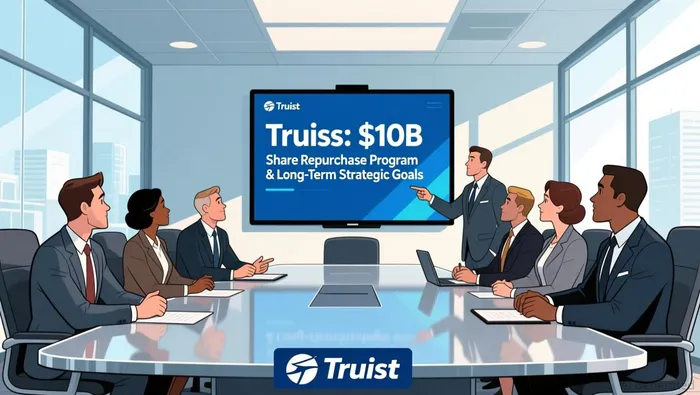 Truist's decision to authorize a significantly larger buyback program aligns with its long-term capital allocation discipline. Over the past five years, , outperforming many regional peers. This track record is bolstered by a strategic focus on infrastructure investments, as announced in investor updates. These initiatives aim to deepen client relationships, particularly with mass-affluent individuals, while enhancing operational efficiency.
. For instance, , the company for the second quarter, signaling confidence in its capital position. At the in September 2025, management for buybacks, emphasizing a balanced approach to growth, profitability, and shareholder returns. This consistency in capital return underscores Truist's disciplined approach to managing its equity base.
Financial Metrics and Shareholder Value Creation
The buyback program's potential to enhance shareholder value is evident in its projected impact on key financial metrics. By reducing the number of outstanding shares, , a critical factor in attracting investors. , reflecting its focus on optimizing capital.
Valuation analyses further support the case for Truist's buyback. According to the , the stock is , . This suggests that repurchasing shares at current prices could generate significant upside for remaining shareholders. Additionally, slightly above the banking industry average . Analysts argue that the market is pricing TruistTFC-- at a discount relative to its fundamentals, making the buyback an attractive tool for unlocking value.
Peer Comparison and Long-Term Discipline
Truist's capital allocation strategy distinguishes itself through a blend of strategic investments and disciplined buybacks. While many regional banks have prioritized cost-cutting, Truist has simultaneously expanded its commercial banking teams , targeting industrial and energy sectors. This dual focus on organic growth and shareholder returns positions the company to outperform peers in both revenue generation and capital efficiency.
Moreover, Truist's buyback program is designed to maintain strong capital ratios, ensuring it remains well-positioned to navigate economic uncertainties. Management has consistently emphasized , a practice that aligns with long-term value creation. This approach contrasts with short-term buybacks driven by temporary market volatility, which can erode capital if executed at inflated prices.
Conclusion: A Strategic Win for Shareholders
Truist's $10 billion buyback program represents a calculated move to enhance shareholder value while reinforcing its long-term capital allocation discipline. By leveraging its strong capital position, the company aims to drive EPS growth, improve ROE, and capitalize on its undervalued stock. Coupled with strategic investments in infrastructure and market expansion, this initiative reflects a holistic approach to creating sustainable returns for investors. As the banking sector continues to navigate a challenging macroeconomic environment, Truist's disciplined execution of its capital return strategy may serve as a model for balancing growth and shareholder rewards.







Comentarios
Aún no hay comentarios