
Trudeau Accuses Trump of Starting a US-Canada Trade War
Generado por agente de IAWesley Park
martes, 4 de marzo de 2025, 1:38 pm ET1 min de lectura
ANSC--
As the clock struck midnight on Tuesday, March 4, 2025, the United States officially imposed a 25% tariff on all imports from Canada and Mexico, marking the beginning of a new chapter in the contentious relationship between the two North American neighbors. Canadian Prime Minister Justin Trudeau was quick to respond, accusing U.S. President Donald Trump of starting a trade war that could have severe consequences for both countries.
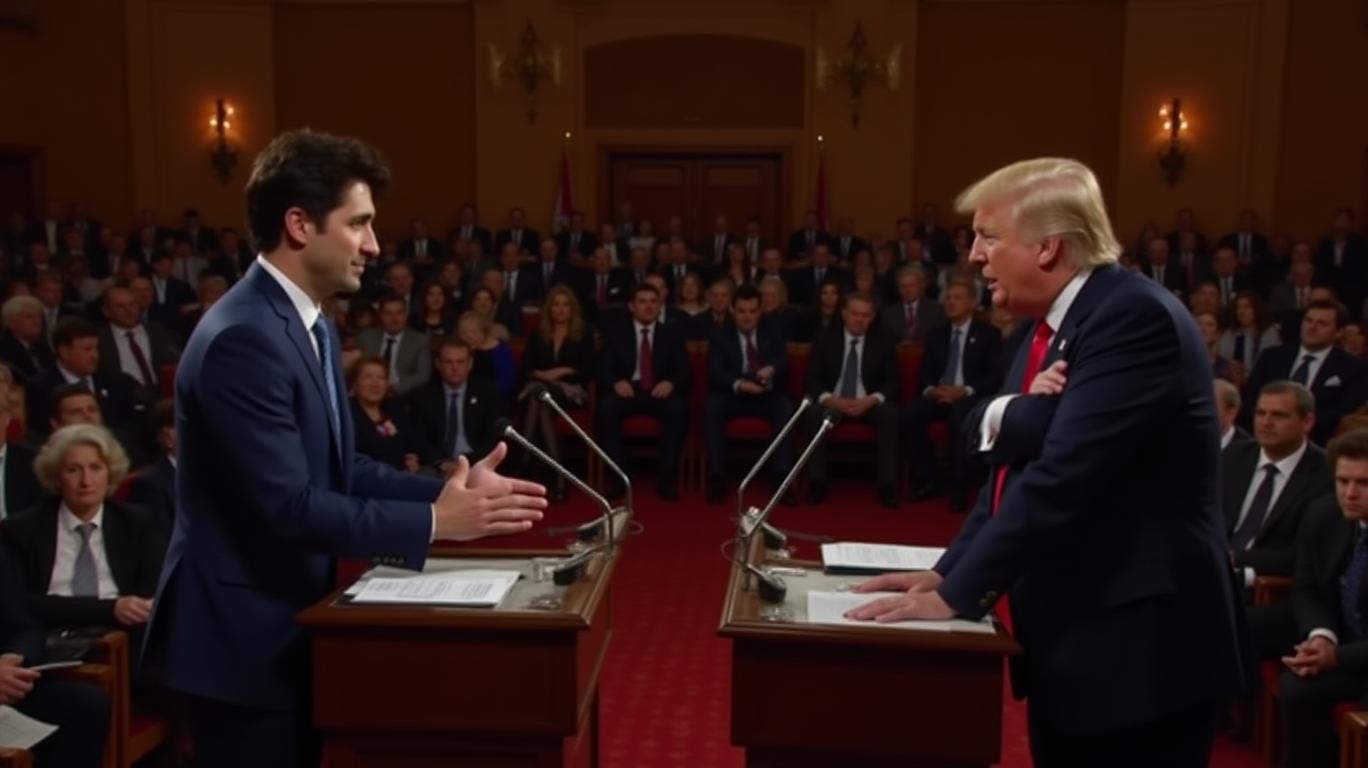
The U.S. tariffs, which also include a 10% levy on Canadian energy imports, were initially justified by Trump as a response to the flow of fentanyl and migrants across the U.S. borders with Canada and Mexico. However, Canadian officials have argued that less than 1% of the fentanyl entering the U.S. comes from Canada, and they have taken steps to address the issue. Despite these efforts, Trump has pressed ahead with the tariffs, which have been widely criticized as an attempt to strong-arm Canada into accepting his demands.
In response to the U.S. tariffs, Trudeau announced that Canada would impose retaliatory tariffs on $155 billion worth of American goods. The first wave of tariffs, totaling $30 billion, went into effect immediately, with the remaining $125 billion set to follow in 21 days. Trudeau warned that Canada would not back down from the trade war, stating that "our response will also be far reaching."
The U.S. tariffs on Canada are expected to have a significant impact on the Canadian economy, particularly in sectors like energy, agricultureANSC--, and manufacturing. Canadian officials have warned that a prolonged trade conflict with the U.S. could lead to a 3% decline in gross domestic product over two years. The retaliatory tariffs imposed by Canada are likely to exacerbate these economic challenges, as they will increase the cost of American goods for Canadian consumers and businesses.
The political dynamics between the U.S. and Canada are likely to become increasingly tense and adversarial in response to the trade war. The retaliatory measures taken by Canada could lead to further escalation, with both countries imposing tariffs on each other's goods. This could strain the long-standing friendship between the two nations and make it more difficult to negotiate future trade agreements or cooperate on other issues.
In conclusion, the U.S. tariffs on Canada have set the stage for a potentially damaging trade war between the two North American neighbors. The retaliatory measures taken by Canada are likely to exacerbate the economic challenges faced by both countries, and the political dynamics between the two nations are likely to become increasingly tense and adversarial. It is crucial for both countries to find a diplomatic solution to the trade war to avoid further damage to their relationship and the broader North American economy.
As the clock struck midnight on Tuesday, March 4, 2025, the United States officially imposed a 25% tariff on all imports from Canada and Mexico, marking the beginning of a new chapter in the contentious relationship between the two North American neighbors. Canadian Prime Minister Justin Trudeau was quick to respond, accusing U.S. President Donald Trump of starting a trade war that could have severe consequences for both countries.
The U.S. tariffs, which also include a 10% levy on Canadian energy imports, were initially justified by Trump as a response to the flow of fentanyl and migrants across the U.S. borders with Canada and Mexico. However, Canadian officials have argued that less than 1% of the fentanyl entering the U.S. comes from Canada, and they have taken steps to address the issue. Despite these efforts, Trump has pressed ahead with the tariffs, which have been widely criticized as an attempt to strong-arm Canada into accepting his demands.
In response to the U.S. tariffs, Trudeau announced that Canada would impose retaliatory tariffs on $155 billion worth of American goods. The first wave of tariffs, totaling $30 billion, went into effect immediately, with the remaining $125 billion set to follow in 21 days. Trudeau warned that Canada would not back down from the trade war, stating that "our response will also be far reaching."
The U.S. tariffs on Canada are expected to have a significant impact on the Canadian economy, particularly in sectors like energy, agricultureANSC--, and manufacturing. Canadian officials have warned that a prolonged trade conflict with the U.S. could lead to a 3% decline in gross domestic product over two years. The retaliatory tariffs imposed by Canada are likely to exacerbate these economic challenges, as they will increase the cost of American goods for Canadian consumers and businesses.
The political dynamics between the U.S. and Canada are likely to become increasingly tense and adversarial in response to the trade war. The retaliatory measures taken by Canada could lead to further escalation, with both countries imposing tariffs on each other's goods. This could strain the long-standing friendship between the two nations and make it more difficult to negotiate future trade agreements or cooperate on other issues.
In conclusion, the U.S. tariffs on Canada have set the stage for a potentially damaging trade war between the two North American neighbors. The retaliatory measures taken by Canada are likely to exacerbate the economic challenges faced by both countries, and the political dynamics between the two nations are likely to become increasingly tense and adversarial. It is crucial for both countries to find a diplomatic solution to the trade war to avoid further damage to their relationship and the broader North American economy.

Divulgación editorial y transparencia de la IA: Ainvest News utiliza tecnología avanzada de Modelos de Lenguaje Largo (LLM) para sintetizar y analizar datos de mercado en tiempo real. Para garantizar los más altos estándares de integridad, cada artículo se somete a un riguroso proceso de verificación con participación humana.
Mientras la IA asiste en el procesamiento de datos y la redacción inicial, un miembro editorial profesional de Ainvest revisa, verifica y aprueba de forma independiente todo el contenido para garantizar su precisión y cumplimiento con los estándares editoriales de Ainvest Fintech Inc. Esta supervisión humana está diseñada para mitigar las alucinaciones de la IA y garantizar el contexto financiero.
Advertencia sobre inversiones: Este contenido se proporciona únicamente con fines informativos y no constituye asesoramiento profesional de inversión, legal o financiero. Los mercados conllevan riesgos inherentes. Se recomienda a los usuarios que realicen una investigación independiente o consulten a un asesor financiero certificado antes de tomar cualquier decisión. Ainvest Fintech Inc. se exime de toda responsabilidad por las acciones tomadas con base en esta información. ¿Encontró un error? Reportar un problema




Comentarios
Aún no hay comentarios