
TROOPS Inc and Legal Risks in Offshore Jurisdictions: Assessing the Cayman Court Ruling's Impact on Shareholder Confidence and Valuation
The recent Cayman Islands court ruling in In the Matter of TROOPS Inc has cast a long shadow over the future of the social media platform operator, underscoring the precarious interplay between offshore legal frameworks and investor confidence. As TROOPS IncTROO--. (TROO) faces a winding-up petition tied to a $51.9 million Hong Kong High Court judgment, as reported by Panabee, the case has become a litmus test for how legal uncertainties in offshore jurisdictions-particularly the Cayman Islands-can erode shareholder trust and depress long-term valuations.
Legal Uncertainties and the Cayman Court's Stance
The Cayman Court's dismissal of the ex parte application for joint provisional liquidators (JPLs) highlights the jurisdiction's cautious approach to insolvency interventions. The court emphasized that the appointment of JPLs-a highly intrusive measure-requires "clear and compelling evidence" of necessity, which the petitioner failed to demonstrate, as Collas Crill explains. This ruling aligns with broader trends in Cayman jurisprudence, where courts prioritize balancing creditor rights with the need to avoid premature liquidation of viable entities. However, for TROOPSTROO--, the ruling offers limited solace. The company remains under existential threat as the October 9, 2025, hearing for the winding-up petition looms, according to the Panabee report, with creditors asserting insolvency or "just and equitable" grounds for liquidation.
The Hong Kong judgment itself-a $51.9 million liability for TROOPS and its subsidiaries-has already triggered a cascade of financial and reputational risks. According to a StockTitan report, the judgment stems from a dispute involving alleged conspiracy and a disputed restructuring plan. While TROOPS has vowed to appeal and pursue a U.S. class-action lawsuit against FTI Consulting for "malicious prosecution," as outlined in a GuruFocus report, the lack of detailed financial disclosures about the judgment's impact on its balance sheet has left investors in the dark. This opacity exacerbates concerns about the company's going-concern status, a critical factor for equity valuation.
Offshore Legal Risks and Investor Sentiment
The TROOPS case is emblematic of broader investor anxieties about offshore legal risks. Over the past year, the Cayman Islands and Hong Kong have seen heightened scrutiny of cross-border insolvency proceedings, AML compliance, and shareholder dispute resolution. For instance, the Safe Hands Plans scandal-where mismanaged offshore funds led to massive investor losses-has amplified calls for stricter regulatory oversight, as noted in a Conyers analysis. Meanwhile, the Cayman Islands' removal from the EU's AML high-risk list in 2024 has not fully quelled concerns, as the jurisdiction remains under enhanced FATF monitoring, per an Ogier article.
Investor confidence in offshore tech firms has also been dented by precedents like In the Matter of Madera Technology Fund (CI) Ltd, where the Cayman Court emphasized that share valuations in buy-out orders hinge on market forces and the fairness of offers, as discussed in a Conventus report. This precedent suggests that even if TROOPS avoids liquidation, its shareholders may face diluted value if a buy-out or restructuring is mandated. Similarly, the British Virgin Islands' Sian Participation Corp ruling clarified that arbitration clauses do not automatically stay winding-up petitions unless debts are genuinely disputed, according to a Walkers analysis. For TROOPS, this means its legal arguments based on arbitration may not provide a shield against creditors.
Valuation Implications and Stock Price Volatility
TROOPS's stock price has mirrored the turbulence of its legal and financial landscape. Data from Yahoo Finance indicates a 74% drop in the stock's value over the preceding year, with intermittent surges-such as a peak of $1.40 on October 7, 2025-reflecting speculative bets on potential appeals or restructuring, per a Coincodex forecast. The company's July 2025 share buyback program, which repurchased 4.4 million shares at $0.90 each, was reported by MarketsGoneWild, and represented a strategic move to bolster shareholder value. However, with the Nasdaq at risk of delisting TROOPS due to its share price falling below the $1 minimum, the buyback's impact remains limited.
The valuation risks extend beyond TROOPS. A study of Cayman winding-up petitions from 2020–2025 reveals that companies facing such proceedings often experience a 50–70% devaluation in equity, as liquidation prioritizes creditors, according to a Harneys analysis. For TROOPS, this dynamic could leave little to no value for shareholders, even if the company avoids full liquidation.
Conclusion: A Cautionary Tale for Offshore Investors
The TROOPS case underscores the fragility of valuations in offshore jurisdictions where legal uncertainties and regulatory complexities intersect. While the Cayman Court's recent dismissal of the JPL application offers a temporary reprieve, the looming October hearing and the Hong Kong judgment remain existential threats. For investors, the lesson is clear: offshore structures, while historically favored for their flexibility, now demand rigorous due diligence on legal and regulatory risks. As TROOPS navigates its legal battles, its fate may serve as a bellwether for how courts and markets balance creditor rights, shareholder interests, and the survival of high-risk tech ventures in an increasingly scrutinized offshore landscape. 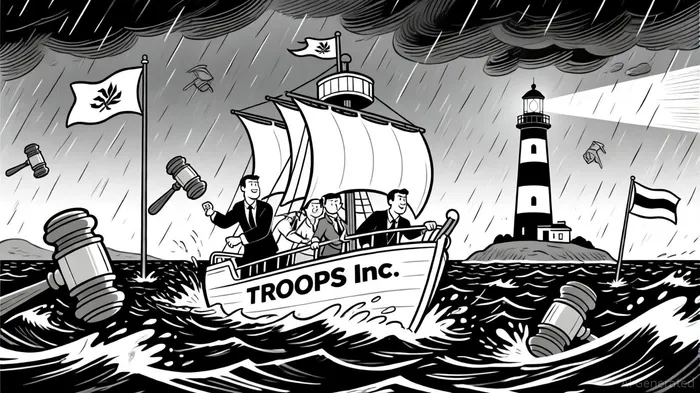





Comentarios
Aún no hay comentarios