
TRON's Fundamentals-Price Divergence: A Contrarian Buy Opportunity?
The cryptocurrency market has long been a theater of paradoxes, where token prices often diverge from underlying network fundamentals. TRONTRX-- (TRX), a blockchain platform renowned for its role in stablecoin settlements, exemplifies this dissonance. Despite surging user growth, record transaction volumes, and expanding institutional partnerships, TRX's price has lagged, trading below $0.32 in October 2025 and declining further in Q4 2025. This article examines whether TRON's fundamentals-price divergence presents a contrarian investment opportunity, analyzing its ecosystem strength, market dynamics, and long-term potential.
Fundamentals: A Network on the Rise
TRON's infrastructure has solidified its position as a dominant force in the stablecoin ecosystem. By H1 2025, the network accounted for 51% of all USDT in circulation, with supply surging 41% to $81.2 billion. This dominance is underpinned by TRON's low fees and high throughput, enabling it to process 784 million transactions in Q2 2025, the second-highest in its history. By November 2025, the network had surpassed 355 million total accounts, with daily new user sign-ups exceeding 240,000-a 26.3% annual growth rate.
The platform's utility extends beyond stablecoins. Total Value Locked (TVL) in TRON's DeFi ecosystem reached $6.2 billion in Q3 2025, driven by protocols like JustLend and USD1USD1-- stablecoin. Strategic integrations with AEON Pay, ChainlinkLINK--, and MoonPay further expanded TRON's reach in Web3, while a proposed on-chain transaction batching system aims to reduce costs for high-volume users. These developments position TRON as a scalable, cost-efficient Layer-1 blockchain, competing directly with EthereumETH-- and Binance Smart Chain (BSC).
Price Underperformance: A Market Disconnect?
Despite these fundamentals, TRX's price performance has been lackluster. In Q4 2025, the token fell over 16% from October to December, even as network adoption continued to rise. As of late 2025, TRX traded around $0.28, with a market capitalization of $26.6 billion. Technical indicators suggest a neutral-to-bearish short-term trend: the price is below the 50-day moving average but above the 200-day average, with key resistance levels at $0.235 and $0.245.
This divergence raises questions about market sentiment. While TRON's user base and TVL have grown, broader crypto market conditions-such as macroeconomic uncertainty and regulatory scrutiny-have dampened investor enthusiasm. Additionally, retail sentiment remains negative, creating a contrarian opportunity for investors who recognize the network's long-term utility.
Market Context: Competing in a Crowded Space
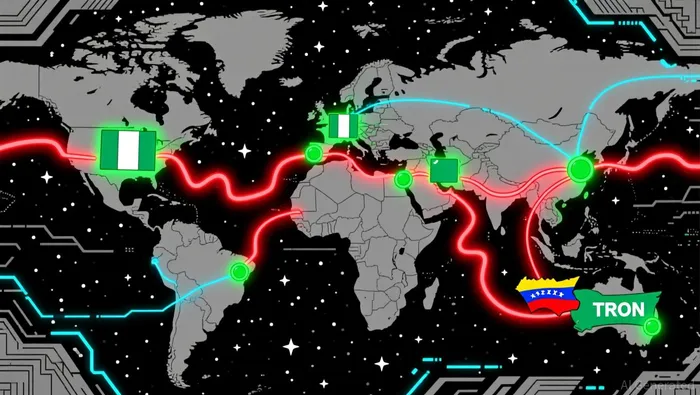
TRON's valuation metrics outperform many competitors in key operational metrics. In Q3 2025, TRON recorded a 99% transaction success rate, surpassing Ethereum (97%) and BSC (94%). It also attracted 74% of daily active users to engage in peer-to-peer (P2P) transactions, commanding a 65% global share of retail USDTUSDT-- transfers under $1,000. These figures highlight TRON's role as a preferred platform for low-cost, high-speed transactions, particularly in emerging markets like Venezuela, Turkey, and Nigeria.
However, TRON faces stiff competition from Ethereum and BSC in broader market valuation. Ethereum's market cap ($355.31 billion) dwarfs TRON's ($26.37 billion), while BSC benefits from Binance's institutional ecosystem. Yet, TRON's niche in stablecoin settlements and retail transactions-supported by a 60% reduction in energy fees in August 2025-has driven adoption, enabling it to surpass 2.5 million daily active users.
Contrarian Investment Thesis: Risks and Rewards
The case for TRON as a contrarian buy hinges on its on-chain utility and ecosystem growth. Processing over 70% of global USDT transactions, TRON's infrastructure is deeply embedded in the stablecoin market, which represents 26% of total stablecoin market capitalization ($80.842 billion). This utility-driven activity generates consistent network revenue, with Q3 2025 revenue hitting an all-time high of $1.2 billion.
Moreover, TRON's institutional credibility is growing. A proposed reverse merger with Nasdaq-listed SRM Entertainment and the SEC's acknowledgment of a staked TRXTRX-- ETF filing signal increasing legitimacy. The network's recent EVM alignment and infrastructure upgrades also enhance its appeal for decentralized applications (dApps) and cross-chain interoperability.
Yet, risks persist. TRON's DPoS consensus mechanism, with 27 Super Representatives, has drawn criticism for centralization concerns. Founder Justin Sun's influence remains a wildcard, as his actions can drive volatility. Regulatory uncertainty, particularly around stablecoin operations, also looms large.
Conclusion: A Long-Term Play with Caveats
TRON's fundamentals-price divergence reflects a market that has yet to fully price in the network's utility and adoption. While short-term risks-such as regulatory scrutiny and competition-remain, the platform's dominance in stablecoin settlements, expanding DeFi ecosystem, and cost-efficient infrastructure position it as a long-term contender. For investors prioritizing on-chain utility over speculative returns, TRON offers a compelling case. However, patience and a clear understanding of the risks are essential.
As one analyst noted, "TRX may be suitable for investors prioritizing ecosystem growth over immediate price appreciation. Its role in low-cost transactions and stablecoin transfers, combined with a growing DeFi ecosystem, positions it as a long-term contender in the crypto space, albeit with notable risks that warrant close monitoring."






Comentarios
Aún no hay comentarios