
Trinseo's Strategic Edge in Chemical Recycling: Pioneering the Circular Plastics Economy
Technological Innovations: Building a Circular Plastics Infrastructure
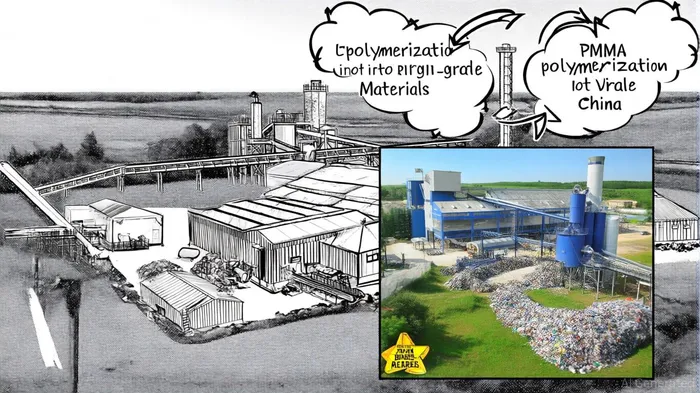
Trinseo's recent advancements in chemical recycling underscore its commitment to transforming waste into high-value resources. The company has pioneered depolymerization and dissolution technologies, which enable the breakdown of complex polymers like polymethyl methacrylate (PMMA), polycarbonate (PC), and polystyrene (PS) into their original monomers. These monomers can then be repolymerized into virgin-quality materials, closing the loop in the plastics lifecycle, according to Trinseo's 2024 results.
A pivotal milestone was the launch of Trinseo's first chemical recycling demonstration facility in Rho, Italy, dedicated to PMMA depolymerization in 2024. Complementing this, a PC dissolution pilot facility in Terneuzen, Netherlands further expanded the company's capacity to process post-consumer and post-industrial waste. These facilities not only align with Trinseo's 2030 sustainability goals but also address the growing demand for circular solutions in industries such as automotive, electronics, and construction.
Looking ahead, Trinseo's $20 million investment in a PC recycling initiative in Zhangjiagang, China signals its intent to scale these technologies globally, as detailed in the Zhangjiagang plant announcement. This initiative is expected to bolster local recycling infrastructure and reduce reliance on fossil-based feedstocks, a critical step in decarbonizing the plastics value chain.
Strategic Partnerships: Strengthening the Circular Ecosystem
Trinseo's strategic acquisitions and collaborations have been instrumental in accelerating its circular economy ambitions. In 2022, the company acquired Heathland B.V., a European plastics recycler specializing in engineered plastic waste. This acquisition provided Trinseo with access to high-quality waste streams and expertise in processing complex materials, as described in "Supporting a Circular Model".
Additionally, Trinseo's participation in the ABSolEU project, an EU Horizon Programme initiative, highlights its commitment to tackling the recycling challenges of acrylonitrile butadiene styrene (ABS) plastics; this engagement is also discussed in the same post. By collaborating with academic and industry partners, Trinseo is developing scalable solutions to recycle ABS, a material traditionally difficult to process due to its composite structure.
These partnerships not only enhance Trinseo's technical capabilities but also align with regulatory trends. As the European Union and other regions tighten sustainability mandates, companies with robust recycling infrastructure will gain a competitive edge-Trinseo is proactively building that edge.
Financial Resilience Amid Industry Challenges
Trinseo demonstrated financial resilience in 2024 despite macroeconomic headwinds. The company reported a net loss of $349 million for the year, a significant improvement from the $701 million loss in 2023. This turnaround was driven by the absence of a $350 million goodwill impairment charge in 2023 and a $50 million increase in Adjusted EBITDA to $204 million.
Trinseo's Q4 2024 performance further reinforced this trend: the company achieved a $64 million Free Cash Flow, the highest in over two years, attributed to improved core business results and reduced working capital balances, according to a TheChemicalData report. Strategic divestitures, such as the sale of its Stade, Germany polycarbonate assets for $52 million, also bolstered liquidity, increasing pro forma cash reserves to $492 million.
Future Outlook: Navigating Challenges, Capitalizing on Opportunities
While Trinseo faces near-term challenges-such as weak demand in automotive and construction markets-the company's long-term strategy remains intact. For Q1 2025, Trinseo forecasts a net loss of $40–60 million but expects Adjusted EBITDA of $60–80 million, per the cited coverage. This outlook reflects cautious optimism, as the company continues to optimize operations and pass through raw material cost savings to customers.
The Zhangjiagang PC recycling project and ongoing R&D in monomer recycling via depolymerization are poised to drive future growth. By 2025, Trinseo aims to scale these technologies into commercial production, potentially capturing a larger share of the $1.5 trillion global plastics market.
Conclusion: A Strategic Leader in the Circular Economy
Trinseo's dual focus on technological innovation and strategic partnerships positions it as a leader in the transition to a circular plastics economy. While financial performance in 2024 was mixed, the company's progress in reducing emissions (31% reduction in greenhouse gas emissions in 2024) and expanding recycling infrastructure demonstrates a clear alignment with global sustainability goals. For investors, Trinseo represents a compelling case study in how traditional chemical companies can adapt to a low-carbon future-transforming waste into value and risk into resilience.





Comentarios
Aún no hay comentarios