
Trilogy Metals and the National Security-Driven Critical Minerals Push: A Strategic Investment Analysis
Trilogy Metals and the National Security-Driven Critical Minerals Push: A Strategic Investment Analysis
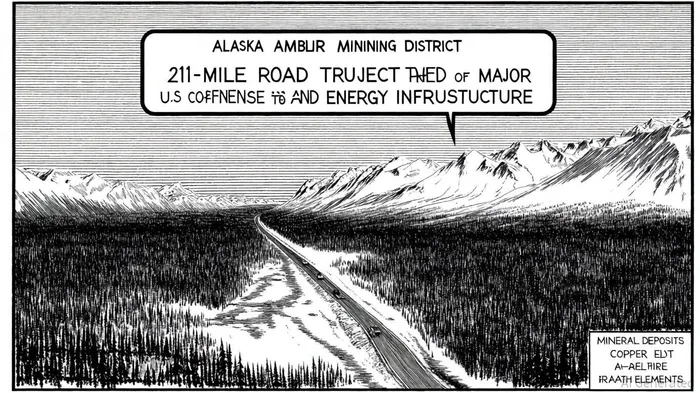
The U.S. Federal Government's recent $35.6 million investment in Trilogy Metals Inc. (TMQ) marks a pivotal moment in the nation's strategy to secure critical mineral supply chains. By acquiring a 10% stake in the company and warrants for an additional 7.5% share, the government has positioned itself as a key player in Alaska's Ambler Mining District-a region rich in copper, cobalt, gallium, and germanium, all of which are indispensable for national security, energy infrastructure, and advanced technologies, according to a GovFacts analysis. This move, announced under President Trump's energy agenda, reverses a prior Biden-era rejection of the Ambler Road Project, a 211-mile access road critical to unlocking the district's mineral potential, as reported in a Bloomberg report.
Strategic Context: Critical Minerals as a National Security Imperative
The U.S. Department of the Interior's 2025 draft List of Critical Minerals-which includes 54 commodities-underscores the urgency of domestic resource development. Minerals like rare earth elements (e.g., samarium, terbium) and gallium are essential for precision-guided munitions, satellite systems, and semiconductor manufacturing. China's dominance in processing these materials-controlling 65% of global lithium refining and over 80% of rare earth element processing-creates a strategic vulnerability, the GovFacts analysis notes. For instance, a hypothetical restriction of U.S. rhodium imports from South Africa could reduce GDP by $64 billion, a risk the Interior's release highlights.
The Ambler Mining District's potential to produce 1.3 million tons of copper and 120,000 tons of cobalt annually, the Silverado report estimates, aligns with the Biden administration's goal to reduce reliance on foreign sources. Copper, in particular, is vital for electric grids and defense systems, while cobalt is a cornerstone of battery technologies for both civilian and military applications.
The Ambler Road Project: A Gateway to Resilience
The approval of the Ambler Road Project, long stalled due to environmental and regulatory hurdles, is a linchpin of this strategy. As stated by Bloomberg, the road will enable the extraction of minerals from one of the largest undeveloped copper deposits in the Western Hemisphere. This infrastructure investment not only facilitates Trilogy Metals' operations but also supports broader U.S. efforts to diversify supply chains. For example, the road could serve as a hub for recycling and refining operations, reducing the need to import processed materials from China, as noted in a NewsRamp article.
Economic and National Security Implications
The U.S. strategy for critical minerals is built on four pillars: onshoring domestic production, friend-shoring with allies, recycling, and technological innovation, a framework outlined in the GovFacts analysis. Trilogy's project exemplifies the first pillar. By securing a federal stake, the government ensures that the Ambler District's resources are prioritized for domestic use, mitigating risks from geopolitical tensions or trade disruptions.
Demand projections further justify this investment. The International Energy Agency estimates that demand for energy transition minerals could surge 20–40 times by 2040, a projection highlighted in the GovFacts analysis. For defense applications, the Silverado report identifies 12 minerals-such as antimony and germanium-as posing the highest national security risks due to their dual-use roles in UAVs, cyber systems, and advanced weaponry. Trilogy's focus on these minerals positions it at the intersection of energy and defense needs.
Challenges and the Path Forward
Despite its promise, the Ambler project faces challenges. Environmental concerns, particularly in Alaska's ecologically sensitive regions, could delay permits or trigger legal challenges. Additionally, the U.S. lacks sufficient domestic refining capacity for many critical minerals, a gap that must be addressed to fully realize the strategic value of raw material extraction, Bloomberg reporting has cautioned.
However, the government's investment in Trilogy MetalsTMQ-- signals a commitment to overcoming these hurdles. By leveraging federal resources and partnerships with private-sector innovators, the U.S. aims to build a resilient supply chain that rivals China's dominance.
Conclusion: A Win-Win for Investors and National Security
For investors, Trilogy Metals represents a unique opportunity to participate in a resource play directly tied to national security priorities. The company's alignment with the U.S. government's critical minerals agenda-coupled with the Ambler Road Project's potential to unlock billions in mineral value-positions it as a key player in the energy transition and defense sectors.
As global competition for critical minerals intensifies, the U.S. is betting on domestic projects like Ambler to secure its technological and military edge. For Trilogy Metals, this investment is not just a financial boon-it's a strategic lifeline in the race to redefine global mineral supply chains.





Comentarios
Aún no hay comentarios