
Trican Well Service: A Beacon of Resilience in Energy's Turbulent Seas – Why Now is the Time to Invest
In an energy sector rattled by geopolitical volatility, fluctuating commodity prices, and the dual pressures of decarbonization, few companies exemplify the power of strategic foresight and operational innovation like Trican Well Service (TCAN). With an 11% dividend hike, a $10 million tech modernization push, and a relentless focus on cost efficiency and sustainability, Trican is positioning itself as a winner in the energy transition while delivering immediate income to shareholders. Let’s dissect why this is a rare buy signal for investors seeking both stability and growth.
Dividend Discipline and Shareholder Returns: A Formula for Long-Term Value
Trican’s May 12 announcement of a $0.05-per-share dividend (up 11% year-over-year) underscores its financial strength. This dividend, paired with its aggressive share buyback program, creates a dual-engine growth strategy:
- NCIB Progress: With 61% of its 2024–2025 NCIB program completed, Trican has repurchased ~6.6 million shares since late 2024, reducing dilution and boosting long-term EPS. Since 2017, it has repurchased 51% of its outstanding shares, a testament to its shareholder-friendly culture.
- Free Cash Flow Fortification: Despite a $43 million free cash flow in Q1 (down 14% year-over-year due to capital spending), Trican’s $159 million working capital acts as a buffer against near-term headwinds like inflation and U.S. tariffs on steel/aluminum.
Tech Modernization: The Secret Sauce for Sustainable Dominance
Trican’s $10 million investment in AI/data analytics and electric ancillary equipment isn’t just about staying ahead—it’s about rewriting the rules of the game. Consider these game-changers:
- Tier 4 Dynamic Gas Blending (DGB) Fleets: Five active fleets with 210,000 HHP capacity now use natural gas instead of diesel, cutting fuel costs by 90% and slashing emissions. This tech is critical for high-pressure jobs in the Duvernay and Montney reservoirs, where demand outstrips supply.
- Electric Ancillary Upgrades: Completing its third group of electric units in Q1 and starting a fourth, Trican reduces idle time and operating costs, while aligning with ESG mandates.
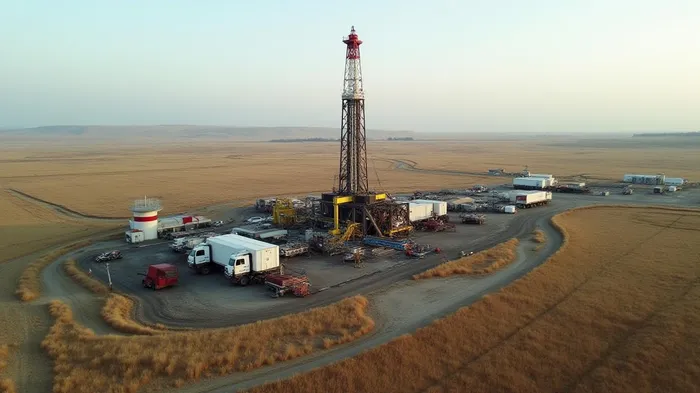
Structural Growth: Riding the Canadian LNG and Resource Plays Surge
The expansion of LNG export capacity (Cedar LNG, Woodfibre LNG) and the Montney/Duvernay drilling boom are tailwinds for Trican’s high-margin services:
- Montney’s Scale: With ~30 billion barrels of oil equivalent, this reservoir alone could fuel decades of activity. Trican’s Tier 4 fleets are uniquely suited to its complex geology.
- LNG-Linked Demand: Rising global gas demand, especially from Asia, is boosting Canadian production. Trican’s natural gas-powered fleets are a direct beneficiary, as they lower costs for producers in a price-sensitive market.
Risks? Mitigated by Smarter Capital Allocation
- U.S. Tariffs: While steel/aluminum tariffs could add $15/ton to frac sand costs, Trican is passing these to customers and lobbying for tariff exclusions.
- Commodity Volatility: Its focus on technology-driven, high-margin services (e.g., coiled tubing, cementing) insulates it from raw price swings.
Valuation: A Rare Entry Point for Energy Transition Winners
At a $4.16 share price (vs. an average target of $5.53), Trican trades at a 28% discount to consensus estimates. With:
- $0.56 EPS projected for .
- A 3.4% dividend yield (vs. the TSX average of 1.5%).
- A low debt-to-equity ratio (0.3x) and a $159 million cash runway, this is a buy signal for investors seeking both income and growth.
Conclusion: Trican’s Future is Bright – Act Before the Crowd
Trican Well Service isn’t just surviving—it’s redefining the energy services landscape. Its blend of dividend growth, disciplined buybacks, and tech-driven operational excellence positions it to capitalize on $100+ billion in Canadian LNG and drilling investments over the next decade. With a 33% upside to analyst targets and a valuation that ignores its sustainability edge, now is the time to act before the market catches on.
This is more than an investment—it’s a bet on the future of energy, with a dividend yield to reward you while you wait.
Investors should consider their risk tolerance and consult with a financial advisor before making investment decisions.







Comentarios
Aún no hay comentarios