
Tri Pointe Homes: Pioneering the 55+ Housing Gold Rush—Is This the Stock to Outrun the Housing Slump?
The U.S. housing market is in a tailspin, with affordability crises, rising interest rates, and a generational shift in buyer behavior creating a perfect storm. Yet, amid this chaos, Tri Pointe HomesTPH-- (TPH) is doubling down on a demographic dividend that could redefine its fortunes: the explosive growth of the 55+ housing segment. With the aging population poised to balloon by 12 million by 2033, this isn't just a niche play—it's a $275 billion supply gap waiting to be filled. But is TPH's pivot to 55+ housing a masterstroke, or is it chasing a mirage in a market already crowded with competitors? Let's break it down.
The 55+ Housing Market: A Structural Tailwind, Not a Cyclical Fluke
The data is irrefutable. By 2030, the 80+ population will outpace inventory growth by a staggering margin, and the 55+ demographic is healthier, wealthier, and more socially engaged than ever. These buyers aren't just looking for a house—they're seeking communities that offer vitality, connectivity, and low-maintenance living. Traditional active adult communities, with their cookie-cutter designs and outdated amenities, are losing relevance. Enter Tri Pointe's Life360 platform, a bold reimagining of 55+ living centered on vitality, adventure, connectivity, and style.
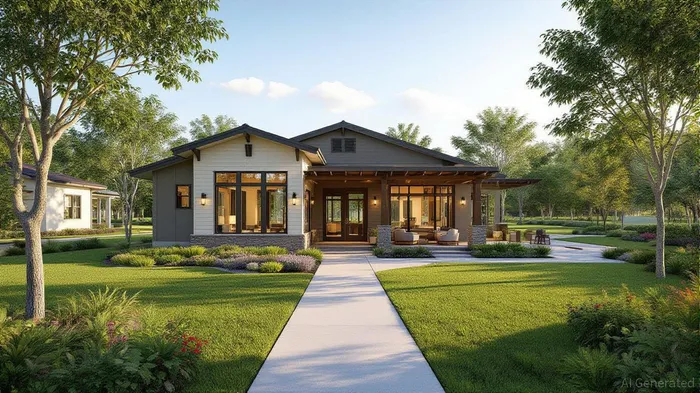
Take Altis, Tri Pointe's flagship 55+ community in California's Inland Empire. It's not just a place to retire—it's a lifestyle hub with walkable paseos, a 24/7 recreation center (VuePoint), and a full-time lifestyle director curating events from yoga to wine tastings. This isn't the “retirement village” of the past; it's a social ecosystem tailored to a demographic that values community over isolation. And it's working: Altis' pricing is competitive with other 55+ developments in the region, but its design-first approach and proximity to major cities like San Diego and Los Angeles give it a unique edge.
Tri Pointe's Financial Engine: Liquidity, Discipline, and Shareholder Alchemy
Tri Pointe isn't just betting on demographics—it's backing them with a fortress balance sheet. As of Q2 2025, the company boasts $1.4 billion in liquidity, including $622.6 million in cash and $785.7 million in revolver availability. This isn't the cash-strapped homebuilder of 2022; it's a company with the firepower to outmaneuver rivals.
The numbers tell the story:
- Home sales revenue: $879.8 million in Q2 2025, down 22% YoY, but driven by 22.1% adjusted gross margins (excluding a $11 million inventory charge).
- Share repurchases: $100 million spent in Q2 alone, with $300 million in total buyback authorization. Since 2016, TPHTPH-- has reduced its share count by 46%, a relentless focus on per-share value.
- Debt-to-capital ratio: 8.0% net homebuilding debt-to-net capital, a level that screams “financially conservative” in a sector prone to overleveraging.
Tri Pointe's expansion into Utah, Florida, and the Coastal Carolinas isn't just geographic diversification—it's a calculated bet on markets with strong 55+ demographics and infrastructure to support long-term growth. These regions are also less vulnerable to the affordability crises plaguing hotspots like Austin and Denver, giving TPH a buffer against macroeconomic volatility.
The Competitive Edge: Life360 vs. Legacy Models
Traditional 55+ developers like Del Webb and Shea Homes' Trilogy are still relying on phased amenities and uniform floor plans, while Tri Pointe is building fully completed, lifestyle-first communities. Altis' VuePoint center is up and running from day oneDAWN--, offering residents immediate access to wellness, social events, and lifelong learning. This upfront investment in community engagement is a game-changer.
Moreover, Tri Pointe's boutique approach—tailoring each community to local preferences—sets it apart. In North Carolina's Altis at Serenity, for example, the design integrates regional aesthetics and climate considerations, avoiding the “cookie-cutter” trap. This level of customization isn't just marketing fluff; it's a response to a demographic that values individuality and authenticity.
Risks and Realities: Can TPH Sustain the Momentum?
No strategy is without risks. The 55+ housing market is capital-intensive, and Tri Pointe's expansion into new markets could strain resources. Labor and insurance costs are still rising, and while the company's gross margins are robust, a downturn in buyer sentiment could pressure margins. Additionally, the 13% cancellation rate in Q2 2025 (up from 9% in 2024) hints at lingering hesitancy among buyers, though Tri Pointe's targeted incentives and balanced spec inventory are mitigating factors.
The bigger question: Is the stock undervalued? At a forward P/E of 7.35x, TPH trades at a discount to its peers and well below book value. With $1.4 billion in liquidity and a 20.5–22% gross margin outlook for 2025, the numbers suggest a compelling value proposition. However, the stock's 4.69% pre-market drop after Q2 earnings highlights investor skepticism—can the company convert its 55+ strategy into consistent revenue growth?
The Verdict: A Re-Rating Awaits Execution
Tri Pointe Homes is positioned to capitalize on one of the most profound demographic shifts in modern history. Its Life360LIF-- platform, financial discipline, and strategic expansion into high-growth 55+ markets are textbook examples of how to build a defensive growth stock. The challenge? Execution.
For investors, the key is to monitor land acquisition deals and community openings in 2026. If Tri Pointe can maintain its 20–22% gross margin range while scaling its 55+ footprint, a re-rating is inevitable. The stock's current valuation offers a margin of safety, but the real opportunity lies in the long-term structural demand for 55+ housing.
Bottom line: This isn't a short-term trade. It's a bet on the next decade of housing demand, driven by a demographic wave that no macroeconomic headwind can stop. For those with a five-year horizon, TPH could be the sleeper hit of the 55+ housing boom.





Comentarios
Aún no hay comentarios