
Tredegar: Navigating Tariff Volatility with Cash Preservation Priority
Tredegar reported a rebound to $7.1 million in net income for Q3 2025, , . This turnaround was primarily driven by stronger performance in its Aluminum Extrusions segment, . However, .
Weekly aluminum extrusion orders have averaged between 2.6 million and 3.4 million pounds since the tariff hike, reflecting persistent market headwinds. The company did record a 19.5% year-over-year increase in aluminum extrusion sales volume, but this growth was accompanied by a concerning drop in open orders, .
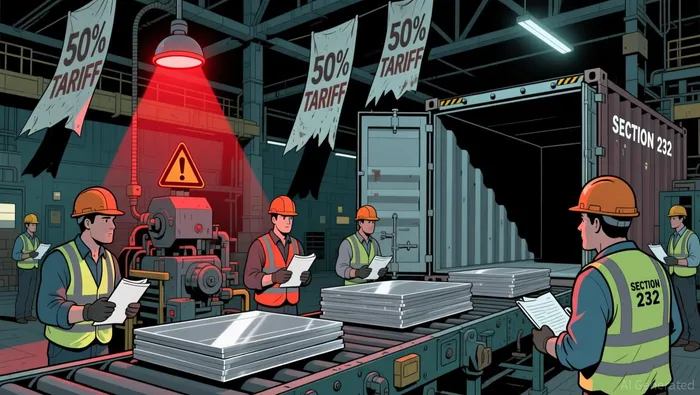 While the improved profitability in Q3 masks the underlying fragility of the recovery, CEO John Steitz highlighted ongoing challenges in capturing U.S. market share due to continued competition from undervalued imported goods. , but cost-cutting measures for 2026 underscore lingering operational pressures.
Balance Sheet Vulnerability: Fragile Resilience Under Pressure
Tredegar's recent balance sheet improvements look good on paper but mask underlying fragility. The company reduced its net leverage ratio to 1.1x . This translated to a net debt level of $36.2 million by Q3 2025 according to Q3 results, a concrete step toward financial recovery. These gains followed significant 2024 losses, highlighting management's focus on deleveraging.
However, this progress is easily undermined. , . More critically, open orders have fallen to 19 million pounds, meaning shipments are outpacing new business. .
The vulnerability is amplified by ongoing operational challenges. Management admits unresolved issues preventing TredegarTG-- from capturing U.S. market share due to undervalued imports. While cost-cutting measures are planned for 2026, the current demand environment and competitive pressure make achieving sustainable profitability uncertain. .
Regulatory Volatility and Leadership Transition
Tredegar's planned leadership change arrives amid growing market scrutiny. , 2025, after six years at the helm, with CFO D. . Their successors-Arijit (Bapi) DasGupta as CEO and Frasier W. , 2026. Both leaders have deep roots in Tredegar's operations, , .
Despite confidence in internal succession, investor skepticism is intensifying. . This sharp contrast highlights growing unease about Tredegar's near-term trajectory.
The transition coincides with heightened regulatory uncertainty for Tredegar's aluminum extrusions business. . . With demand instability already affecting specialty films markets, . While DasGupta and Brickhouse bring institutional knowledge, .
Action Thresholds: When to Adjust Position
Building on recent performance and regulatory challenges, we maintain a cash-preserving stance with clear action triggers. . , . , .
We will hold our position only if remains below 1.0x and leadership transition demonstrates strategic agility. , . The leadership transition, , aims for continuity but has yet to prove strategic agility in action.
Investors are pricing in regulatory uncertainty, . While orders are stable, . Given these factors, caution is advised, .





Comentarios
Aún no hay comentarios