
Treasury Yields and the Israel-Iran Ceasefire: Navigating Rate Cut Expectations and Market Volatility
The recent ceasefire between Israel and Iran, brokered by U.S. President Donald Trump on June 24, 2025, has introduced a critical inflection pointIPCX-- in global markets. While the agreement marked a temporary de-escalation in a conflict that briefly threatened to disrupt oil flows through the Strait of Hormuz, its fragility and the lingering risk of renewed hostilities have created a volatile backdrop for investors. For fixed-income markets, the interplay between geopolitical dynamics, oil prices, and Federal Reserve policy now offers both opportunities and pitfalls.
The Ceasefire's Impact on Oil and Inflation Dynamics
The agreement triggered an immediate drop in oil prices, with U.S. crude falling to $67.13 per barrel—a one-week low—due to reduced supply disruption risks. 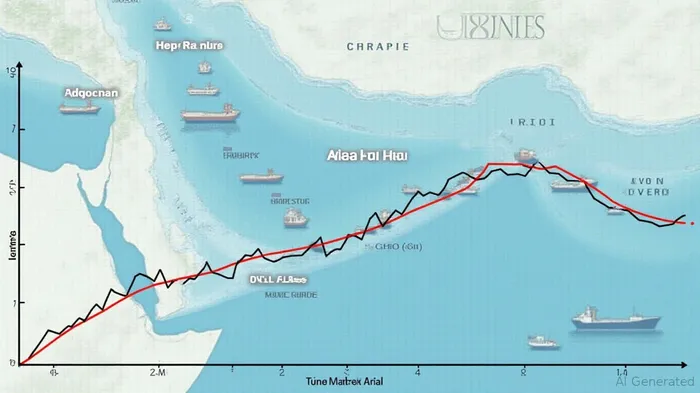 . The Strait, which handles 20 million barrels of oil daily, remains open, though Iran's threats to block it have not been fully discounted.
The data reveals an inverse relationship: falling oil prices reduce inflationary pressures, easing the Fed's hawkish stance and supporting bond prices. Conversely, renewed conflict could spike oil prices, reigniting inflation and prompting tighter monetary policy.
Fed Policy: Between Dovish Tendencies and Geopolitical Whiplash
Federal Reserve Chair Jerome Powell has emphasized a “wait-and-see” approach, with the June 2025 policy statement leaving rates unchanged but signaling a potential 50 basis point cut by year-end. The CME FedWatch Tool currently assigns a 23% probability of a July cut and 68% for September, reflecting the ceasefire's role in easing near-term inflation risks.
The Fed's caution stems from mixed signals: while lower oil prices support disinflation, labor market resilience and fiscal uncertainty complicate the pathPATH--. The ceasefire's sustainability will be pivotal—sustained calm could accelerate dovish pivots, while renewed conflict risks a policy recalibration.
Fixed-Income Strategies: Navigating the Crosscurrents
Investors in fixed-income markets must balance these crosscurrents to capitalize on opportunities while mitigating risks. Here are actionable insights:
1. Duration Extension in Treasuries
The Fed's dovish bias supports longer-duration U.S. Treasuries, which benefit from declining yields. The 10-year Treasury yield has dipped to 3.2% since the ceasefire, a level that could fall further if the Fed cuts rates. Investors should consider overweighting intermediate-term Treasuries (5–10 years) to capture yield declines while avoiding excessive interest-rate risk.
2. Sector Rotation in Corporate Bonds
The energy sector, which underperformed as oil prices dropped, offers value. However, high-yield corporate bonds in sectors like technology and consumer discretionary—supported by lower inflation and stable growth—could outperform. Avoid energy-heavy bonds unless confident in a sustained ceasefire.
3. Hedging with Inflation-Linked Securities
Geopolitical risks remain elevated, as demonstrated by Iran's post-ceasefire missile strikes. Investors should hedge portfolios with TIPS (Treasury Inflation-Protected Securities) to guard against sudden oil-driven inflation spikes.
4. Short-Term Cash Reserves
Allocate 5–10% of fixed-income portfolios to short-term Treasuries (1–3 years) to capitalize on liquidity and flexibility. This buffer allows rapid reallocation if geopolitical tensions escalate or Fed policy shifts abruptly.
Risks and Considerations
- Ceasefire Fragility: Conflicting reports of violations (e.g., Iran's missile strikes on Be'er Sheva) underscore the agreement's instability. A breakdown could send oil prices to $85+/barrel, reversing bond gains.
- Fed Policy Missteps: If inflation resurges due to supply chain shocks or fiscal stimulus, the Fed may delay cuts, pressuring fixed-income assets.
- Global Growth Slowdown: Lower oil prices ease input costs but also reflect weak demand. Monitor U.S. GDP growth (currently 1.2% for Q2 2025) for signs of a soft landing.
Conclusion: Position for Dovish Momentum, but Stay Alert
The Israel-Iran ceasefire has created a temporary “Goldilocks” environment for fixed-income markets: lower oil-driven inflation and Fed easing expectations support bond prices, while equity gains reduce the allure of risk-free yields. Investors should:
- Overweight Treasuries for duration exposure.
- Rotate into credit sectors less tied to energy.
- Hedge with TIPS against geopolitical volatility.
However, the ceasefire's sustainability—and the Fed's response to it—will dictate the next chapter. Stay nimble: if tensions reignite or inflation surprises to the upside, pivot toward shorter-duration, high-quality bonds.
This data underscores the real-time interplay between geopolitical events and fixed-income markets—watch it closely to adjust allocations.
In the end, the path to fixed-income success hinges on balancing the ceasefire's tailwinds with the ever-present risk of Middle East escalation. Stay informed, stay diversified, and stay ready to pivot.







Comentarios
Aún no hay comentarios