
US Treasury Yields and the Fed's Dovish Pivot: Navigating Bond Market Positioning in 2025
The Federal Reserve's dovish pivot in Q4 2025 has triggered a recalibration of bond market positioning, as investors grapple with the implications of rate cuts and shifting yield curve dynamics. With the central bank having already slashed the federal funds rate by 25 basis points in September and signaling two additional cuts by year-end, according to the Fed's implementation note (Fed's implementation note), Treasury yields are undergoing a structural realignment. This analysis explores how market participants are adapting their strategies to capitalize on-and mitigate risks from-this evolving landscape.
The Fed's Rate Path and Yield Curve Reconfiguration
The Fed's September 2025 decision to cut rates by 25 basis points, bringing the federal funds rate to 4.00%-4.25%, marked the beginning of a broader easing cycle, as a CNBC report noted (CNBC report). Updated projections now anticipate a terminal rate of 3.6% for 2025, with GDP growth revised upward to 1.6% and inflation expectations for core PCE held steady at 3.1%, according to FOMC projections (FOMC projections). These adjustments reflect a cautious response to cooling labor market momentum and downside risks to employment, a Morningstar analysis found (Morningstar analysis).
The yield curve is responding asymmetrically. Short-term rates, particularly the 2-year Treasury yield, are expected to decline sharply as the Fed's easing cycle unfolds. In contrast, long-term rates-such as the 10-year Treasury-remain anchored above 4% due to persistent fiscal deficits and inflationary pressures, according to J.P. Morgan Asset Management (J.P. Morgan Asset Management). This divergence is likely to steepen the yield curve, a historically bullish signal for economic growth, Markets.com noted (Markets.com).
Bond Market Positioning: The "Belly" of the Curve as a Strategic Sweet Spot
Investors are increasingly favoring intermediate-term Treasuries, particularly bonds with maturities of 3-7 years, as a balanced approach to navigating the Fed's rate cuts, as BlackRock recommends (BlackRock). This segment offers a favorable combination of income generation and downside protection, as these bonds benefit from roll-down yield while avoiding the volatility of shorter-dated issues or the duration risk of long-term securities, Morningstar reports (Morningstar).
Family offices and institutional investors have amplified this trend, allocating to 3-5 year bonds while avoiding long-duration assets, according to Guggenheim Investments (Guggenheim Investments). Geographic diversification and allocations to gold or high-quality credit are also being used to hedge against geopolitical risks and economic tail events, FTI Consulting notes (FTI Consulting). Meanwhile, active credit strategies-such as risk-aware income funds-are gaining traction to capture higher yields in a low-rate environment, iShares suggests (iShares).
Advanced Risk Management: Convexity, Derivatives, and Sector Rotation
As the Fed's easing cycle progresses, sophisticated investors are deploying advanced tools to manage interest rate risk. Convexity adjustments are becoming critical, as bonds with positive convexity offer asymmetric payoffs in a falling rate environment. For example, portfolios with higher convexity profiles can amplify gains from rate cuts while limiting losses if rates unexpectedly rise, Connect CRE explains (Connect CRE).
Derivative instruments are also playing a pivotal role. Interest rate swaps, swaptions, and caps/floors are being used to hedge exposure to rate volatility. Linear instruments like SOFR futures and 30-Day Fed Funds futures provide direct hedges for short-term rate risk, while bond futures allow for tactical positioning across the yield curve, PNC recommends (PNC). Options-based strategies, such as swaptions and Bermudan swaptions, offer flexibility to respond to curve normalization scenarios, DerivativePath outlines (DerivativePath).
Sector-specific positioning is another key consideration. Investment-grade credit is gaining favor as easing rates enhance the relative value of fixed-income instruments with higher rate components, Goldman Sachs advises (Goldman Sachs). In equities, small-cap stocks and dividend-paying securities are attracting income-focused investors, while gold serves as a hedge against dollar weakness and volatility, Standard Chartered recommends (Standard Chartered).
Implications for Investors
The Fed's dovish trajectory presents both opportunities and challenges. For bondholders, intermediate-term Treasuries and active credit strategies offer a compelling risk-reward profile. However, long-term bonds remain vulnerable to fiscal and inflationary headwinds, Yahoo Finance reports (Yahoo Finance). In equities, a focus on small-cap and dividend-paying stocks aligns with the cyclical benefits of easing rates, as CNBC has reported.
Hedging programs must evolve to address the non-linear risks of rate cuts. Convexity management, derivative overlays, and sector rotation are essential tools for preserving capital and optimizing returns in this environment, KPMG recommends (KPMG). As Fed Chair Jerome Powell emphasized, the current easing cycle is a measured response to economic risks-not a signal of systemic weakness, according to FOMC projections.
Conclusion
The Fed's Q4 2025 rate cuts are reshaping Treasury yields and investor behavior. By prioritizing intermediate-term bonds, leveraging convexity, and deploying advanced hedging techniques, market participants can navigate the complexities of a dovish policy environment. As the yield curve steepens and sector rotations accelerate, a disciplined, diversified approach will be critical to capturing the opportunities ahead.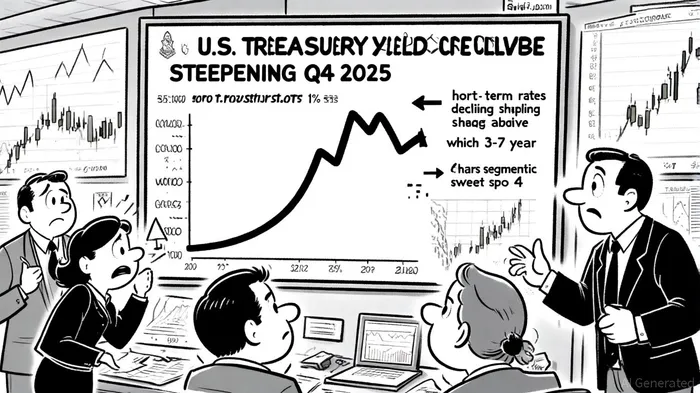







Comentarios
Aún no hay comentarios