
US Treasury Sanctions Three Mexican Financial Institutions Over Opioid Trafficking
The US Treasury Department has taken a significant step in its efforts to combat the opioid epidemic by imposing financial sanctions on three Mexican financial institutions. The institutions targeted are CIBanco, Intercam Banco, and Vector Casa de Bolsa. The Treasury Department has labeled these firms as “primary money laundering concerns,” a designation that allows for strict restrictions on their access to the US financial system. This move is the first time the Treasury’s financial crimes unit has exercised new powers granted under recently enacted anti-fentanyl legislation.
The sanctions come as part of a broader crackdown on opioid trafficking, with Donald Trump intensifying his campaign focus on combating the flow of illegal drugs into the United States. The three companies, according to the Treasury, had played a long-standing and central role in laundering millions of dollars for Mexican cartels and facilitating payments to secure precursor chemicals for the production of fentanyl. Deputy Treasury Secretary Michael Faulkender highlighted that the Treasury has taken steps to stop these financial institutions from working with US financial institutions.
Fentanyl, a cheap synthetic painkiller, has been a major driver of the opioid epidemic in the United States over the last decade and is the most common cause of overdose deaths. The sanctions were carried out under the FEND Off Fentanyl Act, a bill signed into law last year that provides the agency with new authorities to go after opioid smuggling. The news comes as Trump has been ramping up a US assault on drug trafficking from Mexico, challenging left-wing President Claudia Sheinbaum.
Alvaro Vértiz, who leads Latin America at the Washington-based advisory firm DGA Group, commented on the situation. According to Vértiz, this move seriously damages the trust in the Mexican financial system. He also mentioned that the US is ready to do anything necessary to fight fentanyl trafficking, and there will be no exceptions. The founder of Vector Casa de Bolsa is Alfonso Romo, who managed the office of Sheinbaum’s mentor and predecessor, President Andrés Manuel López Obrador, for two years. However, there are no allegations of wrongdoing on Romo’s part or that of the .
All three institutions—two banks and a brokerage—are small but prominent players in Mexico’s financial sector, managing $7 billion, $4 billion, and $11 billion, respectively. Following the Treasury’s claims, CIBanco and Intercam conducted business with or offered services to the now-dominant Jalisco New Generation cartel. For Vector, it assisted a Sinaloa cartel mule to launder US dollars 2 million from the US to Mexico. Several senior industry executives have reacted to the news, stating that this will force Mexico’s financial institutions to strictly adhere to “know your customer” and anti-money laundering oversight.
Sheinbaum has won some praise from US officials for prioritizing greater cooperation on security, with her security minister increasing arrests, seizures, and extraditions. Despite this, Mexico’s finance ministry stated that it had not been provided proof of the accusations. The ministry said that if they received clear evidence showing illegal actions by these three financial institutions, they would take strong legal action. However, at that moment, they did not have any such information. The wider US-Mexico relationship has been rocky as Trump imposed a 25% tariff on a broader range of goods, and the administration has raised the possibility of unilateral military action against drug cartels.
Trump issued an executive order designating six cartels as terrorist organizations in his first weeks in office and sent a former Army Green Beret to be his ambassador in Mexico City. CIBanco and Intercam did not respond to requests for comment. In the statement, Vector said it categorically denies any claim against its integrity, and that the transactions were with legitimate companies. The sanctions are expected to have a significant impact on the Mexican financial sector, forcing institutions to adhere more strictly to oversight regulations and potentially leading to increased scrutiny and enforcement actions in the future. 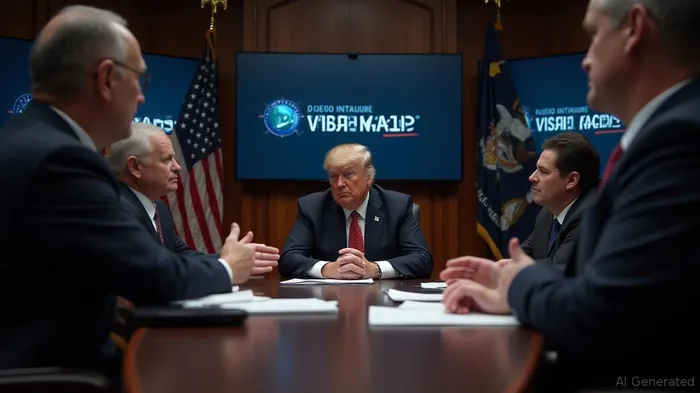







Comentarios
Aún no hay comentarios