
Treasury's Revised Tax Credit Rules and Their Impact on Solar and Wind Equity Valuations
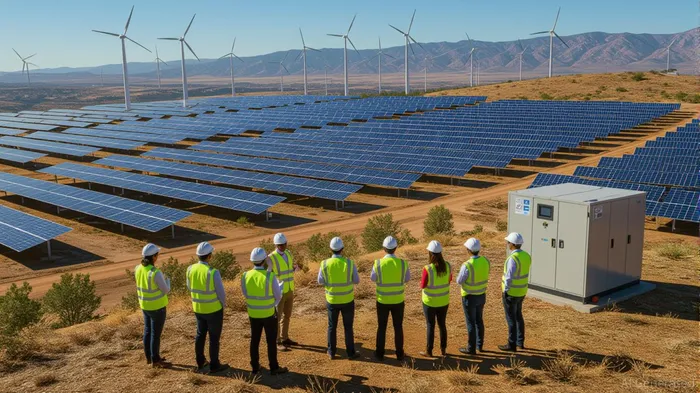
The U.S. Treasury's revised tax credit rules, unveiled in August 2025, have sent shockwaves through the solar and wind sectors, creating a volatile near-term environment while underscoring the long-term resilience of clean energy demand. These changes, embedded in the One Big Beautiful Bill Act (OBBBA), redefine the criteria for qualifying for federal incentives, with profound implications for project timelines, developer financing, and equity valuations. Investors must now navigate a landscape where short-term uncertainty clashes with structural tailwinds for decarbonization.
Short-Term Volatility: Construction Timelines and Developer Financing
The removal of the 5% cost threshold for initiating construction—except for small solar projects under 1.5 MW—has forced developers to prioritize physical work over financial commitments. This shift has compressed project timelines, particularly for mid-sized and smaller developers lacking the capital to begin on-site construction immediately. The new rules require projects to demonstrate “significant physical work” and maintain continuous construction, with a four-year window to place facilities in service.
For example, a wind project that previously could have relied on the 5% safe harbor to secure tax equity financing now faces a higher upfront capital burden. This has led to a scramble among developers to accelerate permitting and procurement, often at the expense of cost efficiency. The result? A surge in short-term volatility for solar and wind stocks, as companies like NextEra EnergyNEE-- (NEE) and First SolarFSLR-- (FSLR) grapple with tighter margins and delayed project monetization.
The FEOC (Foreign Entity of Concern) restrictions further complicate matters. Developers must now conduct detailed cost ratio analyses to ensure compliance with domestic content requirements, adding operational and financial overhead. This has disproportionately affected projects reliant on Chinese-manufactured components, driving up costs and reducing profit margins. The market has already priced in these risks, with solar manufacturers like Enphase EnergyENPH-- (ENPH) seeing share price dips amid supply chain concerns.
Long-Term Resilience: Structural Demand for Clean Energy
Despite the near-term turbulence, the long-term fundamentals for solar and wind remain robust. The global energy transition is accelerating, driven by climate policy, corporate decarbonization goals, and the declining cost of renewables. Even under the OBBBA's tighter rules, the U.S. is projected to add over 100 GW of solar and 30 GW of wind capacity annually through 2030, according to the National Renewable Energy Laboratory (NREL).
Energy storage emerges as a critical sub-sector poised to thrive. Collocated storage systems—those paired with solar or wind facilities—are exempt from the 2027 phase-out of tax credits and can claim incentives until 2032. This creates a unique window of opportunity for companies like TeslaTSLA-- (TSLA) and Fluence (FLNC), which specialize in grid-scale battery solutions. The Treasury's updated cost ratios for energy storage (rising from 55% in 2026 to 75% by 2030) also incentivize domestic manufacturing, aligning with broader U.S. industrial policy goals.
Residential solar, though constrained by the 2027 deadline, retains a niche advantage. Smaller projects (under 1.5 MW) still qualify for the 5% safe harbor, allowing developers to leverage flexible financing models. Companies like SunrunRUN-- (RUN) and Vivint Solar (VSLR) are well-positioned to capitalize on this segment, particularly as state-level incentives and community solar programs fill the federal policy gap.
Sub-Sector Opportunities and Investment Strategies
- Energy Storage: With extended tax credit eligibility and rising domestic content requirements, energy storage is a compelling long-term play. Investors should prioritize firms with strong supply chain diversification and partnerships with domestic manufacturers.
- Residential Solar: While facing a 2027 cliff, residential solar remains resilient due to its lower regulatory burden and consumer demand. Companies with robust state-level policy exposure (e.g., California's SB 100) offer attractive entry points.
- Tax Equity Partnerships: Developers with projects initiated before July 2026 retain access to older, less restrictive tax credit provisions (Sections 45 and 48). These projects are likely to attract tax equity investors seeking stable returns, making them a safer short-term bet.
Navigating the Regulatory Uncertainty
The Loper Bright Enterprises v. Raimondo Supreme Court decision adds another layer of complexity, limiting federal agencies' ability to reinterpret laws. This could lead to legal challenges over the Treasury's revised construction rules, creating further volatility. Investors should monitor litigation risks and favor companies with diversified revenue streams and strong balance sheets.
Conclusion
The Treasury's revised tax credit rules have introduced immediate headwinds for solar and wind developers, but they also highlight the sector's long-term durability. While short-term volatility is inevitable, the structural demand for clean energy—driven by climate policy and technological innovation—ensures that the sector will adapt and grow. Energy storage and residential solar, in particular, offer compelling opportunities for investors willing to navigate the near-term turbulence. As the market recalibrates, those who focus on resilience, compliance, and strategic positioning will emerge ahead.





Comentarios
Aún no hay comentarios