
US Treasury's Debt-Cap Dilemma: Navigating Short-Term Bill Markets and Fiscal Crossroads
The U.S. Treasury's struggle with the debt ceiling and its pivot toward short-term debt issuance have created a precarious balancing act for global markets. With borrowing costs at multi-decade highs and foreign capital flows under strain, investors must reassess their exposure to Treasury bills and reorient portfolios to withstand fiscal volatility. This article dissects the structural shifts in Treasury issuance, the fragility of foreign demand, and the imperiled 3% deficit target—arguing that a barbell strategy of ultra-short Treasuries and cash is the only prudentPUK-- hedge against looming risks.
The Structural Shift: Short-Term Debt Reliance and Its Risks
The Treasury's 2025 auction schedule reveals a stark dependency on short-term financing. Auction sizes for 2-year and 3-year bills remain fixed at $69 billion and $58 billion, respectively, while long-dated issuance (e.g., 30-year bonds) has been pared to $25 billion—a fraction of pre-2020 levels. This strategy reflects an urgent need to manage near-term rollover risks amid the debt ceiling standoff, but it also signals a dangerous overexposure to refinancing volatility.
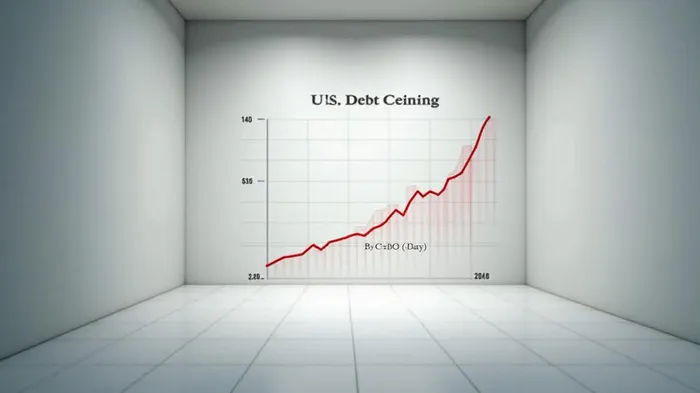
The Treasury's reliance on cash management bills (CMBs) and repurchases of off-the-run securities underscores the fragility of this approach. With debt held by the public at 23% of GDP and interest costs consuming $700 billion annually, even minor yield spikes could push deficits far beyond the Scenario 2 “3% GDP target”—a goal now dismissed as politically unrealistic.
Foreign Capital Flows: A Volatile Lifeline
Foreign indirect bidders—the key arbiters of Treasury market liquidity—are increasingly capricious. While February's TIC data showed a $73.2 billion inflow into Treasury bills, December's figures plummeted to $16.8 billion, reflecting geopolitical tensions and skepticism over U.S. fiscal credibility. Moody's downgrade to Aa1 has amplified doubts about the nation's debt management, with foreign officials now net sellers of long-term securities in 2024.
The Treasury's dilemma is clear: without sustained foreign demand for short-term bills, the cost of rolling over debt will surge. The $1.8 trillion deficit (7% of GDP) requires foreign buyers to absorb roughly $150 billion monthly, a task complicated by trade wars and capital flight risks.
The Trade-Off: Tariffs vs. Fiscal Contraction
Scenario 2's “3% GDP target” hinges on a fiscal alchemy: tariff hikes (projected to raise $77 billion annually) versus mandatory spending cuts. Yet both paths are fraught. Tariffs risk retaliatory measures and consumer price spikes, while austerity could trigger a recession. The Treasury's $20 billion short-term buyback program and $30 billion off-the-run purchases are stopgaps that ignore the core issue: the U.S. cannot credibly fund its deficits under current policies.
The Barbell Strategy: Armor Against Chaos
Investors must abandon passive bond allocations and adopt a barbell strategy:
1. Ultra-Short Treasuries (3-6 months): These minimize duration risk while offering yields above cash. With the 3-month T-bill at 4.8%, they provide a buffer against rate volatility and rollover risks.
2. Cash Reserves (20-30% of fixed income allocation): Liquidity is critical in a market where the “X-date” could trigger a sell-off. Pair this with currency-hedged short-term Treasuries to offset USD weakness.

This strategy also incorporates derivative hedges (e.g., USD put options) to protect against a collapsing dollar and equity volatility spikes. The S&P 500's -2.5% weekly drop in February underscores the need for diversification—fixed income's role as a growth hedge is intact, but only in bulletproof forms.
Conclusion: Act Now or Pay Later
The U.S. Treasury's debt-cap dilemma is not a distant threat—it's shaping markets today. With yields at 15-year highs, foreign flows in flux, and fiscal policy in freefall, investors who cling to long-duration bonds or passive ETFs risk catastrophic losses. The barbell strategy is not just prudent—it's the only way to navigate a landscape where the “Aa1” downgrade and Scenario 2's 3% target are now relics of a bygone era of fiscal discipline.
The time to reposition is now.







Comentarios
Aún no hay comentarios