
TRC-20 USDT Transaction Instability: Risks, Resilience, and Strategic Pathways in TRON's Stablecoin Ecosystem
The rise of blockchain-based stablecoins has redefined global finance, offering speed, scalability, and programmability. Yet, the TRONTRX-- network's TRC-20 USDTUSDT-- variant-once a paragon of efficiency-now faces scrutiny over transaction instability and smart contract vulnerabilities. For investors, the question is no longer whether TRON can scale but whether its technical and regulatory challenges outweigh its advantages. This analysis dissects the risks and opportunities in TRON's stablecoin ecosystem, offering a roadmap for navigating its evolving landscape.
Technical Vulnerabilities and Investor Confidence
TRC-20 USDT's transaction failures stem from a critical flaw in its smart contract design. The non-standard return values in the transfer() function disrupt the safeTransfer() logic used in OpenZeppelin libraries, causing successful transfers to be misinterpreted as failures. This issue, highlighted by QuillAudits, has led to transaction reverts and locked user funds, eroding trust in the network's reliability. Compounding this, the OWASP Smart Contract Top 10 (2025) underscores access control flaws and unchecked external calls as persistent risks, emphasizing the need for rigorous audits and defensive coding.
Investor confidence has further been tested by scams exploiting TRON's low barriers to entry. In 2022, a U.S. user lost 73,586 USDT via a fake app, while address poisoning tactics tricked victims into sending funds to malicious wallets. According to blockchain analysis, these incidents highlight a paradox: TRON's low fees and fast transactions attract users but also make it a honeypot for fraud. Blockchain analytics tools like TronScan have mitigated some risks by enabling transaction verification and contract inspection, yet the sophistication of scams continues to outpace defenses.
TRC-20 vs. ERC-20: A Tale of Two Ecosystems
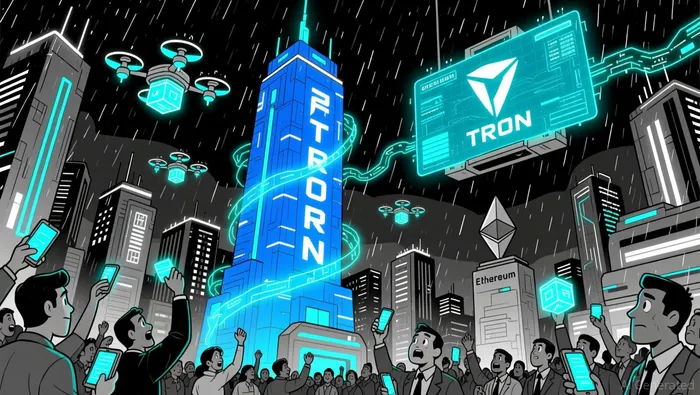 TRC-20 USDT's dominance in transaction volume- processing 2.3–2.4 million daily transfers in 2025, 6.8 times Ethereum's rate-underscores its appeal for high-frequency use cases like cross-border payments and microtransactions. With 51% of global USDT supply now on TRON, the network's low fees ($1–2 per transaction) and 3–5-minute settlement times outpace Ethereum's 15+ minutes during peak loads. However, Ethereum's ERC-20 USDT remains the backbone of DeFi, leveraging institutional support and robust smart contract ecosystems for lending, trading, and yield farming. TRON's infrastructure upgrades, including the GreatVoyage-v4.8.0 (Kant) update, have improved EthereumETH-- compatibility and enabled gas-free USDT transfers. Yet, its dynamic energy model-raising transaction costs to curb low-value activity-has sparked debates over centralization, given TRON's DPoS consensus and reliance on 27 Super Representatives. According to Messari, meanwhile, regulatory scrutiny from the U.S. SEC, which charged TRON's founder with securities violations, adds another layer of uncertainty.
Regulatory and Economic Risks
The U.S. regulatory landscape, shaped by the 2025 GENIUS Act and impending Clarity Act, mandates stablecoin reserves be backed 1:1 by high-quality liquid assets (HQLA). While this bolsters trust, it also exposes issuers to interest rate risks. A hypothetical 100-basis-point rate drop could slash reserve income by $441 million for USDC issuers, a vulnerability TRON's ecosystem must address. Additionally, global efforts by the FATF and FSB to harmonize crypto regulations risk fragmenting TRON's cross-border operations, particularly for European SMEs navigating MiCA compliance.
Investment Strategies: Double Down, Pivot, or Hedge?
For investors, the calculus hinges on balancing TRON's strengths-low costs, high throughput, and growing adoption-with its technical and regulatory risks. Double-down strategies could capitalize on TRON's smart contract improvements, such as the proposed 50% reduction in transaction fees (via lowering energy unit prices) and transaction batching, which aim to attract 12 million new users. Platforms like JustLend and SunSwap further enhance liquidity, making TRON a compelling choice for DeFi-native investors.
Pivoting to alternative networks-such as Ethereum or Solana-might appeal to risk-averse investors prioritizing security and institutional adoption. ERC-20 USDT's entrenched role in DeFi and Ethereum's upcoming upgrades (e.g., Ethereum 2.0) offer long-term stability, albeit at higher costs.
Hedging with multi-chain stablecoins emerges as a pragmatic middle ground. Diversifying into non-USD stablecoins like EURCEURC-- or commodity-backed XAUT mitigates currency-specific risks while leveraging TRON's efficiency for cross-border use cases. As stablecoin transaction volumes surge toward $100 trillion by 2030, a multi-chain approach allows investors to capitalize on regional demand while hedging against regulatory and technical shocks.
Conclusion
TRON's TRC-20 USDT remains a linchpin of the stablecoin ecosystem, driven by its speed, low fees, and growing adoption. Yet, persistent smart contract vulnerabilities, regulatory headwinds, and centralization concerns demand caution. For investors, the path forward lies in strategic diversification: leveraging TRON's strengths for high-volume transactions while hedging with multi-chain stablecoins and DeFi platforms on more mature networks. In a world where stablecoins are reshaping global finance, adaptability-not blind allegiance-will define success.






Comentarios
Aún no hay comentarios