
U.S. Travel Ban Slams Caribbean CBI Schemes, Spur Investor Shift
Washington imposes new travel restrictions on Caribbean nations over 'golden passport' programs, deepening regional economic concerns
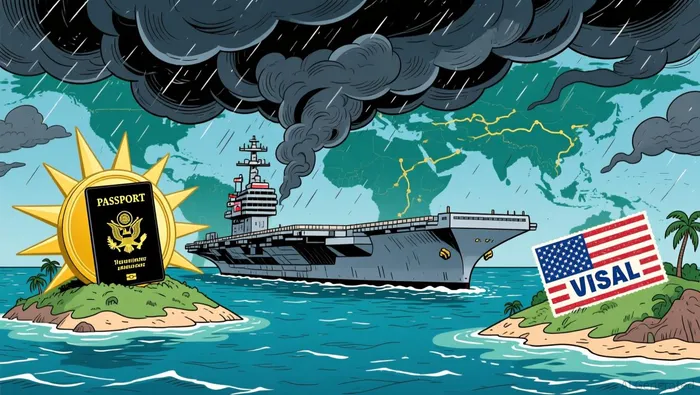
President Donald Trump's administration has placed travel restrictions on two Caribbean nations, Antigua and Barbuda and Dominica, over their so-called "golden passport" programs. The move, announced as part of an expanded travel ban affecting 39 countries in total, aims to curb citizenship-by-investment (CBI) schemes that critics argue allow foreign nationals to buy access to global mobility according to reports. The Caribbean nations are among several now restricted, with U.S. officials citing national security and concerns about inadequate vetting processes.
The decision has drawn immediate criticism from regional leaders, who claim it misrepresents recent reforms to their CBI programs. Antigua's Prime Minister Gaston Browne expressed frustration, stating the rationale for the ban "does not reflect the present reality of our laws". Dominica's Prime Minister Roosevelt Skerrit similarly argued that his country had already implemented residency requirements with U.S. government support.
Caribbean leaders fear the move could damage their tourism-dependent economies and exacerbate tensions with the U.S., which has also increased its military presence in the region. At the same time, the U.S. is promoting its own "Trump Gold Card" program, offering fast-track residency to those willing to pay $1 million to the Treasury according to industry analysis.
Why the Standoff Happened
CBI programs have long been a lifeline for Caribbean nations with limited natural resources, with passport sales contributing up to 58% of Dominica's national revenue and 10% of Antigua's budget. The U.S. and European governments have pushed for stricter oversight in recent years, leading to higher investment thresholds, due diligence checks, and mandatory residency periods. Despite these reforms, Washington's recent move signals a shift toward full restrictions rather than continued dialogue.
The Trump administration's expanded travel ban adds five new countries to the restricted list and imposes new limits on others, citing deficiencies in screening, vetting, and information-sharing. The move follows the arrest of an Afghan national suspected in the shooting of two U.S. National Guard members and reflects the president's broader campaign to tighten immigration controls.
Economic and Political Fallout
For Caribbean nations, the travel restrictions threaten to further strain economies already reeling from global economic uncertainties and a slowdown in tourism according to financial analysis. Antigua and Dominica have historically relied on CBI programs to fund infrastructure and public services, and the U.S. is among the largest markets for their passports according to market reports. With the new restrictions, potential applicants may seek alternatives in countries like New Zealand or select European states with more favorable investor programs as industry observers note.
The situation highlights the growing tension between global financial migration and national security concerns. While CBI programs offer wealthy individuals a pathway to residency or citizenship, they also attract scrutiny over money laundering and the potential for misuse by sanctioned actors according to experts. U.S. and European authorities have increasingly pressured Caribbean nations to align their programs with global standards, a push that has already led to higher prices and tighter rules.
What This Means for Investors
The evolving regulatory landscape means that high-net-worth individuals and family offices must reassess their mobility strategies. Caribbean CBI programs, once seen as a low-cost option for global citizenship, are now more expensive and subject to greater oversight according to industry analysis. Investors are also turning their attention to countries like New Zealand, where investor visa requirements have been relaxed in response to post-recession economic conditions as analysts observe.
Meanwhile, the U.S.'s "Trump Gold Card" program introduces a new competitive element, positioning the country as a premium option for wealthy foreigners. However, the program's controversial aspects-such as the proposed "Platinum Card" with tax-advantaged access-have drawn legal and political scrutiny according to industry reports. For now, investors must weigh the stability of each program against shifting political and regulatory environments.
Risks to the Outlook
The Caribbean faces a dual challenge: maintaining its CBI programs as a viable economic strategy while addressing international pressure for reform. With the U.S. imposing stricter measures and European countries increasingly closing or tightening their own programs, Caribbean nations may struggle to balance fiscal needs with security expectations according to economic experts.
At the same time, the region's tourism industry-already vulnerable to external shocks-could suffer further if the U.S. military buildup in the region deters visitors according to travel analysts. For now, the path forward remains uncertain, as Caribbean leaders push back against the travel ban while adapting to a rapidly changing global mobility landscape.







Comentarios
Aún no hay comentarios