
Transocean Ltd.'s Equity Offering: A Double-Edged Sword for Capital Structure and Shareholder Value
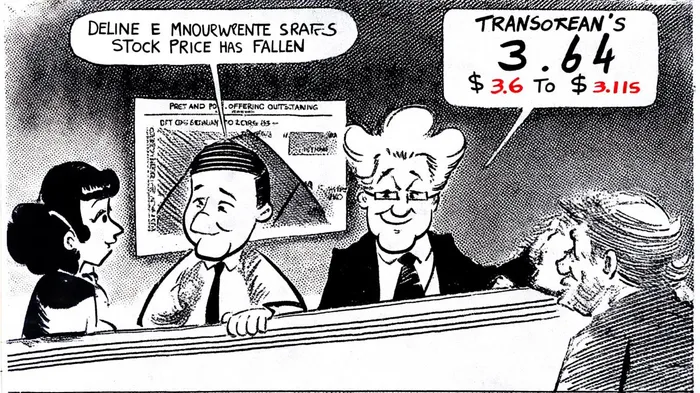
Transocean Ltd. (NYSE: RIG) has embarked on a high-stakes financial maneuver with its recent upsized public offering of 125,000,000 shares at $3.05 per share, raising approximately $381 million in gross proceeds [1]. While the company frames this as a strategic step to delever its balance sheet by targeting its 8.00% Senior Notes due February 2027, the market has reacted with skepticism, sending shares down 13% to $3.16 on the announcement day [2]. This analysis unpacks the capital structure implications and shareholder dilution risks inherent in the offering, offering investors a framework to assess whether this move is a lifeline or a liability.
Capital Structure: A Tactical Debt Reduction Play
Transocean's offering is a direct response to its precarious debt profile. The company plans to allocate proceeds toward repaying $655 million of its 8.00% high-yield bonds, which carry a coupon rate significantly above current market benchmarks [1]. By refinancing this debt with equity, TransoceanRIG-- aims to reduce its interest expense burden—a critical step given the industry's margin pressures from lower offshore drilling demand and volatile oil prices.
However, the cost of this strategy is steep. The offering price of $3.05 represents a 13.4% discount to the prior day's closing price of $3.64, signaling to investors that management perceives limited upside in its stock's intrinsic value [2]. Such deep discounts often trigger sell-offs, as seen in Transocean's 13% post-announcement plunge. This raises questions about whether the capital structure optimization is being achieved at an unfair cost to existing shareholders.
Shareholder Dilution: The Hidden Tax
The offering's dilutive impact is equally concerning. With 888,000,000 shares outstanding as of September 2025 [3], the new issuance of 125 million shares represents a 14.1% expansion of the equity base. For context, this level of dilution would reduce earnings per share (EPS) by approximately 13% assuming pre-offering earnings remain constant—a significant hit for a company already grappling with weak profitability.
The dilution is compounded by the underwriters' 30-day option to purchase an additional 18.75 million shares [1], which could further erode ownership stakes if exercised. While Transocean's management argues that deleveraging will unlock long-term value, the immediate pain of share price declines and EPS compression may outweigh these benefits for retail and institutional investors who lack the patience for multi-year horizons.
Market Sentiment and Strategic Trade-offs
The market's negative reaction underscores a broader skepticism about Transocean's capital allocation decisions. By opting for an equity raise rather than negotiating better terms on its debt or pursuing asset sales, the company has signaled a lack of confidence in alternative solutions. This is particularly problematic in an industry where peers like Seadrill and Diamond Offshore have successfully renegotiated covenants or secured cheaper financing in recent quarters [4].
Moreover, the offering's timing—just weeks before the maturity of its 2027 notes—suggests urgency rather than strategic foresight. Investors may reasonably question whether management explored alternatives, such as extending the debt's maturity or converting it into equity, which could have minimized dilution while achieving similar balance sheet benefits.
Conclusion: A Calculated Risk with Uncertain Rewards
Transocean's public offering is a textbook example of the trade-offs inherent in capital structure management. While the company's debt reduction goals are laudable, the execution—marked by aggressive dilution and a discounted share price—risks alienating shareholders and exacerbating near-term volatility. For long-term investors, the offering may represent a buying opportunity if the deleveraging successfully stabilizes the business. However, those prioritizing capital preservation may view this as a cautionary tale of over-reliance on equity financing in a declining sector.
As the offering closes on September 26, 2025 [1], all eyes will be on Transocean's ability to translate reduced debt into improved operational performance. Until then, the market's skepticism appears well-founded.





Comentarios
Aún no hay comentarios