
Transhumanism and the Ethical-Economic Crossroads of Longevity Tech and AI
The convergence of transhumanism, longevity technology, and artificial intelligence is redefining the boundaries of human potential-and the investment landscape. By 2025, startups at the intersection of these fields are not only advancing radical life extension and cognitive enhancement but also confronting profound ethical and economic questions. For investors, this creates a dual opportunity: to fund breakthroughs that could redefine aging and consciousness while navigating the risks of inequality, governance gaps, and unintended consequences.
Aging as a Treatable Condition: The Longevity Tech Revolution
The biotech sector is increasingly treating aging as a disease to be cured, not a natural process to be managed. Altos Labs, a pioneer in cellular rejuvenation, has raised $3 billion since 2022 and acquired Dorian Therapeutics in 2025 to bolster its senescence-targeting therapies. Its work with epigenetic reprogramming-using Yamanaka factors to reverse cellular aging-has shown promise in restoring youthful gene expression without converting cells into stem cells. Similarly, Retro Biosciences, backed by Sam Altman, is leveraging AI to enhance reprogramming efficiency, with a 50× improvement in protein engineering and plans for an Alzheimer's trial by year-end.
These companies are part of a broader shift toward AI-driven drug discovery. Insilico Medicine, for instance, has entered Phase 2 trials with an AI-designed drug for idiopathic pulmonary fibrosis, while Cradle Bio collaborates with Novo Nordisk to optimize proteins for metabolic therapies. The market for longevity biotech is expanding rapidly, with AI-powered startups raising $6.7 billion in 2024 alone.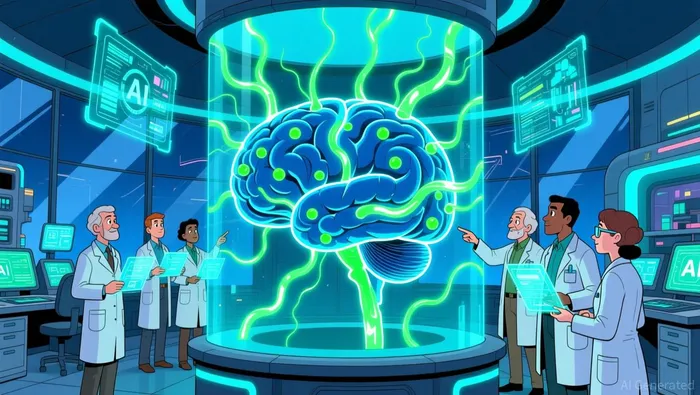 However, the high cost of these treatments raises concerns about access. As Nayef Al-Rodhan warns, radical longevity could deepen societal divides, creating a "longevity privilege" for the wealthy.
Digital Consciousness: Bridging the Human-Machine Divide
Transhumanism's next frontier lies in digital consciousness and brain-computer interfaces (BCIs). Neuralink, Elon Musk's BCI startup, is testing direct neural connectivity to enable telepathic communication and real-time thought-to-text translation. Meanwhile, Merge Labs, also backed by Altman, is developing AI models to enhance cognitive functions, blurring the line between human and machine. Science Corp., co-founded by Max Hodak, is pushing the envelope further with retinal implants, and optogenetic gene therapy, aiming to redefine human vision and identity.
These advancements are not without ethical quandaries. The integration of AI into consciousness raises questions about autonomy, identity, and the potential for cognitive enhancement to exacerbate social hierarchies. For example, BCIs could enable "neuro-privilege", where access to cognitive upgrades becomes a new form of inequality. Yet, the commercial potential is undeniable: embodied AI startups are developing soft robotic systems for healthcare and manufacturing, signaling a future where human-machine collaboration becomes routine.
Ethical Governance: Navigating the AI-Biotech Convergence
As AI and biotech converge, governance frameworks are struggling to keep pace. The EU AI Act's risk-based classification system prohibits high-risk applications in healthcare, and finance, while the OECD emphasizes "convergence spaces" to integrate interdisciplinary expertise. Startups like FairNow and Suzan AI are addressing these gaps by offering AI governance platforms that centralize risk management and ensure compliance.
However, the dual-use risks of AI-biotech remain acute. The U.S. government's AI Action Plan highlights the need for biosecurity measures to prevent harmful applications, such as the accidental design of pathogenic organisms. Ethical frameworks must balance innovation with safeguards, ensuring that AI-driven biotech advances align with principles of equity and human dignity.
Investment Opportunities and Risks
The longevity and AI sectors present a paradox: immense potential alongside existential risks. For investors, the key lies in identifying companies that combine technological ambition with ethical foresight. Altos Labs and Retro Biosciences exemplify the former, while startups like FairNow address the latter. However, the high costs of clinical trials and regulatory hurdles remain significant barriers.
Moreover, the ethical governance of AI-biotech convergence is itself an emerging investment category. Platforms that enable transparent AI operations (RAIops) and governance software are gaining traction, reflecting a market demand for accountability. As the OECD notes, agile regulatory approaches will be critical to fostering innovation without compromising safety.
Conclusion
Transhumanism is no longer a speculative ideology but a tangible force reshaping biotech and AI. For investors, the challenge is to support breakthroughs that extend human life and enhance cognition while mitigating the risks of inequality and misuse. The companies and frameworks discussed here represent the vanguard of this transformation-a crossroads where ethics, economics, and exponential technology collide.







Comentarios
Aún no hay comentarios