
Transformative Gene Therapies for Duchenne Muscular Dystrophy: Navigating Innovation and Commercialization Risks
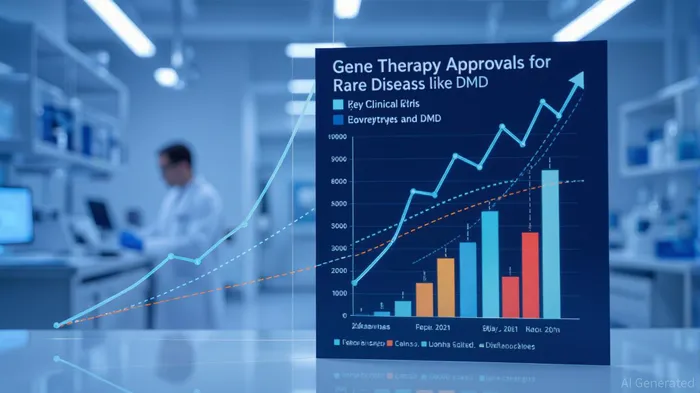
The biotech sector's pursuit of transformative gene therapies for Duchenne muscular dystrophy (DMD) has entered a pivotal phase, marked by groundbreaking scientific advances and sobering commercialization challenges. While SareptaSRPT-- Therapeutics' Elevidys became the first FDA-approved gene therapy for DMD in 2023, its temporary halt due to severe liver-related side effects underscores the delicate balance between innovation and safety in this high-stakes arena. For investors, the broader landscape reveals a duality: a surge in gene therapy approvals for rare diseases and the persistent hurdles of scaling production, managing risks, and securing sustainable reimbursement models.
The DMD Gene Therapy Landscape: Promise and Peril
DMD, a rare X-linked genetic disorder affecting approximately 1 in 3,500 male births, has long been a target for gene therapy due to its monogenic origin and the absence of curative options. Sarepta's Elevidys, a microdystrophin gene therapy, initially represented a milestone, with a price tag of $2.1 million per dose—reflecting both its therapeutic potential and the exorbitant costs of gene therapy development. However, post-approval safety concerns, including elevated liver enzymes in patients, forced a temporary suspension and highlighted the need for rigorous long-term monitoring. This episode serves as a cautionary tale for investors: even therapies with strong early-phase data face unpredictable real-world challenges.
Despite these setbacks, the broader gene therapy ecosystem for DMD remains dynamic. According to a report by Rare360, over 22 gene and cell therapies received regulatory approvals in 2025, spanning conditions such as hemophilia B and recessive dystrophic epidermolysis bullosa (RDEB). These approvals signal growing regulatory confidence in gene therapy's ability to address unmet medical needs, even as the DMD-specific pipeline remains concentrated around a few key players.
Commercialization Challenges and Strategic Imperatives
The commercialization of DMD gene therapies hinges on three critical factors: clinical differentiation, manufacturing scalability, and payer acceptance.
Clinical Differentiation: Beyond Sarepta, the pipeline for DMD gene therapies lacks visibility, with no publicly disclosed emerging biotechs advancing beyond preclinical stages. This scarcity of competitors could be a double-edged sword: while it reduces direct competition, it also limits diversification for investors seeking exposure to multiple innovators. Sarepta's dominance raises questions about its ability to sustain long-term growth without meaningful competition or follow-on innovations.
Manufacturing Scalability: Gene therapies require complex, low-volume production processes, often relying on adeno-associated virus (AAV) vectors. Scaling these processes to meet demand while maintaining quality control remains a significant barrier. For instance, Sarepta's reliance on a single manufacturing site for Elevidys has drawn scrutiny, as any disruption could exacerbate supply constraints and delay patient access.
Payer Acceptance: Payers and insurers are increasingly demanding robust value propositions for high-cost therapies. The $2.1 million price tag for Elevidys has sparked debates about affordability, with some payers requiring outcomes-based agreements. Investors must assess whether companies can demonstrate durable clinical benefits that justify such costs, particularly in a market where patient populations are small and fragmented.
The Road Ahead: Innovation as the Linchpin
To unlock the full potential of DMD gene therapies, innovation must extend beyond the science. Emerging biotechs could differentiate themselves by addressing current limitations:
- Next-Generation Vectors: Developing AAV variants with improved tissue targeting and reduced immunogenicity could mitigate safety risks and enhance therapeutic efficacy.
- Gene Editing Technologies: CRISPR-based approaches, such as those explored for sickle cell disease (e.g., Casgevy), offer the prospect of permanent genetic correction rather than temporary gene supplementation. While still in early stages for DMD, these technologies could redefine the treatment paradigm.
- Biomarker-Driven Trials: Leveraging advanced biomarkers to stratify patients and monitor treatment response could accelerate regulatory approvals and reduce trial costs.
For investors, the key is to balance optimism with pragmatism. While the long-term outlook for DMD gene therapies is promising, the path to profitability is fraught with technical, regulatory, and financial risks. Companies that succeed will be those that prioritize iterative innovation, transparent risk management, and strategic partnerships with payers and regulators.
Conclusion
The DMD gene therapy market exemplifies the transformative yet volatile nature of biotech innovation. Sarepta's Elevidys, despite its initial success, serves as a reminder that even groundbreaking therapies require continuous refinement. As the field evolves, investors should focus on companies that not only advance science but also build scalable, sustainable business models. The next wave of innovation—whether through improved vectors, gene editing, or novel delivery mechanisms—will determine which players emerge as leaders in this high-reward, high-risk sector.
Source:
[1] Genetic Fix or False Hope? The Reality of Gene Therapy in Rare Conditions [https://www.rare360.life/post/genetic-fix-or-false-hope-the-reality-of-gene-therapy-in-rare-conditions]





Comentarios
Aún no hay comentarios