
Traders See Profits Evaporate in Minutes as Trump Convulses Bets
Generado por agente de IAHarrison Brooks
viernes, 7 de febrero de 2025, 2:28 am ET2 min de lectura
BTC--
As President-elect Donald Trump prepares to take office, investors are grappling with the potential impacts of his policy promises on the stock market. Trump's campaign pledges, including tariffs, immigration restrictions, and deregulation, have sparked both optimism and uncertainty among market participants. This article explores how traders are navigating the volatile landscape and the potential implications for various sectors and investment decisions.
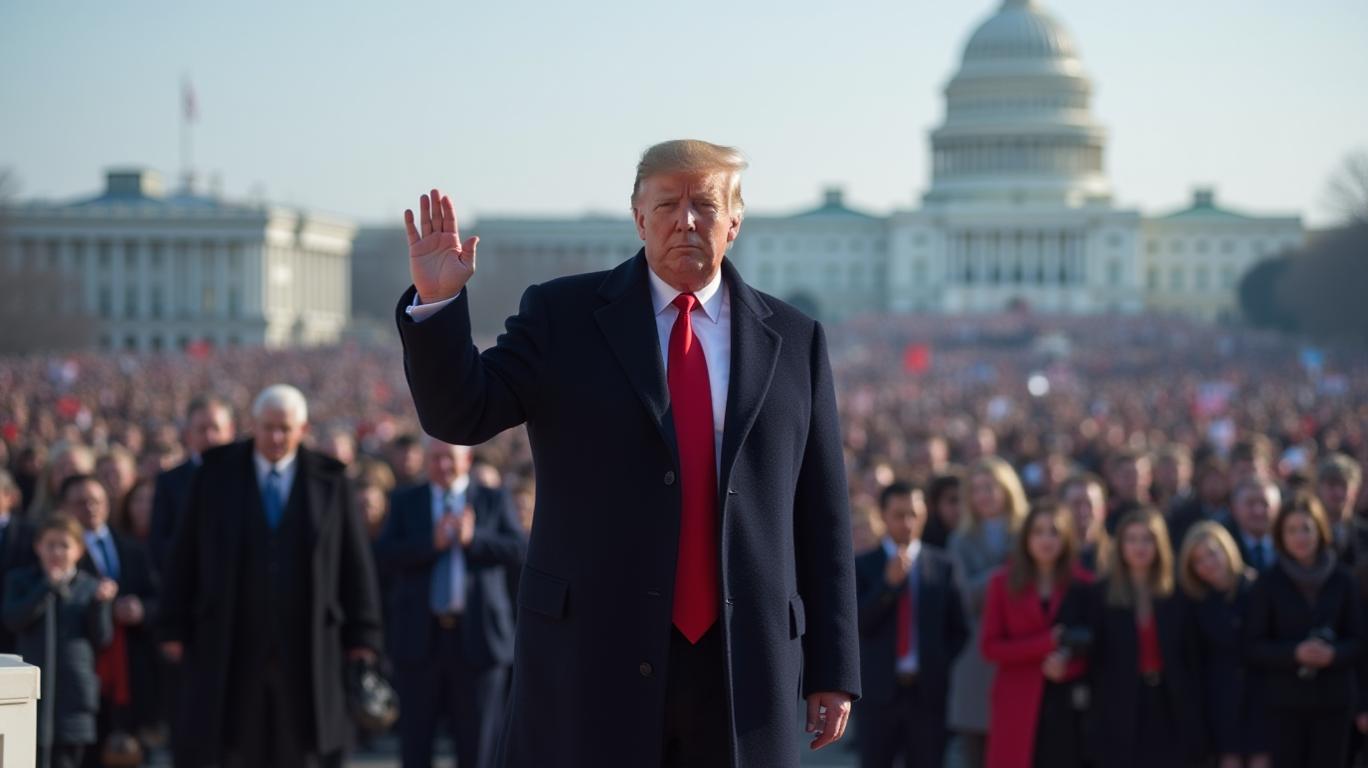
Trump's first term as president was marked by significant market fluctuations, with the S&P 500 index rising nearly 68% during his tenure. However, markets also experienced bouts of volatility, particularly during the trade war with China. As Trump returns to the White House, investors are bracing for another period of uncertainty, with the potential for swift market movements based on the new administration's policies.
One of the most notable impacts of Trump's policies on the stock market is the potential for increased volatility, particularly in sectors sensitive to his policy stances. For instance, the automobile industry may face headwinds due to Trump's antipathy for electric vehicles (EVs) and plans to roll back regulations like the tailpipe-emissions rule and consumer EV tax credits. This could make EVs less affordable, driving down sales and potentially affecting automakers' per unit economics. However, some companies like Ford Motor have a healthy pipeline of hybrid vehicles and traditional internal combustion engine (ICE) vehicles, which could help mitigate these impacts.

Another sector likely to be affected by Trump's policies is banking. Trump's first administration eased certain regulations for banking rules, fintech firms, and financial startups. His second term is expected to usher in lighter financial regulations, which may help bolster profitability in the sector and stock prices. Larger banks are likely to benefit more from this deregulation, and higher interest rates could provide a net positive for the bank industry. However, investors should be mindful of potential risks associated with less stringent regulations, such as increased systemic risk or higher exposure to financial instability.
Trump's energy policies, including his "drill, baby, drill" approach to oil production, could reduce gas prices, supporting demand for gas vehicles. However, trade wars and sanctions on Iran and Venezuela could have the opposite impact, affecting energy prices and energy companies' profitability. Additionally, the energy sector has been volatile in the past due to Trump's policies, with the sector climbing 22.9% under Biden despite the administration's push for renewables and sustainability. Investors should consider these potential fluctuations when making investment decisions in the energy sector.

Trump's about-face on cryptocurrencies and his plans to make the U.S. the "crypto capital of the planet" could drive interest in digital assets. Wall Street anticipates another leg higher for bitcoin in 2025, with speculation surrounding the incoming Trump administration's potential establishment of a U.S. bitcoin reserve. This could help the cryptocurrency reclaim the key $100,000 level and potentially reach $150,000. Investors may want to consider allocating a portion of their portfolio to cryptocurrencies, given the potential for significant growth and the anticipation of a pro-crypto administration.
Market experts anticipate that Trump's policies, particularly his stance on tariffs and trade, will have significant impacts on the broader economy. Higher inflation and a more hawkish Federal Reserve could pose risks to fixed income investments and support the dollar in the short term. Tighter financial conditions will be transmitted across the globe, with Asian markets particularly vulnerable given the added shock from higher tariffs. US equities will be buffeted by conflicting forces, but deregulation and industrial policies under Trump 2.0 will likely benefit sectors such as banks and small/mid-caps.

In conclusion, traders are bracing for a volatile period as President-elect Donald Trump prepares to take office. Trump's policy promises and their potential impact on the stock market differ from his first term, with key factors driving these changes including his focus on tariffs, immigration, and deregulation, as well as the Republican control of both chambers of Congress. Investors should stay informed about the latest developments and adjust portfolios accordingly to capitalize on opportunities and mitigate risks.
F--
ICE--
As President-elect Donald Trump prepares to take office, investors are grappling with the potential impacts of his policy promises on the stock market. Trump's campaign pledges, including tariffs, immigration restrictions, and deregulation, have sparked both optimism and uncertainty among market participants. This article explores how traders are navigating the volatile landscape and the potential implications for various sectors and investment decisions.
Trump's first term as president was marked by significant market fluctuations, with the S&P 500 index rising nearly 68% during his tenure. However, markets also experienced bouts of volatility, particularly during the trade war with China. As Trump returns to the White House, investors are bracing for another period of uncertainty, with the potential for swift market movements based on the new administration's policies.
One of the most notable impacts of Trump's policies on the stock market is the potential for increased volatility, particularly in sectors sensitive to his policy stances. For instance, the automobile industry may face headwinds due to Trump's antipathy for electric vehicles (EVs) and plans to roll back regulations like the tailpipe-emissions rule and consumer EV tax credits. This could make EVs less affordable, driving down sales and potentially affecting automakers' per unit economics. However, some companies like Ford Motor have a healthy pipeline of hybrid vehicles and traditional internal combustion engine (ICE) vehicles, which could help mitigate these impacts.
Another sector likely to be affected by Trump's policies is banking. Trump's first administration eased certain regulations for banking rules, fintech firms, and financial startups. His second term is expected to usher in lighter financial regulations, which may help bolster profitability in the sector and stock prices. Larger banks are likely to benefit more from this deregulation, and higher interest rates could provide a net positive for the bank industry. However, investors should be mindful of potential risks associated with less stringent regulations, such as increased systemic risk or higher exposure to financial instability.
Trump's energy policies, including his "drill, baby, drill" approach to oil production, could reduce gas prices, supporting demand for gas vehicles. However, trade wars and sanctions on Iran and Venezuela could have the opposite impact, affecting energy prices and energy companies' profitability. Additionally, the energy sector has been volatile in the past due to Trump's policies, with the sector climbing 22.9% under Biden despite the administration's push for renewables and sustainability. Investors should consider these potential fluctuations when making investment decisions in the energy sector.
Trump's about-face on cryptocurrencies and his plans to make the U.S. the "crypto capital of the planet" could drive interest in digital assets. Wall Street anticipates another leg higher for bitcoin in 2025, with speculation surrounding the incoming Trump administration's potential establishment of a U.S. bitcoin reserve. This could help the cryptocurrency reclaim the key $100,000 level and potentially reach $150,000. Investors may want to consider allocating a portion of their portfolio to cryptocurrencies, given the potential for significant growth and the anticipation of a pro-crypto administration.
Market experts anticipate that Trump's policies, particularly his stance on tariffs and trade, will have significant impacts on the broader economy. Higher inflation and a more hawkish Federal Reserve could pose risks to fixed income investments and support the dollar in the short term. Tighter financial conditions will be transmitted across the globe, with Asian markets particularly vulnerable given the added shock from higher tariffs. US equities will be buffeted by conflicting forces, but deregulation and industrial policies under Trump 2.0 will likely benefit sectors such as banks and small/mid-caps.
In conclusion, traders are bracing for a volatile period as President-elect Donald Trump prepares to take office. Trump's policy promises and their potential impact on the stock market differ from his first term, with key factors driving these changes including his focus on tariffs, immigration, and deregulation, as well as the Republican control of both chambers of Congress. Investors should stay informed about the latest developments and adjust portfolios accordingly to capitalize on opportunities and mitigate risks.

Divulgación editorial y transparencia de la IA: Ainvest News utiliza tecnología avanzada de Modelos de Lenguaje Largo (LLM) para sintetizar y analizar datos de mercado en tiempo real. Para garantizar los más altos estándares de integridad, cada artículo se somete a un riguroso proceso de verificación con participación humana.
Mientras la IA asiste en el procesamiento de datos y la redacción inicial, un miembro editorial profesional de Ainvest revisa, verifica y aprueba de forma independiente todo el contenido para garantizar su precisión y cumplimiento con los estándares editoriales de Ainvest Fintech Inc. Esta supervisión humana está diseñada para mitigar las alucinaciones de la IA y garantizar el contexto financiero.
Advertencia sobre inversiones: Este contenido se proporciona únicamente con fines informativos y no constituye asesoramiento profesional de inversión, legal o financiero. Los mercados conllevan riesgos inherentes. Se recomienda a los usuarios que realicen una investigación independiente o consulten a un asesor financiero certificado antes de tomar cualquier decisión. Ainvest Fintech Inc. se exime de toda responsabilidad por las acciones tomadas con base en esta información. ¿Encontró un error? Reportar un problema


SOBRE NOSOTROS
Nuestra historiaAutores de noticiasBase de conocimientosPolítica de privacidadTérmino de usoDescargo de responsabilidad de corretaje de tercerosTérminos de uso de AIMEDivulgaciones de riesgos de AInvest AICarrerasCONTÁCTENOS
Email: support@ainvest.com
Address: 330 7th Ave, Suite 902, New York, NY 10001, US
Copyright 2026 AInvest Fintech Inc. All rights reserved.


Comentarios
Aún no hay comentarios