
Traders Pricing in TACO Trade May Be in for 'Rude Awakening' - Analyst
Traders who had been optimistic about the TACO trade — a positioning that benefits from a weaker dollar and falling bond yields — are now facing heightened uncertainty as macroeconomic conditions shift. Recent geopolitical developments in the Middle East have introduced new inflationary risks and clouded the path of interest rates for 2026.
The Federal Reserve's March meeting has become a focal point for assessing whether 2026 rate-cut expectations will be revised. Analysts suggest the updated dot plot could signal a shift in the Fed's stance, given the persistence of inflation and energy shocks from the Iran war according to analysis.
Market participants are also grappling with the fact that crude prices have risen nearly 40% since the start of the conflict. This has led to a reassessment of inflation forecasts and the potential for rate hikes in the near term, complicating the case for an easing cycle.
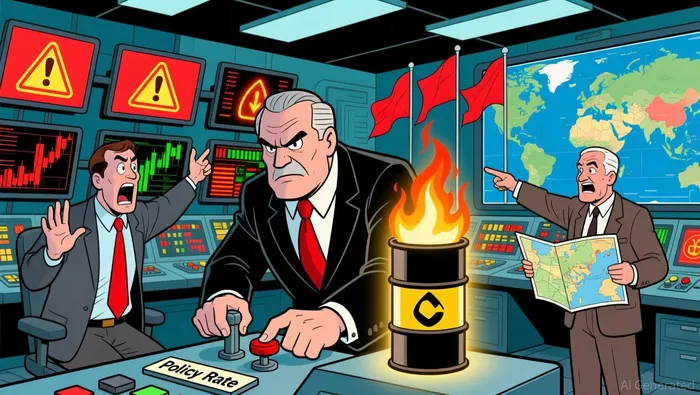
Why Is the Fed's Dot Plot in Focus?
The Fed's dot plot, which outlines officials' rate projections, could provide clues about the central bank's policy trajectory. Currently, seven out of 18 officials have signaled no rate cut or even a hike for 2026, and further shifts could erase the projected cut from the median forecast.
The updated dot plot will also influence market expectations for bond yields, stock valuations, and the US dollar. A shift toward a 'higher for longer' rate scenario could reinforce the narrative of prolonged tight monetary policy and reduce the incentive for aggressive TACO positioning.
How Are Other Central Banks Responding?
Major central banks, including the European Central Bank and the Bank of England, have also adopted a wait-and-see stance. These institutions have left rates unchanged and emphasized the need for more data before making decisions.
The ECB, for example, has maintained its rate at 2%, while the BoE has kept its rate at 3.75%. Both central banks are cautious about overreacting to geopolitical risks and are focused on maintaining inflation credibility.
The cautious approach across major economies reflects the challenge of balancing growth and inflation in the face of energy shocks and geopolitical uncertainty. This environment has increased the likelihood of a stagflationary outcome, limiting the space for aggressive easing.
What Are Analysts Watching Next?
Analysts are closely monitoring the labor market and inflation trends for additional clarity on the Fed's next steps. The core PCE index remains the key inflation gauge, and even the Fed's December forecast suggested it would stay above 2% through 2026.
Traders and investors are also paying attention to the potential for a March rate hike as a response to rising inflation from the Iran war. Carl Weinberg has advocated for a hike to counter an oil-shock-driven inflation spike, estimating that inflation could reach 3.5% by summer.
At the same time, the Fed is wary of overreacting to short-term volatility. Fed Chair Powell has emphasized the importance of maintaining policy credibility while avoiding premature moves that could exacerbate uncertainty.
The evolving macroeconomic landscape is reshaping investor expectations for 2026. With geopolitical tensions and inflationary pressures adding complexity to the outlook, the TACO trade may not deliver the anticipated returns for traders who were previously confident in its potential.







Comentarios
Aún no hay comentarios