
Trade Truce Hopes Rise as China, U.S. Prep for Weekend Talks
The U.S. and China are on the brink of a critical moment in their trade dispute as senior officials prepare for in-person talks in Switzerland this weekend. The meetings, the first of their kind under the Trump administration’s escalated tariff regime, could mark a turning point for two economies that have seen trade volumes plummet since the 145% and 125% tariffs were imposed. While neither side has signaled sweeping breakthroughs, the talks offer a rare opportunity to ease tensions and stave off a global economic slowdown—provided both prioritize de-escalation over political posturing.
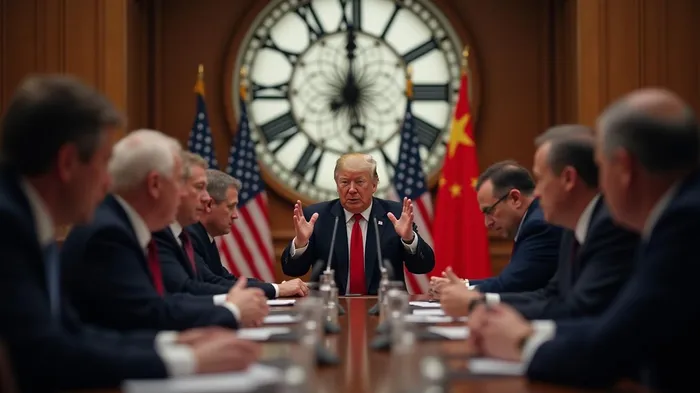
Key Players and the High Stakes
Leading the U.S. delegation will be Treasury Secretary Scott Bessent and Trade Representative Jamieson Greer, tasked with balancing the administration’s “fair trade” rhetoric with the urgent need to avert a deepening recession. China’s delegation is headed by Vice-Premier He Lifeng, who has already hinted at limited tariff exemptions as a goodwill gesture but has ruled out concessions on core principles like intellectual property and market access.
The stakes are immense. The International Monetary Fund (IMF) recently slashed its 2025 global growth forecast to 2.8% from 3.3%, citing the tariffs’ ripple effects. Federal Reserve Chair Jerome Powell has warned that the full economic “shock” of these tariffs remains unrealized, with the trajectory of trade negotiations likely to determine whether markets stabilize or plunge further.
The Agenda: Small Steps, Big Risks
The talks will focus on three pillars:
1. Reducing tariffs: The U.S. has floated lowering its 145% tariff rate, while China has quietly exempted some U.S. goods from its 125% counter-tariffs. However, neither side has made these moves public, leaving room for negotiation.
2. Fair trade frameworks: The U.S. demands structural changes to Chinese trade practices, such as curbing state subsidies and enforcing intellectual property laws. China, meanwhile, insists on mutual respect and adherence to international norms.
3. Economic stabilization: With U.S. manufacturing data weakening and China’s factory activity hitting a 14-month low, the talks must address how to cushion vulnerable sectors like semiconductors and automotive manufacturing.
What the Numbers Say—and What They Don’t
The market’s response to the talks has been cautiously optimistic. Equity indices like the S&P 500 and NASDAQ have edged higher this week, buoyed by hopes of a deal. But underlying risks remain. Sectors like semiconductors—critical to both economies—have underperformed year-to-date, with companies like Intel (INTC) and Taiwan Semiconductor (TSM) down 15% and 10%, respectively, amid supply chain disruptions.
Meanwhile, the IMF’s revised growth forecast underscores the fragility of the global economy. A prolonged trade war could push growth below 2.5%, a level that would likely trigger a synchronized global recession.
A Fragile Path Forward
The talks’ success hinges on whether both sides can agree on a “de-escalation first” approach. Bessent’s emphasis on this strategy—“we’ve got to de-escalate before we can move forward”—aligns with China’s public stance on mutual respect. However, political constraints loom large. President Trump has tied any tariff reductions to a broader “deal,” while China’s leaders face domestic pressure to resist U.S. demands.
Even a partial agreement—such as a 12-month tariff moratorium or expanded exemptions—could provide enough breathing room for markets to rebound. The U.S. stock market’s performance in 2023, when trade tensions briefly eased, offers a blueprint: the S&P 500 rose 18% during periods of détente.
Conclusion: Hope, but Not Certainty
Investors should approach the talks with cautious optimism. A modest de-escalation could lift equities and stabilize global growth, but the path to a lasting resolution remains fraught. Key data points—such as the IMF’s 2.8% growth forecast and the Fed’s warnings about tariffs’ latent economic impact—underscore the high stakes.
While a trade truce would likely benefit cyclical sectors like industrials and consumer discretionary, investors should remain wary of overcommitting. As Asia Society’s Wendy Cutler noted, “quick victories” are unlikely. The markets may rally on any headline deal, but the real test will be whether the U.S. and China can translate weekend talks into sustained progress—and avoid the kind of tariff ratcheting that has plagued relations for years.
For now, the world watches Geneva, hoping that the economic costs of conflict will finally outweigh the political allure of confrontation.







Comentarios
Aún no hay comentarios