
Trade Tensions and Trump’s Claims: Navigating the Investment Landscape Amid U.S.-China Diplomacy
The recent Time interview with President Donald Trump, where he claimed Chinese President Xi Jinping called to discuss trade and “other deal plans,” has reignited global scrutiny over U.S.-China relations. Yet, Chinese officials swiftly dismissed the assertion, calling it “fake news” and denying any ongoing negotiations. For investors, the conflicting narratives underscore a critical question: How should markets and portfolios adapt to the volatility of an unresolved trade war?
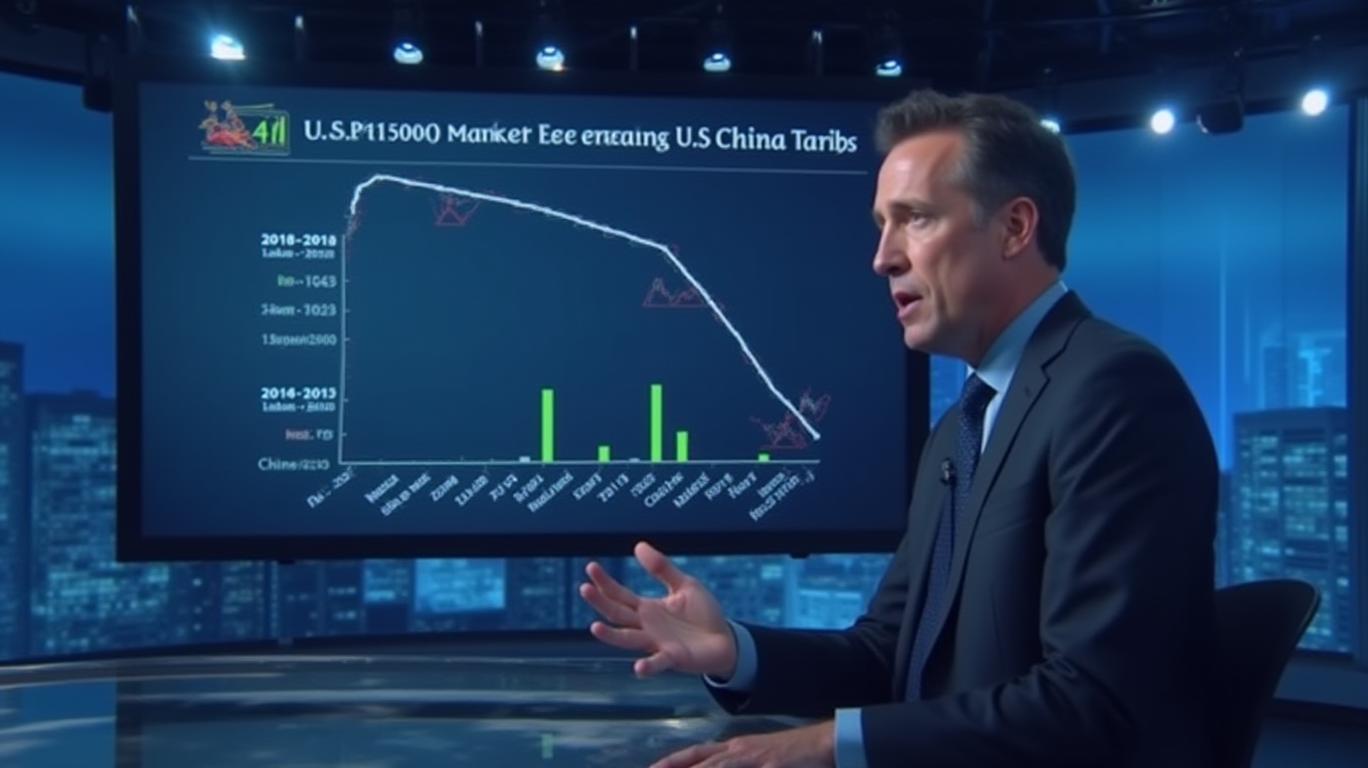
The Claims and Denials: A Diplomatic Standoff
Trump’s remarks in the April 22 interview framed the alleged call as evidence of China’s willingness to negotiate, stating, “He’s called. And I don’t think that’s a sign of weakness.” However, Chinese Foreign Ministry spokesperson Guo Jiakun countered, “There are currently no economic and trade negotiations between China and the United States.” This chasm between U.S. rhetoric and Chinese silence mirrors a pattern of mistrust that has defined the trade war since 2018.
The stakes are high. U.S. tariffs on Chinese imports have reached 145%, while Beijing retaliates with its own punitive duties. A 2025 study by Connecticut’s attorney general estimates that 95% of prior tariff costs were passed to American consumers, with new levies projected to add up to $4,900 annually per household by 2026.
The Economic Reality: No Deal, No Relief
Despite Trump’s optimism, there’s scant evidence of progress. China’s Commerce Ministry has repeatedly stated that no high-level talks have occurred, and it refuses to negotiate until tariffs are reduced. Analysts note that Beijing calculates it holds the upper hand: its centralized governance allows it to withstand prolonged economic strain, while U.S. businesses and voters face immediate pain from rising costs.
The failure of the 2020 “Phase One” deal, which required China to buy $200 billion in U.S. goods, further undermines trust. China fulfilled just 17% of its commitments, per U.S. trade data. Without enforceable terms, any new agreement risks repeating past failures.
Sector-Specific Risks and Opportunities
Investors must parse the impact on key sectors:
1. Technology: U.S. chipmakers like NVIDIA (NASDAQ: NVDA) and AMD (NASDAQ: AMD) face dual pressures—U.S. export controls and Chinese tariffs.
2. Manufacturing: Automakers such as General Motors (NYSE: GM) and Ford (NYSE: F) could suffer if tariffs on Chinese steel and components persist.
3. Consumer Staples: Companies like Walmart (NYSE: WMT) and Target (NYSE: TGT) face margin squeezes as tariffs inflate the cost of Chinese-made goods.
The Path Forward: APEC and Beyond
A breakthrough may hinge on the November 2025 APEC Leaders’ Summit in South Korea, the first face-to-face meeting between Trump and Xi since tensions escalated. While analysts doubt a major deal emerges, the summit could reset dialogue or signal a pause in tariffs.
However, Beijing’s conditions remain non-negotiable: tariffs must be reduced first. “The ball is in China’s court,” Trump insists—a claim Beijing rejects. Without compromise, the trade war could deepen, with global GDP growth estimates dropping by 0.5% by 2026, per the International Monetary Fund.
Conclusion: Proceed with Caution
The U.S.-China trade dispute remains a high-risk, low-certainty scenario for investors. Key takeaways:
- Avoid Overexposure: Sectors tied to China-U.S. trade (semiconductors, autos) face valuation risks.
- Monitor Tariff Rollbacks: A 50% tariff rollback on Chinese goods, as Trump proposed, could boost markets but depends on Beijing’s cooperation.
- Watch APEC: A public truce or “face-saving” deal at the November summit might temporarily stabilize markets.
With Chinese stocks trading at a 13-year low relative to U.S. equities and U.S. manufacturing PMIs contracting for six straight months, patience is critical. Until credible negotiations begin—or tariffs ease—the investment climate remains hostile. As the old adage goes: In trade wars, everyone loses. For now, investors should brace for more volatility.







Comentarios
Aún no hay comentarios