
U.S. Trade Policy Risks and Market Volatility: Navigating the Impact of Trump-Era Tariff Reversals on Global Supply Chains and Investor Sentiment
The Legal and Economic Crossroads of Trump's Tariff Policies
The U.S. Supreme Court's ongoing review of Trump's global tariffs has introduced significant uncertainty. If the court rules against the administration, the U.S. average effective tariff rate could drop to 6.50%, a dramatic shift from the current 18%-the highest since 1934, according to a Strait Times analysis. This legal ambiguity extends to key bilateral relationships, such as the U.S.-China trade agreement, where a 10% tariff reduction and a one-year suspension of threatened tariffs signal a tentative easing of tensions, as noted in the same analysis. However, high tariffs on India (50%) and the European Union (15%) persist, while proposed 300% tariffs on semiconductors threaten to further complicate global supply chains, the analysis also reports.
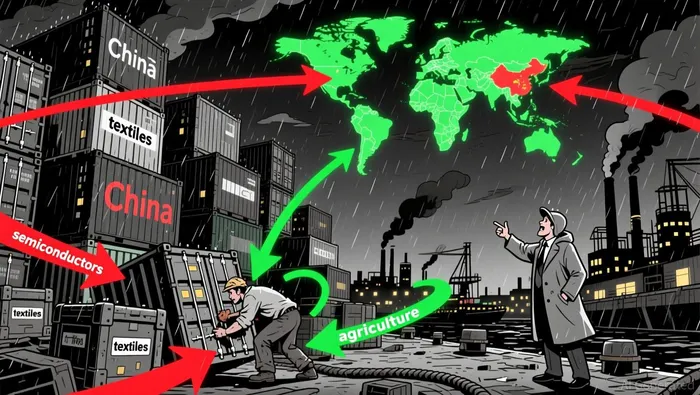
Supply Chain Disruptions and Industry-Specific Impacts
The ripple effects of Trump-era tariffs are already evident in logistics and manufacturing sectors. Cheetah Net Supply Chain Service Inc., a logistics firm, reported a 31.5% revenue decline from Edward Transit Express Group Inc., attributed to lingering U.S.-China trade tensions, according to a Yahoo Finance report. Such disruptions highlight the vulnerability of firms reliant on cross-border trade. Meanwhile, the proposed 300% semiconductor tariffs could exacerbate bottlenecks in tech manufacturing, particularly for firms dependent on Asian suppliers, as the same report notes.
Goldman Sachs economists suggest that most trade agreements will remain intact to avoid renewed uncertainty, but the semiconductor case underscores the risks of sector-specific overreach, the analysis also notes. The broader supply chain management software (SCMS) market, however, is projected to grow at 3.2% CAGR from 2024 to 2030 as companies adopt digital tools to mitigate disruptions, according to the Strait Times analysis.
Investor Sentiment and Market Volatility
Trump's trade policies have historically influenced investor sentiment, with his recent "tariff dividend" proposal reigniting the so-called "Trump Put" effect. Anthony Pompliano, a prominent investor, argues that the $2,000 dividend plan-funded by tariff revenues-has reinvigorated market optimism, driving bullish trends in the S&P 500 and Nasdaq, as reported in a Seeking Alpha piece. However, this optimism contrasts with the heterogeneous impacts observed in Q3-Q4 2025.
When Trump announced the "Liberation Day" tariffs in April 2025, firms in trade-exposed sectors and smaller companies experienced sharp losses, according to a ScienceDirect study. A partial recovery followed as implemented tariffs proved less severe than initially feared, the study notes. This pattern underscores how policy announcements create asymmetric risks, with smaller firms and trade-dependent industries bearing the brunt of volatility, the study also finds.
The Tariff Dividend: Promise or Fiscal Quagmire?
While Trump and Senator Josh Hawley advocate for distributing $2,000 to most Americans via tariff revenues, Treasury Secretary Scott Bessent has prioritized debt reduction, given the national debt now exceeds $38 trillion, as noted in the Seeking Alpha piece. The administration collected $195 billion in tariffs through Q3 2025, but congressional approval remains uncertain, the piece also reports. Critics warn that diverting funds to households could exacerbate inflationary pressures, while supporters argue it would offset the cost-of-living crisis, the piece also notes.
Conclusion: Strategic Considerations for Investors
The interplay between U.S. trade policy and market dynamics in 2025 demands a nuanced approach. Investors must weigh the risks of supply chain disruptions, sector-specific vulnerabilities, and the fiscal implications of tariff-driven policies. While the "Trump Put" may offer short-term gains, the long-term stability of global trade hinges on resolving legal uncertainties and balancing protectionist measures with economic pragmatism.







Comentarios
Aún no hay comentarios