
U.S. Trade Deficit Contraction and the Reshaping of Export-Driven Opportunities in 2025
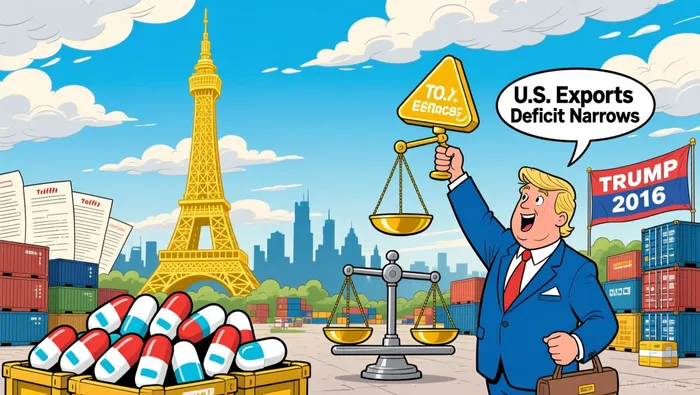
The U.S. trade deficit has contracted sharply in Q3 2025, driven by a surge in exports of non-monetary gold and pharmaceuticals, alongside a slowdown in imports. This shift, fueled by aggressive tariff policies under the Trump administration, has created a complex landscape for investors. While the trade deficit's narrowing offers a temporary boost to GDP growth estimates, the long-term implications for global supply chains and sector-specific equities remain nuanced.
Trade Deficit Contraction: A Double-Edged Sword
According to a Bloomberg report, the U.S. trade deficit fell to $52.8 billion in September 2025, the smallest since mid-2020, driven by a 3% increase in exports-largely in non-monetary gold and pharmaceutical preparations-while imports rose only 0.6%. This contraction was partly a result of Trump's tariffs, which disrupted pre-tariff import surges and caused volatility in trade flows. For example, tariffs on Switzerland led to a sharp drop in gold imports in August, followed by a rebound in September after a tariff reduction deal.
However, the year-to-date goods and services deficit expanded by 25% compared to 2024, highlighting the fragility of this improvement. The Federal Reserve Bank of San Francisco warns that such volatility could depress long-term growth and inflation as businesses and consumers adjust to higher costs.
GDP Growth: A Mixed Picture
 The trade deficit contraction has had a mixed impact on Q3 GDP growth. The Atlanta Fed's GDPNow model estimated that net exports would contribute 0.86 percentage points to Q3 growth in September, while Goldman Sachs revised its Q3 forecast down to 1.6% due to a "surge in the trade deficit." This contradiction reflects the duality of trade data: while the September contraction boosted growth, year-to-date imports-particularly from China-have widened the deficit.
Deloitte projects that higher tariffs will slow GDP to 1.4% in 2026 from 1.8% in 2025, as average tariff rates rise from 10% to 18.6%. However, strong business investment in AI-related sectors may offset some of this drag.
Sector-Specific Opportunities: Gold and Pharmaceuticals
Gold: The surge in non-monetary gold exports has made the sector a standout performer. Gold prices rose 16% in Q3 2025, driven by safe-haven demand, inflationary pressures, and a weaker U.S. dollar. The Trump administration's tariffs on Switzerland initially disrupted gold imports but were later softened, stabilizing the market. For investors, gold's resilience amid trade uncertainty positions it as a hedge against policy-driven volatility.
Pharmaceuticals: The sector has faced headwinds from tariffs but is adapting through reshoring. A KPMG report notes that 52% of life sciences companies are expanding domestic manufacturing to mitigate tariff costs. While a 100% tariff on branded drugs was temporarily paused, analysts suggest the impact on large-cap biopharma firms will be minimal, as many have already increased domestic production. M&A activity in Q3 2025 totaled $30.8 billion, with a focus on oncology and cardiovascular assets. The NASDAQ Biotech Index rose 11% year-to-date, reflecting investor confidence in the sector's adaptability.
Tariff-Driven Supply Chain Shifts and Investment Implications
Tariffs have forced companies to reconfigure supply chains, creating both challenges and opportunities. For instance, pharmaceutical firms are accelerating reshoring plans, while gold producers benefit from geopolitical-driven demand. Spartan Capital notes that gold's 48.5% year-to-date gain underscores its role as a strategic asset in a high-tariff environment.
Investors should also consider the broader economic context. The Fed's September rate cut and weak dollar have bolstered commodities and equities, with the S&P 500 rising 8.1% in Q3. Sectors with low exposure to tariffs-such as AI-driven technology firms-may outperform, but gold and pharmaceuticals offer unique positioning against trade policy risks.
Conclusion: Navigating the New Normal
The U.S. trade deficit contraction in Q3 2025 reflects a short-term boost to GDP but masks long-term structural challenges. For investors, the key lies in sectors that are either insulated from tariffs (e.g., gold) or actively reshoring production (e.g., pharmaceuticals). As the Fed grapples with inflationary pressures from tariffs and the Supreme Court weighs in on their legality, equities in these sectors may offer asymmetric upside in a volatile environment.







Comentarios
Aún no hay comentarios