
Toyota's Strategic Edge in a Post-Tariff World: Why TM is a Buy Now
The U.S. Court of International Trade's May 2025 ruling to block former President Trump's sweeping tariffs under the International Emergency Economic Powers Act (IEEPA) has upended the automotive industry's geopolitical calculus. By invalidating the administration's use of emergency powers to justify tariffs on non-U.S. auto imports, the decision has removed a major overhang on global trade flows, particularly for companies like 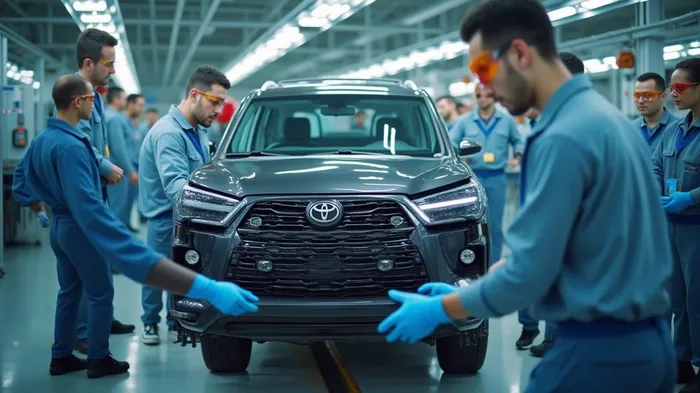 . For investors, this landmarkLARK-- ruling creates a rare confluence of policy clarity, demand resilience, and strategic positioning—making Toyota Motor Corporation (TM) a compelling buy in the automotive sector.
The Tariff Ruling: A Game-Changer for Global Supply Chains
The court's decision to invalidate tariffs on automobiles, auto parts, and steel/aluminum imports from Canada, Mexico, and China has dismantled a key pillar of Trump-era trade policy. By ruling that trade deficits do not constitute a “national emergency,” the judiciary has reaffirmed Congress's constitutional authority over tariffs—a move that destabilizes unilateral trade threats and restores a modicum of predictability to cross-border commerce.
For automakers, this means reduced costs, simplified compliance, and a renewed ability to optimize global supply chains. The removal of the 25% tariff on non-U.S. auto content from Mexico and Canada, for instance, eliminates a major incentive for manufacturers to relocate production to avoid punitive duties. This opens the door for companies like Toyota to lean into their North American manufacturing hubs without the threat of sudden tariff hikes.
Toyota's Hybrid Dominance: Resilience Meets Opportunity
While electric vehicles (EVs) dominate headlines, Toyota's hybrid vehicles—accounting for over 90% of its U.S. sales—remain a cash flow powerhouse. Unlike EVs, which face supply chain bottlenecks (e.g., lithium shortages) and regulatory uncertainty, hybrids bridge the gap between combustion engines and full electrification.
The tariff ruling amplifies this advantage. With U.S.-Mexico-Canada Agreement (USMCA) rules still in place—requiring 75% North American content for duty-free access—Toyota's vertically integrated supply chain in Mexico and the U.S. is perfectly positioned. shows TM outperforming broader markets during periods of trade tension, a trend likely to accelerate as policy uncertainty fades.
Leveraging the U.S. Market: Scale, Profits, and Policy Proof
Toyota's U.S. operations are its crown jewel. The company commands a 14% market share in the world's largest auto market, with factories in Texas, Alabama, and Indiana producing hybrids like the Prius and Camry. The tariff ruling removes a key drag on margins: previously, automakers faced tariffs on components sourced outside North America, even if final assembly occurred in the U.S. Now, Toyota can streamline sourcing decisions, reducing costs and boosting profitability.
Moreover, the U.S. remains a hybrid stronghold. While EV adoption lags in regions like the Midwest, Toyota's portfolio—backed by decades of R&D—continues to attract buyers who prioritize affordability and reliability. This resilience is critical as competitors like Ford and GM pivot aggressively toward EVs, which face steeper regulatory and infrastructure hurdles.
Global Trade Clarity: A Tailwind for Automakers
The court's decision isn't just a U.S. story—it reshapes global trade dynamics. By curbing the executive branch's ability to weaponize tariffs, it reduces the risk of retaliatory measures from trade partners like the EU and China. For Toyota, this means:
1. Lower Retaliation Risks: The EU had threatened 25% tariffs on U.S. auto exports, which could have disrupted Toyota's $12.4 billion in annual shipments to Europe.
2. Smarter China Strategy: While China's retaliatory tariffs on U.S. goods remain a concern, Toyota's diversified supply chain (with 40% of production in Asia) insulates it from overexposure to any single market.
3. Supply Chain Efficiency: The removal of arbitrary tariffs allows Toyota to optimize logistics, reducing costs and accelerating delivery times.
The Investment Case: TM as a Buy Now
- Valuation: At a P/E ratio of 14x (vs. 18x for the sector), TM trades at a discount to its growth prospects.
- Dividend: A 3% yield with a track record of consistent payouts underscores financial strength.
- Catalysts: The tariff ruling, rising hybrid demand in emerging markets, and U.S. tax incentives for hybrids (e.g., the Inflation Reduction Act) create a trifecta of tailwinds.
Conclusion: Toyota's Moment in the Sun
The U.S. court ruling has stripped away a major risk to global automakers, but it also rewards companies with scale, geographic diversification, and a product lineup that thrives in uncertainty. Toyota's hybrid dominance, U.S. market leadership, and North American supply chain agility position it to capitalize on post-tariff clarity. With shares down 8% year-to-date on broader market volatility, now is the time to buy TM before the broader market recognizes this transformation.
Investors seeking resilience in an era of geopolitical flux—and exposure to a company poised to lead the next chapter of automotive innovation—should act swiftly. Toyota isn't just surviving trade wars; it's winning them.







Comentarios
Aún no hay comentarios