
Toyota's Hydrogen Horizon: Betting Big on a Carbon-Free Future
Toyota’s latest push to build a “hydrogen society” is no small bet. By 2025, the automaker aims to deploy advanced fuel cell systems, expand infrastructure partnerships, and scale hydrogen applications across transportation and energy sectors. The stakes are high: a successful hydrogen ecosystem could position ToyotaTM-- as a leader in decarbonizing global supply chains—and deliver long-term returns for investors.
The Technology Edge: Fuel Cells Go Mainstream
At the heart of Toyota’s strategy is its third-generation fuel cell (FC) system, a technological leap designed to rival diesel engines in durability and cost. The 3rd Gen FC System, introduced at Tokyo’s 2025 H2 & FC EXPO, offers a 20% improvement in fuel efficiency and a lifespan of up to 600,000 miles—twice that of its predecessor. This durability is critical for heavy-duty trucks, where maintenance costs often outweigh fuel savings.
The system’s versatility is equally compelling. Scalable for everything from passenger vehicles to ships, it underpins Toyota’s vision of a “multi-pathway” energy future. By 2027, Gen 3 FC-powered Class 8 trucks will debut in North America, targeting 20,000 diesel trucks for replacement at the Port of Long Beach alone.
Infrastructure: Building the Hydrogen Backbone
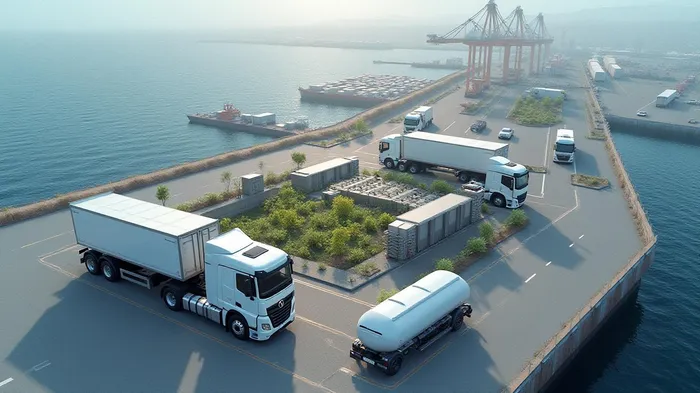
Hydrogen’s Achilles’ heel has long been infrastructure. Toyota is tackling this head-on with the Tri-gen system at Long Beach, which converts biogas into hydrogen, producing 1,200 kg daily—enough to fuel 200 trucks. The facility also generates 2.3 MW of electricity and 1,400 gallons of drinking water daily, reducing CO₂ emissions by 9,000 tons annually.
Partnerships are key. Toyota’s collaboration with Air Liquide and Iwatani aims to expand hydrogen distribution networks, while its North American Hydrogen Headquarters (H2HQ) in California—housing a 1.2 MW dynamometer and microgrid—doubles as a R&D hub and education center. By 2026, Toyota plans to add 30 new hydrogen stations in the U.S., addressing a critical bottleneck for consumer adoption.
The BMW Partnership: Scaling Demand and Cost
Toyota’s alliance with BMW, announced in 2024, is a masterstroke. Joint development of fuel cell systems and infrastructure aims to slash costs through shared procurement and pooled demand. BMW’s first mass-produced FCEV, slated for 2028, will amplify market reach, while Toyota’s 2025 Mirai—boasting a 402-mile range—targets eco-conscious buyers.
The partnership’s real value lies in creating a hydrogen supply network. By aligning with European and U.S. governments pushing green hydrogen mandates, Toyota and BMW may accelerate adoption in regions where regulations favor low-carbon fuels.
Risks and Realities: Can Hydrogen Compete?
Hydrogen’s success hinges on cost parity with alternatives. Toyota claims its Gen 3 system reduces production costs by 50% compared to 2015 models—a critical milestone. However, BEVs still dominate consumer markets, with Tesla’s Model Y outselling FCEVs globally.
Infrastructure remains a hurdle. While California has 57 hydrogen stations (vs. 15,000 EV chargers), scaling to national networks will require massive investment. Competing technologies like green ammonia and advanced batteries also loom.
Conclusion: A Niche Leader or Industry Game-Changer?
Toyota’s hydrogen gambit is ambitious but grounded in actionable steps. By 2025, it aims to:
- Deploy Gen 3 FC systems across 10 vehicle types, including trucks and ships.
- Cut hydrogen production costs by 50% via partnerships like the Tri-gen system.
- Reduce its logistics sector emissions by 30% through fleet electrification and hydrogen.
The data is promising: Toyota’s H2HQ projects a 1-MW stationary fuel cell market in industrial sectors, while its collaboration with BMW could double FCEV production capacity by 2030. Yet, success depends on overcoming regulatory and economic barriers.
For investors, Toyota’s hydrogen push is a long-game bet. While BEVs and hybrids will remain cash cows, the company’s focus on decarbonizing heavy transport—where batteries struggle—could carve out a $120 billion market by 2030 (as per BloombergNEF). Toyota’s 2025 milestones, paired with its multi-technology approach, suggest a strategy designed to thrive in a post-carbon world—regardless of which energy pathway wins.
In a race where infrastructure and scale define winners, Toyota’s early moves may just give it the edge.





Comentarios
Aún no hay comentarios