
TotalEnergies and the Vaca Muerta Opportunity: A High-Return Play in Argentina's Shale Boom
Argentina's Vaca Muerta shale basin has emerged as one of the most compelling energy plays in the Americas, offering a rare combination of low production costs, untapped reserves, and improving infrastructure. While TotalEnergiesTTE-- has publicly signaled its intention to pivot away from shale oil in Argentina, focusing instead on natural gas and LNG exports, the strategic value of the region's oil assets remains too compelling to ignore. Here's why investors should keep a close eye on TotalEnergies' potential re-entry into the Vaca Muerta oil market—and why the timing might finally be right.
The Case for Vaca Muerta: A Low-Cost, High-Potential Basin
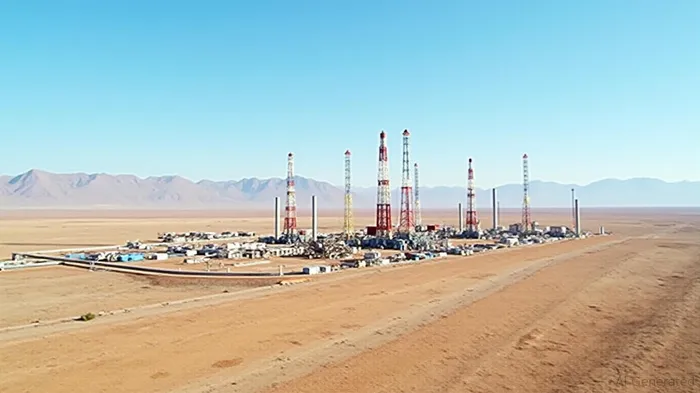
Vaca Muerta is a game-changer. With lifting costs as low as $4.5–$4.6 per barrel of oil equivalent (boe)—among the lowest in the global shale sector—the basin's economics are unrivaled. Operators like YPF and Vista EnergyVIST-- have demonstrated that wells here are 30% more productive than those in the U.S. Permian Basin, thanks to favorable geology and optimized drilling techniques. This efficiency, combined with Argentina's 26% year-on-year oil production growth (to 447,000 barrels per day in early 2025), positions Vaca Muerta as a cornerstone of the country's energy renaissance.
Why TotalEnergies Might Re-Engage in Shale Oil
Despite its stated exit from Vaca Muerta's oil assets, TotalEnergies' strategic calculus could shift for three key reasons:
Infrastructure Upgrades Reduce Risk:
The completion of projects like the Oldelval Duplicar pipeline (expanding oil transport capacity to 750,000 bpd by mid-2025) and the Vaca Muerta Sur pipeline (targeting 550,000 bpd by 2027) has alleviated takeaway constraints. These upgrades, paired with the Punta Colorado terminal (to launch by 2026), are turning Argentina into a major crude exporter. With logistics no longer a bottleneck, oil projects here could deliver consistent, high-margin returns.Strategic Partnerships and Divestment Timing:
TotalEnergies' plans to offload stakes in shale oil blocks like La Escalonada and Rincón de la Ceniza (where it operates alongside ShellSHEL-- and state-owned GyP) might create a buying opportunity. If Total were to acquire a competitor's divested assets at a discounted price—especially those with proven reserves or access to infrastructure—it could secure a low-cost, high-impact position without overextending capital.Political Stability Gains Traction:
While Total CEO Patrick Pouyanné has cited Argentina's historical forex policy instability as a deterrent, the Milei administration's reforms—ending capital controls and stabilizing the peso—are reducing regulatory risks. If these policies endure, Total could mitigate its earlier concerns and deploy capital with greater confidence.
The Numbers Tell the Story
Let's quantify the opportunity:
- Cost Efficiency: At $4.6/boe, Vaca Muerta oil projects have a breakeven price far below global benchmarks. Even at $60/barrel crude, margins here are ~$14/barrel, among the industry's highest.
- Growth Trajectory: Argentina's oil output is projected to hit 830,000 bpd by 2025, with Vaca Muerta accounting for ~85% of this growth.
- Export Potential: With $17 billion in crude exports expected by 2027, the basin's scale is primed for supermajor participation.
Risks and Considerations
- Policy Volatility: While Milei's reforms are positive, Argentina's history of abrupt shifts remains a risk.
- Commodity Cycles: A prolonged oil price slump could erode margins, though Vaca Muerta's low costs offer a cushion.
- LNG vs. Oil Prioritization: Total's CEO has emphasized gas over LNG infrastructure. However, oil assets could complement its gas strategy by leveraging shared infrastructure and export corridors.
Investment Thesis: Monitor TotalEnergies for a Strategic Re-Entry
TotalEnergies' stock has underperformed peers in 2025 despite its strong gas and renewables growth. A re-entry into Vaca Muerta's oil sector—achieved through opportunistic acquisitions or joint ventures—could unlock $1–$2 billion in annual free cash flow by 2030, boosting its valuation. Investors should watch for:
- M&A activity: Total's moves to acquire discounted shale oil assets post-divestment.
- Infrastructure utilization: Its ability to piggyback on YPF's pipelines and ports to reduce costs.
- Political stability metrics: Sustained forex policy reforms and export terminal progress.
Conclusion: A High-Reward, High-Conviction Play
Vaca Muerta's oil potential is undeniable. While TotalEnergies' current strategy prioritizes gas, the basin's low-cost, high-growth profile and improving infrastructure make it a tempting target for a strategic re-entry. For investors, Total's stock offers a leveraged play on Argentina's energy boom—if the company can navigate the risks and seize the right opportunity. Keep an eye on the next 12 months; this could be the pivot point for one of the decade's most underappreciated energy stories.
Final thought: In a world of high-cost shale plays, Vaca Muerta is the exception. TotalEnergies' management knows it—and may be forced to act.







Comentarios
Aún no hay comentarios