
TotalEnergies' Southeast Asia Gambit: A Play for LNG Supremacy and the Green Transition
The energy landscape in Southeast Asia is undergoing a seismic shift, driven by surging LNG demand, decarbonization mandates, and the scramble to secure low-cost hydrocarbon reserves. TotalEnergiesTTE-- has positioned itself at the epicenter of this transformation through a series of bold moves in Malaysia and Indonesia. Its partnership with PETRONAS—Malaysia's national oil company—has become the linchpin of its strategy to dominate regional LNG markets while advancing its net-zero ambitions. Here's why investors should pay close attention.
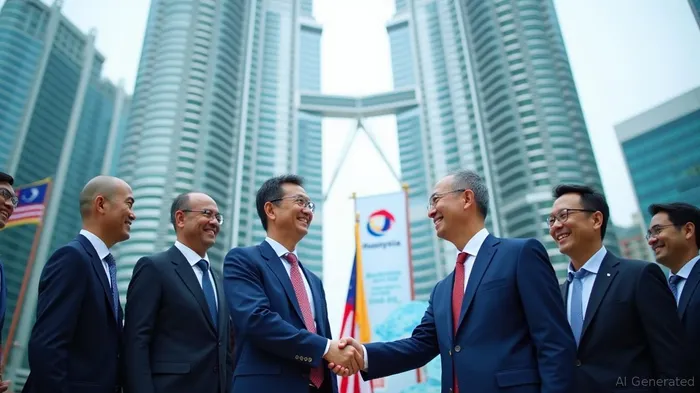
The PETRONAS Partnership: A Blueprint for LNG Dominance
TotalEnergies' collaboration with PETRONAS since 2023 has been nothing short of transformative. The duo's joint venture in Malaysia's Blocks SK301b and SK313—a pair of offshore gas-rich zones—has unlocked over 4 Tcf of proven gas reserves, a critical mass that will feed Malaysia's LNG export facilities starting in 2030. These reserves are not just large in scale but also strategically located: they sit near existing infrastructure, enabling low-cost production with operating expenses estimated at $1–2 per million British thermal units (MMBtu), well below global averages.
The partnership also extends to Indonesia, where TotalEnergies secured a 24.5% stake in the Bobara block—a frontier exploration area targeting oil and gas. While not explicitly gas-focused like its Malaysian ventures, Bobara's potential aligns with TotalEnergies' broader ambition to diversify its Southeast Asian portfolio while leveraging PETRONAS's local expertise.
TotalEnergies' stock has risen ~15% since early 2023, outperforming peers like Exxon (XOM) and Chevron (CVX), as investors bet on its Southeast Asia pivot. However, its P/E ratio of 12.5x remains modest compared to growth-oriented energy transition plays, suggesting further upside if execution risks are managed.
LNG: The Fuel of Asia's Energy Transition
Asia's LNG demand is expected to grow by 35% through 2030, driven by coal-to-gas switching in power generation and industrial sectors. TotalEnergies is uniquely positioned to capitalize on this:
- Low-Cost Supply: The 4 Tcf reserves in Malaysia are among the cheapest in Asia, with production costs undercutting projects in Australia and Qatar.
- Strategic Timing: The gas from Blocks SK301b/SK313 will hit markets just as regional LNG imports from Russia and the U.S. face geopolitical headwinds, creating a supply vacuum.
- LNG Export Capacity: Malaysia LNG, the terminal set to receive these reserves, has a capacity of 8.4 million tons per annum (Mtpa), with plans to expand.
The Green Pivot: CO2 Storage and ESG Credibility
TotalEnergies' vision extends beyond hydrocarbons. Its 2023 agreement with PETRONAS and Mitsui to develop a carbon capture and storage (CCS) hub in Malaysia's Malay Basin is a masterstroke. The project targets saline aquifers and depleted offshore fields, aiming to store 10 million tons of CO2 annually by 2030—a critical step toward Malaysia's net-zero goals.
This initiative not only aligns with TotalEnergies' net-zero targets but also opens new revenue streams. By offering a “merchant storage” service to Asian industries, the company can monetize its CO2 capacity, turning climate compliance into profit.
Risks: Regulatory Hurdles and Commodity Volatility
The path to LNG supremacy is not without obstacles. Key risks include:
1. Regulatory Delays: Approvals for the SK301b/SK313 gas project and CCS hub require navigating complex environmental and geopolitical regulations in Malaysia.
2. Commodity Price Fluctuations: A prolonged LNG price slump could erode margins, though the low-cost nature of the reserves provides a buffer.
3. Execution Risk: Frontline exploration in Indonesia's Bobara block carries geological uncertainty, and any dry holes could dent returns.
Investment Takeaways
TotalEnergies' Southeast Asia strategy is a high-reward, high-conviction play for investors willing to look beyond short-term volatility. Its 4 Tcf gas reserves, strategic PETRONAS partnership, and CCS ambitions position it as a leader in Asia's energy transition. Key catalysts to watch include:
- Final regulatory sign-off for the SK301b/SK313 project by mid-2026.
- First CO2 injection milestones at the Malay Basin hub by 2027.
- LNG price dynamics, particularly against U.S. and Russian supply disruptions.
For investors, TotalEnergies offers a rare blend of stable cash flows from mature assets and high-growth exposure to Asia's energy needs. While risks remain, the stock's ~5% dividend yield and undervalued P/E ratio make it a compelling buy-and-hold option for portfolios seeking exposure to the decarbonization wave.
In a world racing to balance energy security and sustainability, TotalEnergies' bet on Southeast Asia could prove prescient—and profitable.





Comentarios
Aún no hay comentarios