
TotalEnergies Navigates the EU's Gas Shift: LNG Diversification and Energy Transition Risks Ahead
The European Union's phased ban on Russian gas by 2027 is reshaping the continent's energy landscape, creating both opportunities and challenges for energy majors like TotalEnergiesTTE--. As the EU accelerates its pivot toward renewable energy and non-Russian LNG suppliers, TotalEnergies' strategic positioning—rooted in existing Russian LNG contracts, diversification efforts, and infrastructure investments—could prove pivotal. However, risks tied to supply chain bottlenecks and geopolitical volatility remain critical uncertainties.
Opportunity 1: Capitalizing on LNG Diversification
TotalEnergies' 20% stake in the Yamal LNG project in Russia has drawn scrutiny, but the company's contracts with Gazprom are legally permissible until January 2028 under the EU's phased ban. While critics argue this perpetuates reliance on Russian energy, TotalEnergies has positioned itself as a neutral actor complying with sanctions and contractual obligations. Crucially, the company is also diversifying LNG sources to non-Russian regions, including the U.S., Qatar, and Azerbaijan.
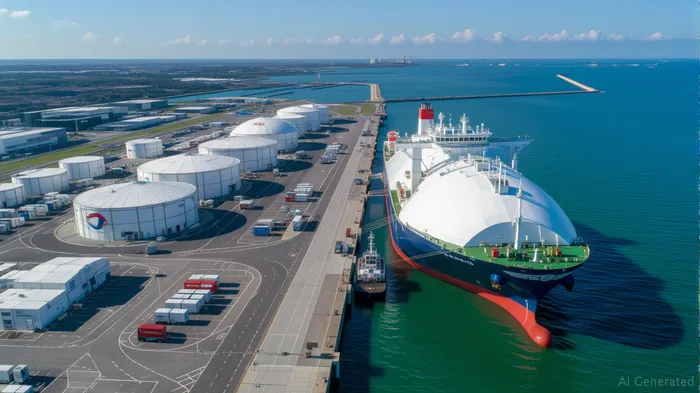
The EU's push to boost imports from these suppliers—via the Southern Gas Corridor and expanded partnerships—aligns with TotalEnergies' global LNG portfolio. By leveraging its terminals in Belgium and Spain, the firm can capitalize on rising demand for flexible, non-Russian LNG supplies.
Opportunity 2: Leadership in Energy Transition Infrastructure
The EU's REPowerEU plan earmarks €300 billion for renewables and grid modernization, creating a tailwind for TotalEnergies' investments in hydrogen, biomethane, and offshore wind. The company's acquisition of U.S.-based solar developer SunPower in 2022 and its partnerships in green hydrogen projects (e.g., in France's Dunkirk) signal a strategic shift toward clean energy dominance.
The Clean Industrial State Aid Framework (CISAF) further supports this transition by allowing member states to subsidize TotalEnergies' projects, shielding them from high energy costs. Meanwhile, the EU's 2030 renewables target of 45% of energy consumption could amplify demand for TotalEnergies' low-carbon technologies.
Risk 1: Supply Chain Bottlenecks in Renewable Infrastructure
Despite its ambitions, TotalEnergies faces hurdles in scaling renewable projects. The EU's push for domestic production of critical raw materials (CRMs) like lithium and rare earth metals—vital for batteries and wind turbines—is hampered by supply chain bottlenecks. For instance, disputes over the environmental impact of Portugal's Mina do Barroso lithium mine could delay CRM availability, raising project costs and timelines.
Moreover, the EU's reliance on imports for 98% of its lithium underscores vulnerability to global shortages. This could stall TotalEnergies' plans for green hydrogen and battery storage projects, which require CRM-intensive components.
Risk 2: Geopolitical Uncertainties and Contractual Risks
The EU's phaseout of Russian gas hinges on geopolitical stability. Conflicts such as the Israel-Iran standoff threaten LNG shipping routes in the Red Sea, raising insurance costs and delays. Meanwhile, TotalEnergies' Russian contracts could become liabilities if EU member states like Hungary or Slovakia push for extended exceptions, delaying the ban's implementation.
Legal risks also loom. If TotalEnergies exits Russian contracts early, it may face arbitration claims from Gazprom akin to Uniper's €13 billion dispute. While force majeure clauses offer some protection, the financial impact remains uncertain.
Investment Considerations
TotalEnergies' dividend yield of 6.2% (as of Q2 2025) and its balance sheet strength (debt-to-equity ratio of 0.3) provide a safety net. However, investors should monitor two key metrics:
1. EU LNG import volumes from non-Russian sources ()
2. Renewables investment pipeline execution ()
Conclusion
TotalEnergies' dual focus on LNG diversification and energy transition infrastructure positions it to benefit from the EU's energy shift. However, supply chain fragility and geopolitical volatility could temper growth. For investors, the stock offers a blend of yield and growth, but closely tracking CRM availability and geopolitical developments will be critical to navigate risks.
In the long term, TotalEnergies' ability to pivot from hydrocarbons to renewables—while managing contractual and logistical risks—will determine its success in this era of energy transformation.







Comentarios
Aún no hay comentarios