
TotalEnergies' ADR Conversion: A Strategic Move to Boost Liquidity and Shareholder Value
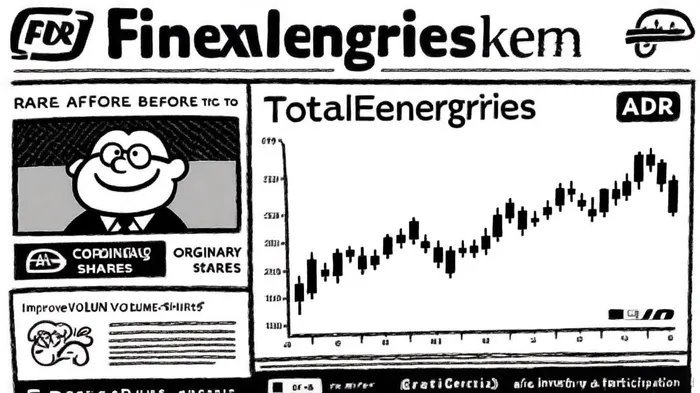
TotalEnergies SE's recent decision to convert its American Depositary Receipts (ADRs) into listed ordinary shares on the New York Stock Exchange (NYSE) marks a pivotal shift in its capital structure strategy. This move, announced by the company's board of directors, aims to streamline its U.S. listing and enhance accessibility for American investors[2]. By eliminating the complexities of ADRs—such as cross-border settlement processes and currency conversion—the conversion is expected to improve liquidity, reduce transaction costs, and align the company's equity structure with global best practices[5]. For investors, this structural change signals TotalEnergies' commitment to optimizing shareholder value while reinforcing its position as a leader in the energy transition.
Strategic Rationale: Liquidity and Market Participation
The ADR-to-ordinary share conversion directly addresses liquidity constraints that have historically limited U.S. investor participation. ADRs, while convenient for foreign securities, often trade at discounts or premiums to their underlying shares due to regulatory and operational inefficiencies. By listing ordinary shares directly on the NYSE, TotalEnergiesTTE-- eliminates these discrepancies, enabling seamless trading and fostering greater price discovery[2]. This aligns with the company's broader financial strategy of maintaining a robust balance sheet, as evidenced by its 2025 SEC filings, which emphasize a gearing ratio below 20% to ensure resilience against economic volatility[4].
Moreover, the conversion supports TotalEnergies' ambition to attract long-term institutional investors. U.S. pension funds and ESG-focused portfolios, which prioritize transparency and direct ownership, may now find it easier to allocate capital to the company's shares. This is particularly relevant given TotalEnergies' $5 billion investment in low-carbon energy projects in 2024, including carbon capture in Norway and solar power in Iraq[5]. By simplifying its equity structure, the company positions itself to capitalize on the growing demand for sustainable energy investments.
Shareholder Value: Buybacks and Dividend Discipline
TotalEnergies has reinforced its commitment to shareholder returns through aggressive buybacks and a consistent dividend policy. In 2025, the board authorized $7.5 billion in share repurchases, with guidance for $1.5 billion per quarter in 2026, contingent on stable oil prices and exchange rates[2]. These measures, combined with a 20-year dividend growth streak, underscore the company's dedication to balancing reinvestment in its energy transition with direct value creation for investors[3].
The ADR conversion further amplifies this value proposition. By reducing administrative costs associated with ADR programs, TotalEnergies can redirect resources toward high-return projects or additional shareholder distributions. For instance, the company's Gas Growth Integrated Project (GGIP) in Iraq—a $1.5 billion initiative combining flared gas recovery, solar power, and seawater treatment—demonstrates how capital efficiency can drive both profitability and decarbonization[5]. Investors stand to benefit from this dual focus on earnings growth and environmental impact.
Long-Term Investment Appeal: Energy Transition and Profitability
TotalEnergies' multi-energy strategy—anchored on oil and gas (particularly LNG) and renewables—positions it as a rare hybrid in the energy sector. In 2024, the company achieved a 14.8% ROACE while expanding its renewable capacity by 23%[5]. This balance of traditional and emerging energy sources mitigates transition risks, ensuring steady cash flows even as global markets pivot toward net-zero targets.
The ADR conversion complements this strategy by enhancing the company's visibility in U.S. capital markets. With methane emissions reduced by 55% since 2020 and a new 2025 target of a 60% cut[5], TotalEnergies aligns with regulatory trends that favor low-carbon portfolios. For investors seeking exposure to the energy transition without sacrificing yield, the company's dual-track approach offers a compelling proposition.
Conclusion: A Compelling Case for Investors
TotalEnergies' ADR conversion is more than a technical adjustment—it is a strategic lever to unlock liquidity, enhance shareholder value, and accelerate its energy transition. By aligning its U.S. listing with global standards, the company removes barriers to investment while reaffirming its commitment to profitability and sustainability. For investors, this represents an opportunity to participate in a diversified energy giant that is both a cash-flow generator and a decarbonization leader. With buybacks, dividends, and a clear roadmap for growth, TotalEnergies' ordinary shares now offer a streamlined path to capitalize on its transformative vision.







Comentarios
Aún no hay comentarios