
Tornado Cash and the Crypto Laundering Dilemma: Regulatory Scrutiny, Investor Risks, and the Future of Privacy Protocols
The intersection of privacy-focused cryptocurrency tools and regulatory enforcement has become a flashpoint in the digital asset space. Tornado CashTORN--, a decentralized mixer that enables users to obscure the origins of their transactions, has emerged as both a symbol of financial privacy and a focal point of legal and ethical debate. Recent developments-including high-profile fund movements, judicial challenges to OFAC sanctions, and the SEC's shifting enforcement priorities-highlight the growing tension between innovation and compliance. For investors, the implications are clear: assets tied to controversial protocols or individuals face heightened scrutiny, regulatory uncertainty, and reputational risk.
Tornado Cash's Role in High-Profile Laundering Cases
Tornado Cash has been at the center of multiple high-profile crypto laundering incidents. In 2022, the U.S. Treasury sanctioned the protocol for its role in laundering over $7 billion in virtual currency, including $455 million stolen by the North Korean state-sponsored group Lazarus. The mixer was also used to launder $96 million from the Harmony Bridge Heist and $7.8 million from the Nomad Heist. These cases underscore Tornado Cash's utility for cybercriminals seeking to anonymize illicit proceeds, despite its stated purpose of enhancing user privacy.
The protocol's decentralized nature-operating via immutableIMX-- smart contracts-has made it a lightning rod for regulatory debate. While OFAC initially defended its authority to sanction Tornado Cash under the International Emergency Economic Powers Act (IEEPA), a 2024 ruling by the Fifth Circuit overturned the sanctions, arguing that smart contracts cannot be classified as "property" under the law. This decision has created a legal gray area, complicating efforts to regulate DeFi platforms.
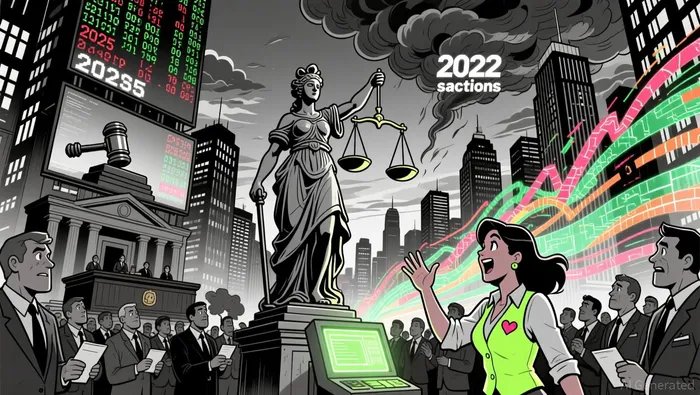
Legal Battles and Regulatory Uncertainty
The Fifth Circuit's ruling did not end the legal saga. The Department of Justice pursued criminal charges against Tornado Cash co-founder Roman Storm, who was convicted in 2025 of conspiracy to operate an unlicensed money transmitting business. While the jury deadlocked on more severe charges, the conviction signaled that developers of decentralized platforms could face liability for failing to address anti-money laundering obligations.
This legal tug-of-war reflects broader questions about the boundaries of regulatory authority in the DeFi space. For investors, the uncertainty raises concerns about the enforceability of compliance measures and the potential for future litigation against protocols or their creators.
Richard Heart's Activity and Tornado Cash's Resurgence
The controversy surrounding Tornado Cash has not deterred high-profile users. Richard Heart, the controversial crypto entrepreneur and founder of PulseChain and PulseX, has been linked to significant transactions on the mixer. In 2025, 21 PulseX-linked addresses deposited over 116,000 Ether into Tornado Cash, amounting to $393 million at the time. Additional on-chain activity revealed that wallets associated with Heart moved $162,937 ETH ($619 million) into the protocol, followed by withdrawals of 4,920 ETH ($16.25 million) in a layered transaction pattern.
These movements have drawn scrutiny from regulators and on-chain analysts. Tornado Cash's TVL surged to $1.5 billion by November 2025, with a significant portion tied to Heart's activities. While the protocol's privacy features are designed to protect user anonymity, such large-scale transactions raise questions about their intent and the potential for misuse.
SEC's Legal Retreat and Regulatory Shifts
The U.S. Securities and Exchange Commission (SEC) has also recalibrated its approach to crypto enforcement in 2024–2025. Under new leadership, the agency has deprioritized technical violations in favor of "bread-and-butter" cases involving investor harm. High-profile enforcement actions against platforms like Coinbase, Binance, and Gemini were either dismissed or paused. The SEC has emphasized notice-and-comment rulemaking over aggressive enforcement, signaling a shift toward regulatory clarity.
This "legal retreat" has not eliminated enforcement entirely. The SEC secured a $46 million default judgment against crypto fraud schemes and issued no-action letters for projects like Fuse Crypto Token. However, the agency's focus on investor protection over technical compliance has created a more favorable environment for innovation, albeit with lingering risks for projects associated with illicit activity.
Implications for Investors
For investors in privacy-focused protocols or controversial crypto projects, the risks are multifaceted. First, regulatory uncertainty-exemplified by the Fifth Circuit's ruling-creates volatility in the legal landscape. Second, association with high-profile users like Richard Heart or protocols linked to cybercrime (e.g., Tornado Cash) can trigger reputational damage and liquidity constraints. Third, the SEC's shift toward investor-focused enforcement does not eliminate the possibility of future crackdowns on AML violations.
The long-term viability of assets tied to such activity depends on their ability to navigate these risks. Protocols that fail to implement robust compliance measures may face exclusion from institutional markets or exchange listings. Conversely, projects that balance privacy with transparency-such as those adopting know-your-customer (KYC) mechanisms for certain transactions-could position themselves for broader adoption.
Conclusion
The Tornado Cash saga illustrates the complex interplay between privacy, innovation, and regulation in the crypto space. While decentralized tools offer unprecedented financial autonomy, they also pose challenges for AML frameworks and investor due diligence. As regulators grapple with the implications of decentralized systems, investors must weigh the potential rewards of privacy-focused assets against the risks of regulatory backlash and reputational harm. In this evolving landscape, the ability to adapt to compliance expectations will be critical for the survival of controversial projects-and the portfolios that back them.






Comentarios
Aún no hay comentarios