
TON's Declining Market Position: Governance Failures and Spam Risks Undermine Token Utility and Investor Trust
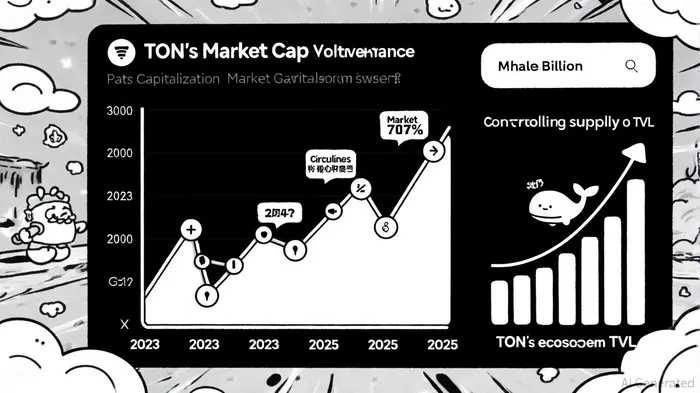
The TONTON-- blockchain, once heralded as a scalable, Telegram-integrated alternative to EthereumETH--, is now grappling with a confluence of governance failures and spam-driven risks that threaten its market position. While the ecosystem has seen explosive growth—bolstered by Telegram's 800 million monthly active users and partnerships like Tether's USDTUSDT-- integration—these gains are increasingly overshadowed by systemic issues eroding token utility and investor confidence[1].
Governance Failures: Centralization, Missteps, and Eroding Trust
Decentralized governance is a cornerstone of blockchain ecosystems, yet TON's governance model has been plagued by centralization risks and high-profile missteps. In 2025, the TON Foundation faced a reputational crisis when an intern used its official branding to promote a personal memeMEME-- token on Pump.Fun, misleading users into believing it was endorsed by the Foundation[1]. The incident, which led to the intern's termination, exposed vulnerabilities in brand governance and employee oversight. Such lapses are particularly damaging in Web3, where trust is paramount and a single misstep can trigger mass skepticism[1].
Compounding these issues was the TON Golden Visa debacle in July 2025. The Foundation prematurely announced a UAE residency program tied to staking ToncoinTON--, only for UAE authorities to deny its existence[2]. The unverified claim caused a sharp price spike followed by a crash, eroding credibility and highlighting a lack of regulatory due diligence. According to a report by Blocksizelaw, the incident underscored the need for “robust legal frameworks to prevent speculative hype from overshadowing compliance”[2].
These governance failures align with broader global trends. The NACD 2025 Governance Outlook emphasizes that boards must navigate reputational risks and integrate emerging technologies responsibly[2]. For TON, this means addressing not only internal missteps but also the broader challenge of balancing decentralization with accountability. While the Foundation has introduced a Society DAO to decentralize decision-making[4], critics argue that such measures are reactive rather than proactive.
Spam and Misuse: A Toxic Ecosystem Undermining Token Utility
The TON ecosystem has become a hotbed for spam and scams, further eroding trust. In 2025, Telegram Mini Apps—once a driver of mass adoption—became a vector for phishing attacks and fraudulent projects[5]. The TON Foundation's response, which shifted responsibility for user safety to individual projects, drew sharp criticism from the community[5]. This approach contrasts with the principles of decentralization, where shared accountability is essential for trust.
The rise of speculative “Tap-to-Earn” (T2E) games like NotcoinNOT-- and Hamster KombatHMSTR-- initially drove mass adoption but also fostered a culture of short-termism. Projects like Tapswap promised rewards but delivered little tangible utility, leading to plummeting token values and empty wallets[2]. According to a Dapp Expert analysis, the ecosystem is now a “mix of hyped-up projects and outright garbage,” with poorly designed DApps and memecoins diluting the value of the TON token[2].
Token utility, a critical factor for long-term value, is further strained by whale dominance. Over 65.87% of Toncoin's circulating supply is controlled by a small number of large holders[1], creating volatility and price manipulation risks. While integrations like Telegram Wallet and STON.fi's $169 million TVL offer promise[2], these gains are offset by the perception of TON as a speculative playground rather than a utility-driven platform.
Investor Trust in Jeopardy
Investor trust, already fragile, has been further shaken by inconsistent governance and spam-driven volatility. CoinMarketCap data shows TON's 24-hour trading volume at $114 million in 2025, but this figure masks underlying instability[3]. Technical indicators, such as a breakdown from an ascending channel, suggest bearish momentum[3]. Meanwhile, institutional interest—spurred by a $400 million investment from Sequoia Capital and Benchmark[3]—has not translated into sustained retail confidence.
The Foundation's attempts to address these issues, including the Society DAO, remain unproven. While the DAO aims to decentralize resource allocation and project execution[4], its success hinges on community buy-in and transparency. As of September 2025, the ecosystem continues to grapple with the fallout from past missteps, and investors remain wary of overhyped promises.
Conclusion: A Tenuous Path Forward
TON's market position in 2025 is a cautionary tale of rapid growth outpacing governance maturity. While the ecosystem's integration with Telegram and innovative projects like STON.fi demonstrate potential, these strengths are undermined by centralization risks, spam-driven speculation, and a history of credibility crises. For TON to reclaim its footing, the Foundation must prioritize accountability, strengthen spam mitigation, and deliver on tangible utility. Until then, the token's future remains precarious—a reflection of the broader challenges facing decentralized ecosystems in an increasingly skeptical market.







Comentarios
Aún no hay comentarios