
Tokenizing Trump's Empire: Strategic and Financial Implications of WLFI's Real Estate On-Chain Move
The tokenization of real estate is no longer a speculative concept-it's a seismic shift in how value is created, traded, and democratized. At the forefront of this movement is World Liberty FinancialWLFI-- (WLFI), a blockchain venture backed by the Trump family, which is tokenizing high-value properties from Donald Trump's global real estate portfolio. This initiative, which includes assets like Trump Tower Dubai, aims to fractionalize ownership of luxury real estate into blockchain-based tokens, enabling retail investors to access markets previously reserved for ultra-wealthy institutions. But what does this mean for investors, regulators, and the broader tokenization ecosystem?
Strategic Implications: Democratizing Access and Liquidity
WLFI's approach leverages blockchain to address two critical pain points in traditional real estate: illiquidity and high entry barriers. By converting physical assets into digital tokens, WLFIWLFI-- allows investors to buy fractions of properties for as little as $0.05 per token, drastically lowering the capital required to participate in high-value markets, according to a FinanceFeeds report. This aligns with broader trends in real-world asset (RWA) tokenization, which grew to a $24 billion market in 2025, with real estate contributing $280.6 million, as noted in an Elevex analysis.
The strategic value of WLFI's model lies in its hybrid ecosystem. The platform integrates a USD1 stablecoin (backed by U.S. treasuries and liquid instruments), a crypto-to-fiat debit card, and DeFi protocols to create a seamless bridge between traditional finance (TradFi) and decentralized finance (DeFi), as explained in an Odaily analysis. For example, USD1 has already facilitated a $2 billion transaction between Abu Dhabi-backed MGX and Binance, demonstrating its utility as a settlement medium (reported by FinanceFeeds). This infrastructure notNOT-- only enhances liquidity but also reduces settlement times from weeks to seconds, a critical advantage in fast-moving markets.
However, the Trump family's involvement introduces both opportunities and risks. On one hand, their brand recognition and political influence could accelerate adoption, particularly in markets where regulatory clarity is still evolving. On the other hand, the project faces scrutiny due to ethical concerns and potential conflicts of interest, given the Trump family's vested interest in WLFI tokens (over 22.5 billion tokens under vesting schedules), the FinanceFeeds report notes.
Financial Performance and Tokenomics
WLFI's financial trajectory has been robust. By Q3 2025, the company had sold over 24 billion tokens, with less than 1 billion remaining for purchase at $0.05 each-a 230% increase from the initial price of $0.015, according to a Blockonomi report. This surge is partly driven by institutional interest, including a $100 million investment from the Aqua 1 Foundation in June 2025, as reported by FinanceFeeds. Additionally, WLFI's Macro Strategy reserve, which includes $5 million in ETH and $470,000 in MOVE tokens, underscores its commitment to diversifying risk while supporting major cryptocurrencies, per Blockonomi.
The platform's tokenomics model is designed to incentivize long-term participation. A 35% allocation of tokens is reserved for ecosystem rewards, while deflationary mechanisms aim to sustain token value, Odaily notes. This structure mirrors successful DeFi projects, where token utility and governance rights drive adoption. For instance, WLFI holders gain voting rights on platform decisions, aligning incentives between developers and investors, according to FinanceFeeds.
Yet, financial success hinges on regulatory navigation. The SEC's Howey Test, which classifies tokenized assets as securities if they meet the criteria of an investment contract, poses a significant hurdle, according to a Blockchain Academy analysis. In contrast, the EU's MiCA framework offers a more structured path for compliance, potentially enabling cross-border transactions. WLFI's ability to adapt to these varying regulations will determine its scalability.
Risks and Regulatory Frontiers
The tokenization of real estate is not without challenges. Accurate asset valuation remains a technical and legal gray area, particularly for properties with fluctuating market values. Secondary market liquidity is another concern-while tokenized assets can be traded 24/7, their value depends on the underlying property's performance and investor confidence, FinanceFeeds reports.
Regulatory uncertainty is perhaps the most pressing risk. In the U.S., the SEC's aggressive stance on projects resembling investment contracts could lead to enforcement actions. For example, WLFI's tokenized real estate products may be classified as securities, requiring compliance with stringent disclosure and registration rules, as discussed in the Blockchain Academy analysis. Conversely, jurisdictions like Singapore and the EU are developing clearer frameworks, which could position WLFI as a global leader if it prioritizes these markets.
The Road Ahead: A New Era for Real Estate?
If successful, WLFI's initiative could redefine real estate investment. By tokenizing assets like oil, gas, and timber alongside real estate, the platform aims to create a diversified RWA ecosystem, FinanceFeeds reports. The upcoming crypto-to-fiat debit card, slated for Q4 2025 or Q1 2026, further blurs the line between digital and traditional finance, enabling direct spending of cryptocurrencies, according to Odaily.
However, investors must weigh the potential against the risks. The Trump family's political influence and the project's regulatory exposure could lead to volatility. For instance, a shift in U.S. regulatory policy or a decline in Trump's public standing might impact investor sentiment.
Conclusion
WLFI's tokenization of Trump's real estate portfolio represents a bold experiment at the intersection of blockchain, politics, and finance. While the platform's hybrid infrastructure and strategic partnerships position it as a leader in RWA innovation, its success will depend on navigating regulatory complexities and maintaining investor trust. For investors, the key takeaway is clear: tokenization is not just a technological shift-it's a reimagining of asset ownership itself.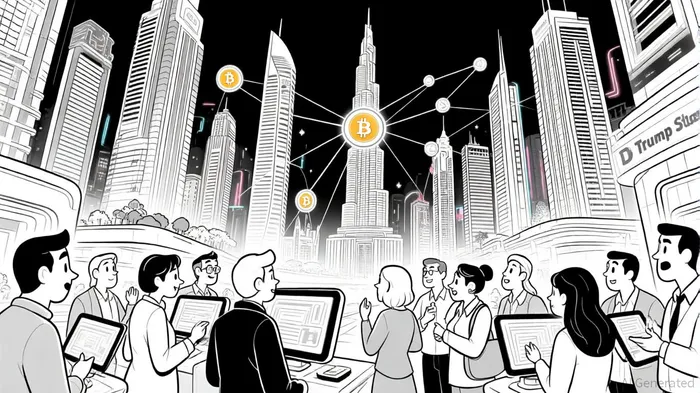






Comentarios
Aún no hay comentarios