
Tokenizing Traditional Finance: Trump Crypto's Strategic Expansion into Commodities and Debit Cards
The convergence of blockchain technology and traditional finance is accelerating, with projects like World Liberty FinancialWLFI-- (WLFI) leading the charge. Backed by the Trump family and spearheaded by CEO Zach Witkoff, WLFIWLFI-- is leveraging tokenization to disrupt asset classes and payment systems, positioning itself at the intersection of decentralized finance (DeFi) and real-world assets (RWA). By tokenizing commodities and launching a crypto-integrated debit card, the firm aims to democratize access to global markets while challenging legacy systems.
Tokenizing Commodities: A New Paradigm for Global Trade
WLFI's strategy to tokenize oil, gas, cotton, and timber represents a seismic shift in how physical assets are traded. According to a CNBC report, the firm's tokenization efforts are designed to "increase transparency and efficiency in global markets" by enabling on-chain trading of these assets. This approach addresses long-standing inefficiencies in traditional commodity markets, where physical storage, intermediaries, and slow settlement processes inflate costs and reduce liquidity.
The USD1USD1-- stablecoin, fully collateralized by U.S. Treasuries, serves as the backbone of this ecosystem. By pairing tokenized commodities with USD1, WLFI creates a bridge between volatile crypto markets and stable, fiat-backed value. As stated by The Block, this model allows investors to trade commodities in real-time, with price discovery and settlements occurring on blockchain networks. For example, a farmer in Texas could tokenize their cotton harvest and sell it to a buyer in China within minutes, bypassing traditional brokers and reducing transaction costs.
Debit Cards and Financial Inclusion: Bridging Crypto and Everyday Spending
WLFI's debit card initiative, set to launch in Q4 2025 or Q1 2026, further blurs the line between crypto and traditional finance. The card, integrated with Apple Pay and linked to USD1, will enable users to spend digital assets seamlessly in retail environments, according to a Bankless Times article. This move aligns with a broader trend of financial inclusion, as underbanked populations gain access to global markets through mobile-friendly tools.
The retail app accompanying the debit card-described as a "Venmo meets Robinhood" hybrid-adds another layer of disruption, per a Hoka News piece. By combining peer-to-peer payments with simplified investment features, WLFI targets millennials and Gen Z users who demand speed and accessibility. A partnership with South Korea's Bithumb exchange also signals the firm's ambition to expand into Asia's $10 billion crypto market, noted a CoinDesk report.
Market Impact and Institutional Momentum
USD1's rapid ascent to the fifth-largest stablecoin-with a market capitalization of $2.7 billion-demonstrates the growing institutional appetite for tokenized assets, according to DWF Labs research. A $2 billion investment from Abu Dhabi-based MGX into Binance via USD1 in May 2025 underscored its credibility, while listings on Binance, CoinbaseCOIN--, and HTX expanded its reach, per CoinGecko. Meanwhile, WLFI's governance token ($WLFI) raised $550 million through public sales, attracting crypto-native firms like DWF Labs, according to OKX.
However, challenges persist. Critics highlight WLFI's centralized governance structure and the Trump family's political associations as potential liabilities. Despite a 20% reduction in their ownership stake since 2024, regulatory scrutiny remains a risk, the OKX analysis noted.
Conclusion: A Disruptive Force or a Fleeting Trend?
WLFI's initiatives reflect a broader shift toward tokenization as a tool for financial inclusion and market efficiency. By tokenizing commodities and integrating crypto into daily spending, the firm challenges traditional gatekeepers while empowering individual investors. Yet, its success will hinge on navigating regulatory hurdles and proving the scalability of its cross-chain strategy. For investors, the key question is whether WLFI can sustain its momentum-or if it will fade as a short-lived experiment in crypto populism.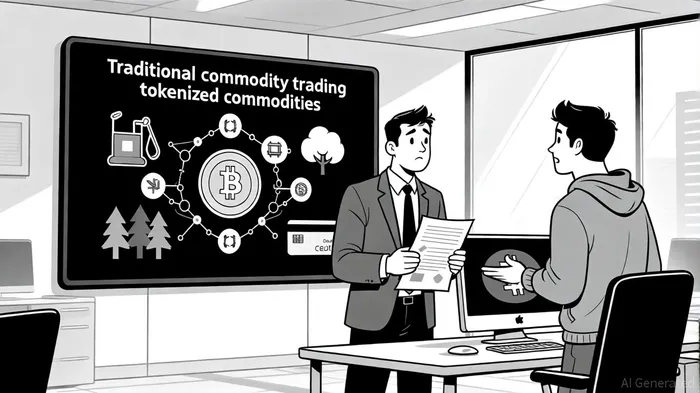





Comentarios
Aún no hay comentarios