
Tokenized Stocks and the Rise of StockFi: A New On-Chain Asset Class
Market Growth and Adoption: A New Era of Accessibility
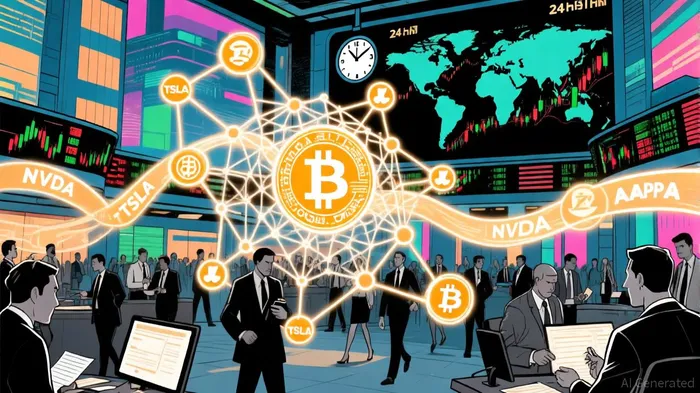
The tokenized equities market has surged in 2025, driven by platforms that cater to both retail and institutional investors. Kraken's xStocks platform, for instance, has surpassed $5 billion in trading volume since its launch, offering non-U.S. investors exposure to major U.S. equities like TeslaTSLA-- and NVIDIANVDA-- through partnerships with Backed Finance. These tokenized assets operate on multiple blockchain networks and have attracted over 37,000 unique holders, underscoring their appeal for 24/7 trading and fractional ownership.
Meanwhile, StableStock and Native have launched 24/7 tokenized-stock trading on the BNBBNB-- Chain, further expanding access to global markets. This shift is not limited to tech giants; mid-cap and data stocks are also being tokenized, democratizing access to asset classes previously reserved for accredited investors.
Regulatory Developments: Bridging Compliance and Innovation
Regulatory clarity has been a critical enabler of this growth. In October 2025, Backpack Exchange-a Solana-based centralized exchange-partnered with Superstate to list SEC-registered U.S. stocks as tokenized assets, backed by real shares and traditional identifiers like CUSIP codes. This marks the first time a crypto exchange has provided direct on-chain access to regulated Wall Street assets, bypassing legacy brokerage systems while adhering to U.S. securities laws.
Kraken's tokenized equities, meanwhile, are custodied by a regulated European entity and compliant with Swiss regulations, ensuring a balance between innovation and legal safeguards. These developments signal a maturing ecosystem where compliance is no longer a barrier but a competitive advantage.
Disrupting Traditional Finance: Liquidity, Efficiency, and Inclusivity
Tokenized equities are reshaping traditional finance by addressing long-standing inefficiencies. Blockchain technology enables instant settlement (T+0) compared to the T+2 standard in traditional markets, reducing counterparty risk and freeing up capital, as detailed in Onchain Standard's guide. Fractional ownership models allow retail investors to purchase shares of high-value assets for as little as $10, expanding market participation.
Smart contracts automate compliance tasks such as dividend distributions and KYC/AML checks, slashing operational costs by up to 70%. Institutional players like BlackRock and JPMorgan are already tokenizing funds, while DeFi protocols like AaveAAVE-- Arc and Maple FinanceSYRUP-- are offering liquidity solutions that generate yield for token holders.
Institutional Adoption and Market Validation
The rise of tokenized equities is not just theoretical-it's being validated by institutional demand. The REX-Osprey XRP ETF, for example, has amassed $100 million in assets under management in its first month, outpacing international counterparts like Brazil's Hashdex XRPXRP-- ETF. This surge reflects a broader appetite for regulated crypto investment vehicles, with XRP's price rising 11% to $2.64 amid growing institutional adoption.
Derivatives markets are also expanding, with CME Group reporting $27 billion in notional volume for XRP futures and options since May 2025. Corporate treasuries, such as Evernorth's use of XRP for cross-border settlements, further cement digital assets as a legitimate component of institutional finance.
Challenges and the Road Ahead
Despite its promise, the tokenized equities market faces hurdles. Regulatory complexity remains a barrier, particularly for U.S. investors due to jurisdictional differences. Custody risks and smart contract vulnerabilities also require robust solutions. However, the pace of innovation suggests these challenges will be addressed incrementally, much like the evolution of traditional finance.
Conclusion: A Paradigm Shift in Global Finance
Tokenized equities are not a passing trend but a foundational shift in how assets are issued, traded, and accessed. By combining blockchain's efficiency with traditional finance's legitimacy, StockFi is unlocking new possibilities for liquidity, inclusivity, and global market integration. For investors, the key takeaway is clear: those who ignore this asset class risk being left behind in a rapidly evolving financial ecosystem.





Comentarios
Aún no hay comentarios