
The Tokenized Social Economy and Its Implications for Crypto and Web3 Investors
The tokenized social economy is rapidly evolving into a cornerstone of decentralized finance (DeFi) and Web3, redefining how user-generated value is created, captured, and monetized. At the forefront of this transformation is the Base App, a platform that integrates social networking, DeFi tools, and tokenized assets into a unified ecosystem. For crypto and Web3 investors, understanding Base's strategies and their broader implications is critical to navigating the next phase of digital asset innovation.
Base App: A Super App for the Tokenized Social Economy
The Base App, rebranded from the CoinbaseCOIN-- Wallet, has emerged as a "super app" that merges social media, mini-apps, payments, and trading into a single interface. Built on Ethereum's layer-2 infrastructure, Base leverages the Farcaster protocol to enable decentralized social feeds, where users can tokenize their content via Zora and earn income through tips, engagement rewards, and secondary market trades. This model eliminates traditional barriers-such as follower minimums or delayed payouts-by allowing creators to monetize their work instantly.
A key innovation is Base's integration of DeFi tools, including staking, lending, and yield-generating opportunities. For instance, partnerships with platforms like Ondo Finance and Maple Finance enable users to access tokenized real-world assets (RWAs), such as institutional-grade treasuries and private credit, which offer stable income and high returns. These features position Base as a bridge between traditional finance and decentralized infrastructure, fostering a tokenized economy where users can earn and trade seamlessly.
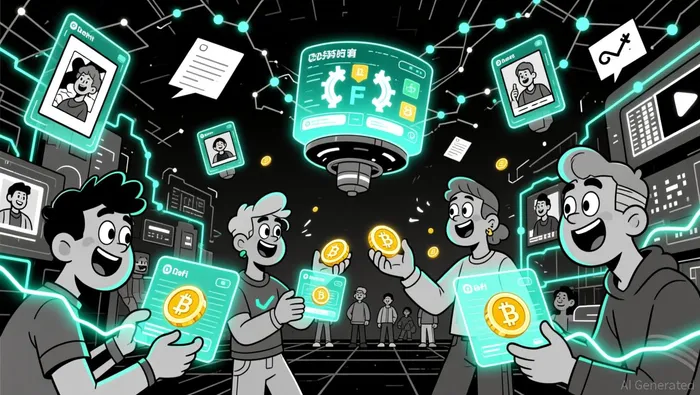
Monetization Models: From Freemium to Tokenized Rewards
Base's monetization strategies reflect a hybrid approach that combines traditional app models with blockchain-native mechanisms. The freemium model, where core features are free but premium upgrades are paid, is complemented by in-app purchases for virtual goods and subscriptions for premium content. However, the platform's standout feature is its tokenized social economy, where users earn transaction fees when others trade their content. This creates a self-sustaining ecosystem where value is directly tied to user engagement.
Additionally, Base supports encrypted messaging via the XMTP protocol and facilitates USDC payments through a single-tap NFC feature, enabling low-cost, near-instant transactions. These tools not only enhance user experience but also align with broader trends in Web3, where financial sovereignty and interoperability are prioritized.
Strategic Partnerships and Ecosystem Expansion
Base's growth is underpinned by strategic partnerships and a focus on developer onboarding. The platform aims to onboard 25 million users and 25,000 developers by 2025, reflecting its ambition to become a central hub in the onchain economy. Collaborations with Shopify merchants and institutions like Edel Finance further expand its utility, enabling tokenized stocks and lending mechanisms that enhance capital efficiency.
Regulatory developments also play a pivotal role in Base's trajectory. The European Union's MiCA regulation and U.S. legislative progress, such as the GENIUS and CLARITY Acts, have created a conducive environment for innovation while addressing compliance challenges. These frameworks are critical for attracting institutional investors, who now constitute a significant portion of the crypto market.
Investment Implications and Market Outlook
For investors, the tokenized social economy represents a high-growth opportunity. Data from Chainalysis indicates that over 28% of U.S. adults owned crypto in 2025, with blockchain adoption accelerating across industries. Base's integration of social media and DeFi aligns with this trend, offering a scalable model for monetizing user-generated content.
Moreover, the global blockchain market is projected to reach nearly $2 trillion by 2034, driven by Fortune 500 companies adopting decentralized solutions. Base's focus on tokenized RWAs and institutional-grade assets positions it to capture a significant share of this growth. As of 2025, over 80% of Fortune 500 companies use blockchain in some capacity, signaling a shift toward interoperable financial systems.
Conclusion
The Base App exemplifies the convergence of social media, DeFi, and tokenized assets, redefining how users generate and monetize value in decentralized ecosystems. For crypto and Web3 investors, its hybrid monetization models, strategic partnerships, and regulatory alignment present compelling opportunities. As the tokenized social economy matures, platforms like Base will likely play a pivotal role in shaping the future of digital finance.





Comentarios
Aún no hay comentarios