
Tokenized Hashrate Exposure: A New Flow for Institutional Bitcoin
The Omnes Mining Note (OMN) is a secured debt instrument with precise, industrial-scale backing. Each note is backed by a fixed 1 petahash per second (1 PH/s) of Bitcoin hashrate for a 36-month tenor. This structure provides professional non-U.S. investors with direct economic exposure to new BitcoinBTC-- production, measured in hashrate, without the operational complexities of managing mining infrastructure.
The target investor base is clear: professional non-U.S. investors. The OMN is designed to deliver rights to newly produced Bitcoin that correspond to an allocated share of network computing power, separating economic participation from direct coin custody. This approach aims to make the economics of protocol issuance accessible through a regulated, institutional-grade channel.
The administrative backbone is provided by a major financial services firm. Apex Group, with over $3.5 trillion in assets serviced, is handling the tokenization, administration, and transfer agency services for the OMN. The note will be issued and managed on the Base Chain, leveraging Apex's Digital 3.0 platform and the ERC-3643 token standard for compliant, on-chain transferability among whitelisted investors.
The Mining Economics Context: Pressure on the Underlying Asset
The fundamental value proposition for the Omnes Mining Note (OMN) is under severe strain. The core asset-Bitcoin mining-is operating at a steep loss, with average production costs around $88,000 per coin versus a market price near $69,200. This creates a gap of nearly $19,000 per coin, meaning the average miner is losing 21% on every block produced. The math has turned against the industry, driven by rising energy costs and geopolitical disruptions.
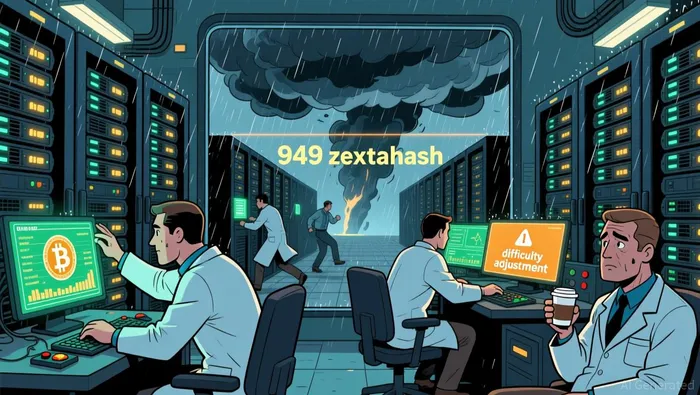
This economic pressure is forcing tangible network contraction. The network's hashrate recently fell below the 1 zetahash per second (ZH/s) thresholdT--, triggering a 11.16% difficulty drop in February. That adjustment, the second-largest of 2026, followed weeks of declining hash power and severe weather disruptions that forced miners offline. The network's 7-day average hashrate has since retreated to roughly 949 exahash per second, well below its record level.
The latest data shows miner revenue is still under pressure. Over the past week, hashprice rose 7.3% to $32.30 per PH/s/day, but it remains near breakeven for many operations. This metric, which tracks expected revenue per unit of computing power, is a direct indicator of the economic viability of the hashrate backing the OMN. While the recent pop offers a temporary reprieve, the underlying cost structure suggests this is a fragile equilibrium.
Flow Implications and Institutional Adoption Catalyst
The Omnes Mining Note (OMN) unlocks a new capital flow by serving as a bridge for institutional capital with strict mandates. For fund managers restricted to stocks or bonds, the OMN provides a regulated, tokenized vehicle to gain exposure to Bitcoin mining-a real-world asset class-without violating their investment charter. This bypasses the need to invest directly in Bitcoin or through ETFs, which may fall outside their permitted asset universe.
This product aligns with a powerful, maturing trend of institutional capital entering Bitcoin. A recent survey shows 94% of institutional investors believe in the long-term value of blockchain technology and digital assets. This growing conviction is translating into action, with 86% of institutions already having or planning digital asset allocations. The OMN offers a sophisticated, industrial-grade entry point within this expanding ecosystem.
The primary catalyst for this flow is the tokenization of real-world assets, a service Apex Group is actively expanding. The company has been "steamrolling into the tokenization industry" since acquiring Tokeny. By bringing a secured debt instrument backed by physical hashrate onto the Base Chain, the OMN demonstrates how tokenization can create new, liquid markets for traditionally illiquid industrial infrastructure. This setup is the key to scaling institutional participation in Bitcoin's underlying production.







Comentarios
Aún no hay comentarios