
Tokenized Gold as a Strategic Hedge in a Fragmented Global Market
In an era defined by rising economic nationalism, trade fragmentation, and geopolitical volatility, traditional safe-haven assets are being redefined. Gold, long a cornerstone of macro resilience, has surged in demand amid global uncertainty, with prices hitting $3,456.54 per ounce in Q3 2025-a 40% year-on-year increase. However, the limitations of physical gold-illiquidity, high entry barriers, and storage costs-have created a gap in the market. Enter tokenized gold, a digital innovation that combines the timeless appeal of gold with the efficiency of blockchain. This article argues that tokenized gold, exemplified by Tether's XAU₮, offers a compelling solution for onchain diversification and macro resilience in a fragmented world.
The Macroeconomic Case for Gold in a Fragmented World
The surge in gold demand is not a fleeting trend but a structural shift. Central banks added 220 tonnes of gold in Q3 2025 alone, with annual purchases projected to reach 900–1,000 tonnes in 2025-the highest level since the collapse of the Bretton Woods system. This reflects a global pivot toward de-dollarization and reserve diversification, as emerging economies seek to insulate themselves from U.S. dollar volatility and geopolitical risks.
Trade fragmentation, epitomized by escalating tariffs between the U.S. and China, has further amplified demand. As energy and transportation costs rise, inflationary pressures persist, making gold a critical hedge. Historically, gold has thrived during crises: in 1980, prices spiked to $875 per ounce following the Soviet invasion of Afghanistan. Today, with geopolitical tensions at multi-decade highs, the parallels are striking. Analysts project gold prices could reach $5,000–$6,000 per ounce by 2028, driven by structural demand and constrained supply.
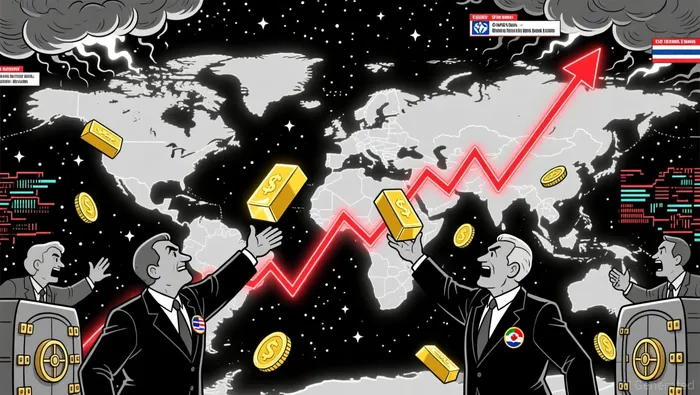
The Limitations of Traditional Gold and the Rise of Tokenization
Despite its strengths, physical gold remains illiquid and inaccessible to many. Fractional ownership is logistically complex, and 24/7 trading is impossible. Tokenized gold bridges these gaps. XAU₮, Tether's tokenized gold, represents a paradigm shift: each token is backed by one troy ounce of physical gold stored in Swiss vaults, with 246,524.33 tokens in circulation as of Q2 2025. The token's divisibility to six decimal places (0.000001 troy ounces) enables fractional ownership, democratizing access to gold for retail investors.
Real-time liquidity is another game-changer. XAU₮ trades 24/7 on platforms like Coinbase and BitGet, with daily volumes averaging $30–60 million. This contrasts sharply with physical gold, which requires intermediaries and incurs storage and insurance costs. Tokenization also introduces self-custody: investors can store XAU₮ on-chain, bypassing traditional custodians and reducing counterparty risk.
Blockchain Infrastructure and Regulatory Tailwinds
The rise of tokenized gold is underpinned by robust blockchain infrastructure and regulatory progress. Stablecoin adoption has surged, with the market cap reaching $300 billion in September 2025-a 75% year-on-year increase. This growth is driven by cross-border payments, treasury operations, and institutional adoption. For example, JPMorgan has launched tokenized money-market funds, while Visa and Mastercard integrate stablecoins into their payment systems. Regulatory clarity has been pivotal: the U.S. GENIUS Act and the EU's MiCA framework have established guardrails for stablecoins, enabling institutional participation. In parallel, tokenized assets like XAU₮ are gaining traction as policymakers recognize their potential to modernize financial infrastructure. Singapore's Project Guardian and the U.S. SEC's Project Crypto further signal a shift toward embracing tokenization.
Strategic Allocation: Why Tokenized Gold Now?
The case for tokenized gold is strongest in today's macro environment. With trade tensions reshaping global supply chains and central banks prioritizing reserve diversification, gold's role as a hedge is irreplaceable. Tokenized gold amplifies this role by offering:
1. Real-time liquidity: 24/7 trading on decentralized and centralized exchanges as reported in analysis.
2. Fractional ownership: Accessibility for small investors, bypassing logistical hurdles of physical gold.
3. Self-custody: On-chain storage reduces reliance on traditional custodians.
Moreover, Tether's growing involvement in the gold market-holding 116 tons of reserves and investing in gold royalty models-positions XAU₮ as a structural demand driver. This could influence mining financing and pricing dynamics, further solidifying tokenized gold's macro relevance.
Challenges and the Path Forward
While tokenized gold is promising, challenges remain. Transparency in reserves and insurance disclosures are under scrutiny, with TetherUSDT-- in discussions with a Big Four accounting firm to address these concerns. However, these issues are surmountable and reflect the maturation of the asset class. As infrastructure and regulation evolve, tokenized gold is poised to become a mainstream component of diversified portfolios.
Conclusion
Tokenized gold represents the convergence of tradition and innovation. In a world of rising economic nationalism and trade fragmentation, XAU₮ and similar products offer a unique combination of macro resilience, onchain diversification, and accessibility. With gold prices projected to climb toward $6,000 per ounce by 2028, the time to allocate is now. For investors seeking to hedge against a fragmented future, tokenized gold is not just a speculative play-it is a strategic imperative.





Comentarios
Aún no hay comentarios