
Tokenized Deposits as the Next Frontier in Digital Finance
The financial landscape is undergoing a seismic shift as tokenized deposits emerge as a cornerstone of digital finance. By 2025, the market capitalization of tokenized real-world assets (RWAs) had surged to $20 billion, driven by institutional adoption and strategic infrastructure development. This growth is not speculative but rooted in tangible use cases, regulatory clarity, and technological innovation. Tokenized deposits-digital representations of traditional deposits issued on blockchain-are redefining liquidity, transparency, and efficiency in financial systems. This article examines the strategic infrastructure adoption and institutional validation propelling tokenized deposits to the forefront of digital finance.
Institutional Adoption and Credibility
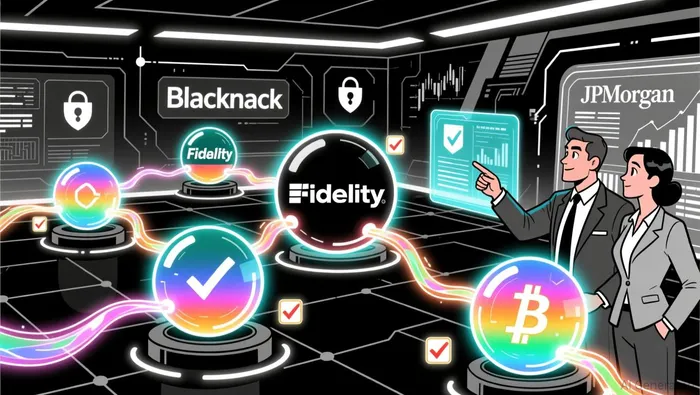
Institutional players have moved beyond experimentation to execution, with major firms like BlackRockBLK--, ApolloAPO--, and Fidelity launching regulated, yield-generating tokenized products. These include tokenized U.S. Treasuries and gold, which offer enhanced transparency and liquidity. State Street's 2025 Digital Assets Outlook underscores that nearly 60% of institutional investors plan to increase their allocation to digital assets, viewing tokenized instruments as a strategic lever for growth. Regulatory developments have further bolstered confidence: the SEC's retreat from lawsuits against crypto platforms and the EU's MiCA regulation entering implementation have created a more stable environment.
Custodians are leading the charge, with 63% of institutions already offering tokenized assets, according to Broadridge's 2025 Tokenization Survey. This shift is not merely about technology but about reimagining financial infrastructure. Tokenized deposits enable real-time settlements, programmable payments, and 24/7 accessibility, addressing inefficiencies in traditional systems. For example, JPMorgan's JPM Coin operates on a permissioned blockchain to facilitate secure, real-time transactions between institutions.
Strategic Infrastructure Development
The transition from hype to reality in tokenization is marked by infrastructure projects that bridge traditional finance and blockchain. JPMorgan's JPM Coin exemplifies this, serving as an interoperability layer for institutional clients. However, challenges persist. The collapse of Silicon Valley Bank in 2023 highlighted the risks of tokenized deposits if exposed to public-market dynamics, such as rapid liquidity crises. Tokenized deposits must remain within supervised perimeters to ensure stability, a lesson reinforced by the USDC depegging event in 2023.
Collaborative efforts are addressing these gaps. Deloitte projects that multibank networks using tokenized currencies could process 25% of large-value international money transfers by 2030, reducing costs and improving efficiency. The U.S. GENIUS Act, passed in July 2025, provides a regulatory foundation for stablecoins, enabling broader institutional adoption. This act, alongside initiatives like Project Agorá, signals a growing acceptance of tokenized deposits as complementary tools in global finance.
AI Integration and Risk Management
Artificial intelligence (AI) is a critical enabler of tokenized deposit systems. Financial institutions are leveraging AI for dynamic risk scoring, predictive analytics, and real-time fraud detection. JPMorgan Chase has deployed AI-driven platforms like "Smart Monitor" to enhance risk management in its tokenized deposit infrastructure. These tools analyze transaction patterns, device fingerprints, and behavioral biometrics to generate dynamic risk scores, addressing the limitations of static models in high-volume, real-time environments.
Custodia and Vantage Bank's tokenized deposit platform integrates AI for compliance and operational efficiency. Their system supports geolocation-triggered payments and milestone-based disbursements, demonstrating AI's role in automating complex workflows. By 2025, over 85% of institutions were already using AI in fraud detection and risk modeling, reducing losses and false positives. AI-native operations are reshaping liquidity management, with programmable money and tokenized deposits at the core of financial innovation.
Regulatory Frameworks and Institutional Validation
Regulatory clarity remains a linchpin for tokenized deposits. The Conference of State Bank Supervisors has called for joint guidance from the FDIC, Federal Reserve Board, and Office of the Comptroller of the Currency to address risks associated with distributed ledger technology (DLT). Critical areas include deposit insurance coverage, BSA/AML compliance, and liquidity risk management. The distinction between private and public blockchains is also under scrutiny, with regulators emphasizing the need for clear frameworks to govern non-IDI participants in tokenized networks.
Institutional validation is evident in the adoption of tokenized deposits by major banks. Vantage Bank and Custodia's consortium offers a turnkey solution for integrating tokenized deposits and stablecoins into digital banking platforms. These deposits, backed by FDIC-insured traditional bank accounts, combine blockchain's advantages with regulatory safeguards. The success of such initiatives hinges on common standards, robust technological platforms, and a cultural shift prioritizing tokenization as a core strategic initiative.
Conclusion
Tokenized deposits are no longer a speculative concept but a strategic infrastructure imperative. Institutions are leveraging blockchain and AI to enhance efficiency, transparency, and risk management, while regulatory frameworks are evolving to support this transition. As the market capitalization of tokenized RWAs approaches $33 billion by 2025, the next frontier lies in scaling adoption through interoperability, standardization, and continued innovation. For investors, the convergence of institutional validation, technological advancement, and regulatory clarity positions tokenized deposits as a transformative force in digital finance.





Comentarios
Aún no hay comentarios