
Tokenized Assets in Emerging Markets: Strategic Infrastructure and Market Penetration in 2025
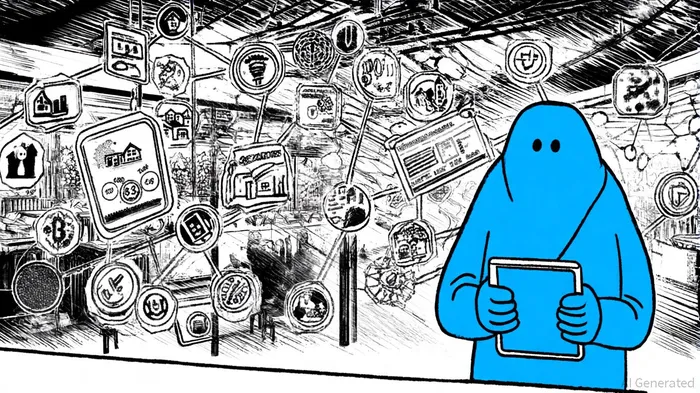
The tokenization of real-world assets (RWAs) is no longer a speculative concept—it's a strategic imperative for emerging markets seeking to modernize financial infrastructure and unlock new capital flows. As of 2025, the global tokenized asset market has surged to $26 billion in value, with emerging economies accounting for a disproportionate share of innovation and experimentation. From tokenized government bonds in the Philippines to fractional real estate ownership in Kenya, the convergence of blockchain technology and financial inclusion is reshaping how capital is allocated and accessed.
Strategic Infrastructure: The Backbone of Tokenization
Blockchain platforms like EthereumETH--, SolanaSOL--, and Binance Smart Chain (BSC) have emerged as the foundational infrastructure for tokenized assets in emerging markets. Ethereum's ERC-20 and ERC-721 standards remain dominant, but Solana's high throughput and low fees are gaining traction in real estate and commodities tokenization. For instance, in Indonesia, platforms like IDXCarbon are leveraging Ethereum to tokenize carbon credits, while BSC supports tokenized palm oil and nickel commodities, capitalizing on the country's $88 billion projected tokenization market by 2030 [1].
Custody solutions are equally critical. Ripple Custody, for example, has enabled institutional investors in Southeast Asia to securely manage tokenized assets, with 71% of APAC financial institutionsFISI-- planning to adopt custody services within three years [2]. Multi-party computation (MPC) and multi-signature wallets are addressing security concerns, while Layer-2 solutions like zk-Rollups reduce transaction costs, making tokenization viable for small and medium enterprises (SMEs).
Market Penetration: From Pilots to Scale
Emerging markets are bypassing traditional financial intermediaries by directly tokenizing assets. In Kenya, the Nairobi Securities Exchange (NSE) has partnered with DeFi TechnologiesDEFT-- to launch digital-asset ETPs, attracting over $100 million in institutional capital in 2024 [3]. Similarly, Nigeria's Lagos State government announced plans to tokenize real estate to boost housing affordability, leveraging platforms like LandX to enable fractional ownership.
Tokenized government bonds are another success story. The Philippines issued $179 million in tokenized treasury bonds in 2025, with a 6.5% coupon rate, demonstrating how blockchain can enhance transparency and attract foreign investors [4]. In Thailand, tokenized municipal bonds have reduced minimum investment thresholds from $100,000 to $1,000, democratizing access to infrastructure projects.
Challenges and the Road Ahead
Despite progress, challenges persist. Regulatory fragmentation remains a hurdle: Kenya's 2025 Virtual Asset Service Providers Bill now splits oversight between the Central Bank and Capital Markets Authority, creating compliance complexities [5]. Infrastructure gaps also limit scalability—only 30% of APAC institutions currently use custody solutions, despite 52% planning adoption within three years [2].
However, the OECD and McKinsey emphasize that collaboration between regulators, financial institutions, and tech providers is accelerating adoption. For example, Switzerland's Helvetia III project, which settled tokenized bonds using wholesale CBDC, has inspired similar initiatives in emerging markets like Brazil and Argentina [6].
Conclusion: A $19 Trillion Opportunity
Tokenization is not just a technological shift—it's a financial revolution. By 2030, the tokenized asset market could reach $18.9 trillion, with emerging markets capturing a significant portion. For investors, the key is to focus on regions with supportive regulatory sandboxes (e.g., Dubai's VARA framework) and robust blockchain ecosystems.
As Anthony Pompliano often stresses, the future belongs to those who build infrastructure. In emerging markets, tokenization is the bridge between exclusion and inclusion—a bridge that's already being constructed.





Comentarios
Aún no hay comentarios