
Tokenization and Sentiment-Driven Markets: Assessing the Investment Viability of Emotionally Charged Digital Assets
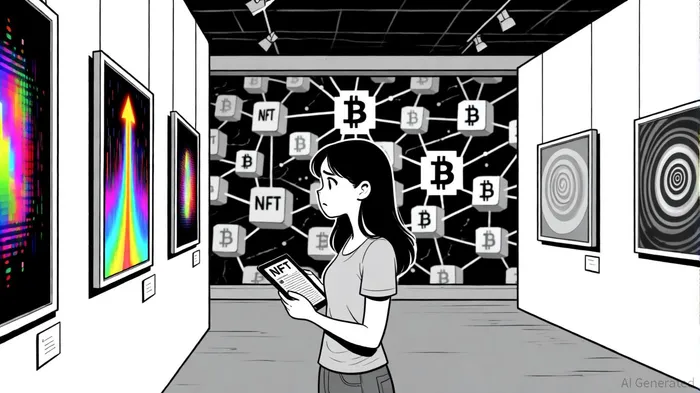
The rise of tokenization has unlocked new frontiers in finance, blending blockchain technology with emotional and psychological market dynamics. Emotionally charged digital assets—tokens whose value and characteristics are influenced by sentiment-driven data—represent a nascent yet rapidly evolving segment of the market. These assets, often generated via AI systems that analyze social media, news, and trading volumes to condition generative models like GANs, create dynamic NFTs that evolve with market psychology[5]. While this innovation promises novel investment opportunities, it also introduces complex risks tied to sentiment volatility, regulatory uncertainty, and technological fragility.
Market Dynamics: Sentiment as a Catalyst
Market sentiment exerts a profound influence on the performance of tokenized assets. A 2025 Forbes analysis revealed that total value locked (TVL) in tokenized real-world assets (RWAs) reached $20 billion by April 2025, despite the collapse of speculative tokens like $OM[1]. Investors increasingly favor regulated, asset-backed tokens—such as Treasury bills and rental income streams—over unsecured crypto projects. This shift underscores a growing preference for sentiment-driven assets grounded in tangible value rather than hype.
Sentiment metrics, particularly from social media platforms like Twitter and RedditRDDT--, correlate strongly with price movements. For instance, Elon Musk's tweets about DogecoinDOGE-- historically triggered sharp price surges[2], while negative sentiment or bot-driven engagement often led to corrections[2]. Advanced sentiment analysis tools, including Natural Language Processing (NLP) and emotion-mapping algorithms, now quantify these effects. A 2025 study demonstrated that AI-generated NFTs with emotional depth commanded a 78% premium over conventional NFTs, leveraging affective computing to map physiological signals to emotional states[2].
Case Studies: Successes and Failures
The Bored Ape Yacht Club (BAYC) exemplifies the dual-edged nature of emotionally charged assets. Launched in 2021, BAYC NFTs surged to over 100 ETH apiece, driven by celebrity endorsements and community-driven exclusivity[5]. However, by 2024, floor prices had plummeted to 20–30 ETH, reflecting broader NFT market saturation and crypto bear cycles[5]. Despite this, BAYC retains utility through IP rights and metaverse projects, suggesting long-term value for strategic investors.
Conversely, the tokenization of the St. RegisRGS-- Aspen Resort raised $18 million by 2025, showcasing how blockchain democratizes access to high-value real estate[4]. Similarly, Maecenas' tokenization of an Andy Warhol artwork generated $1.7 million, highlighting the potential for fractional ownership in traditional asset classes[5]. These successes hinge on regulatory clarity and platform credibility, as noted in a World Economic Forum report[4].
Risks and Regulatory Challenges
Emotionally charged assets face significant hurdles. Regulatory fragmentation remains a critical barrier, with jurisdictions like Singapore and Hong Kong adopting progressive frameworks while others lag[4]. Cybersecurity risks and liquidity constraints further complicate adoption. A 2025 OECD report warned that tokenization's transformative potential is tempered by the need for standardized compliance frameworks and intermediary oversight[3].
Sentiment-driven volatility also poses risks. A Springer study found that negative Twitter sentiment had a greater impact on stock prices than positive sentiment, with cumulative abnormal returns of 1–2% during high-volume events[6]. For tokenized assets, this asymmetry could amplify losses during bearish phases.
Conclusion: Balancing Innovation and Caution
Emotionally charged digital assets represent a paradigm shift in how value is tokenized and traded. Their investment viability depends on balancing innovation with risk mitigation. Institutional adoption, driven by platforms like Zero Hash and Chintai, signals confidence in regulated tokenization[1], while advancements in sentiment analysis offer tools to navigate volatility. However, investors must remain vigilant against speculative bubbles and regulatory shifts.
As the market matures, the integration of emotional and financial metrics will likely redefine asset valuation. For now, the path forward requires a nuanced understanding of sentiment's role in shaping both opportunity and risk.






Comentarios
Aún no hay comentarios